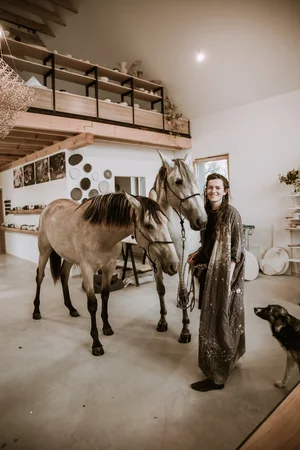
Marbling with PORCELAIN & STONEWARE
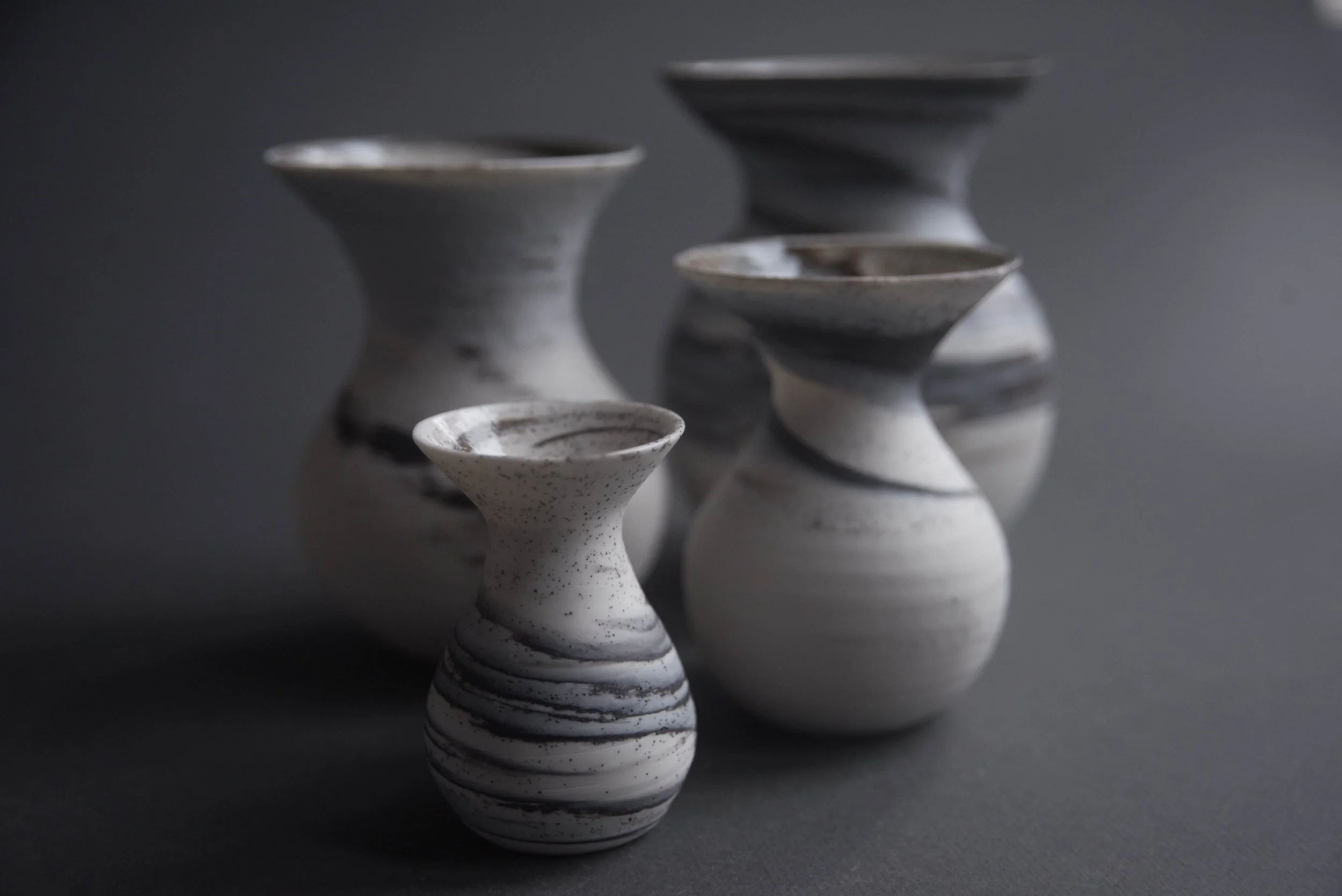
Mixing stonewares, layering bodies, and letting the material speak
There is something endlessly fascinating about marbling clay.
Two bodies meet —
they resist, fold, stretch, spiral —
and suddenly the surface becomes alive.
Not applied decoration.
But pattern born from the material itself.
Can any clays be mixed?
In theory: Yes — as long as they share the same firing range.
If one matures at cone 6 and the other at cone 10, you’ll run into trouble — warping, cracking, mismatched shrinkage.
But within the same range? There is a lot of freedom.
One thing I’ve consistently observed:
When a darker clay is hidden underneath a lighter body
(for example: black clay under porcelain)
You can get:
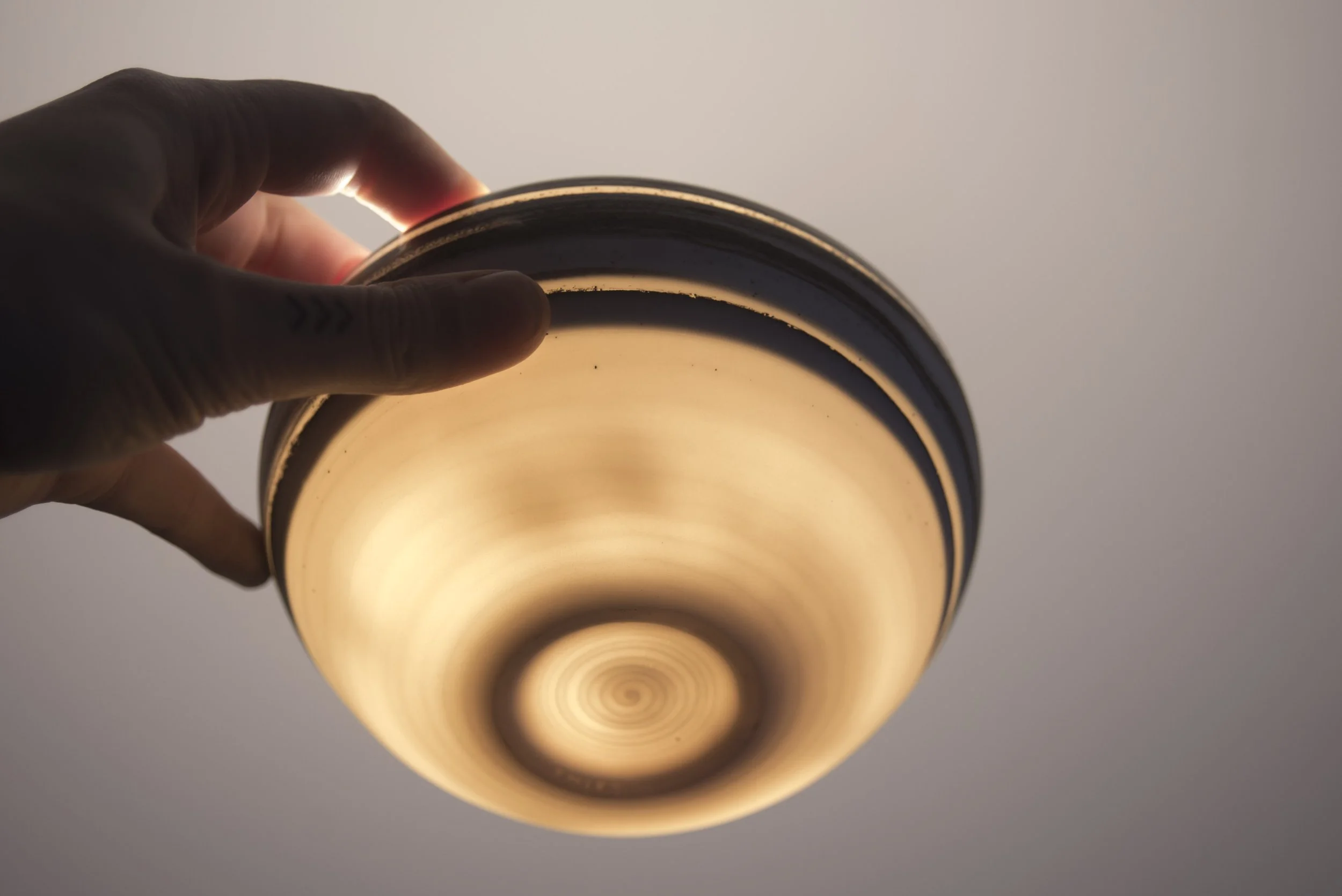
Trapped gases
Small bubbles
Surface disruptions
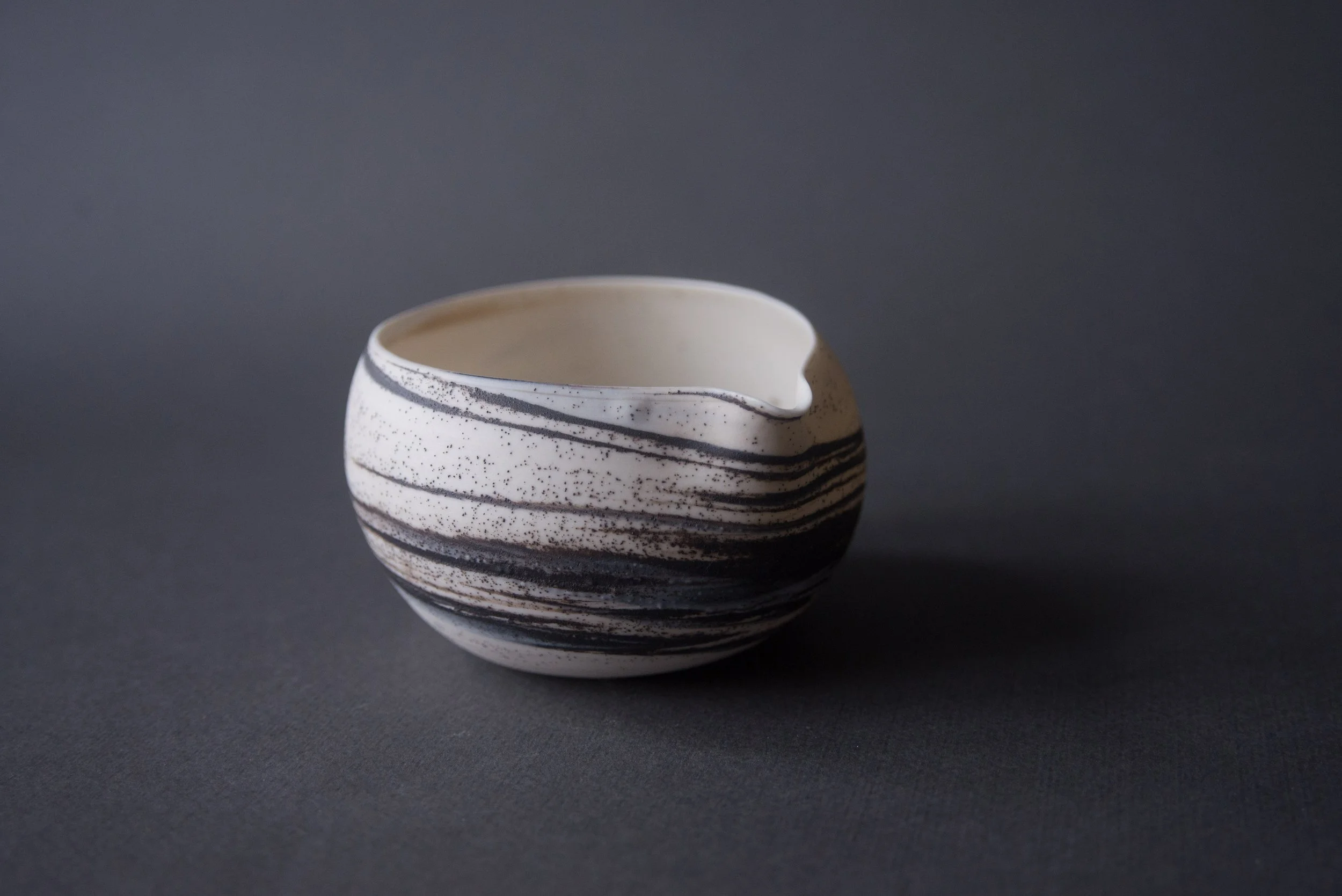
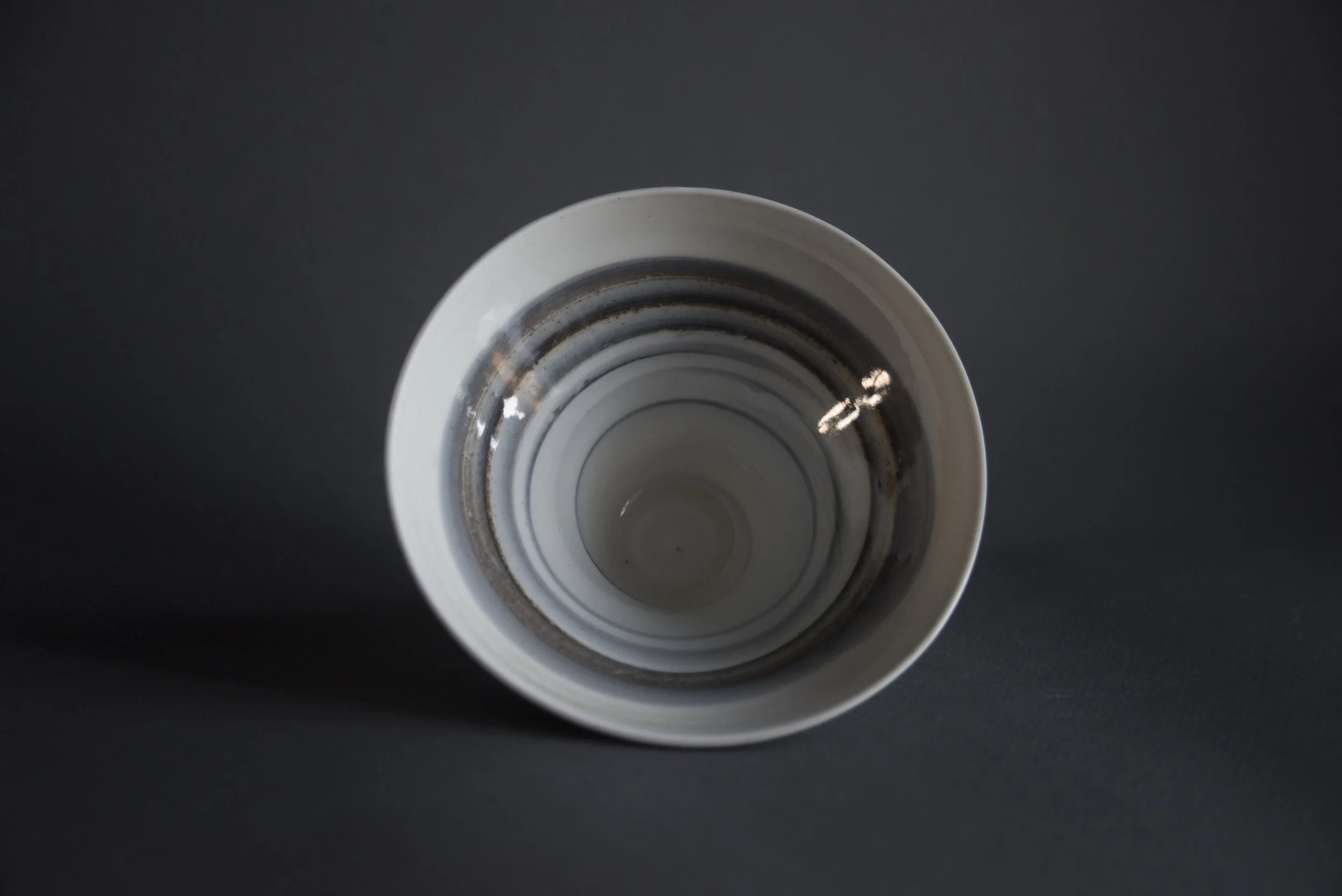
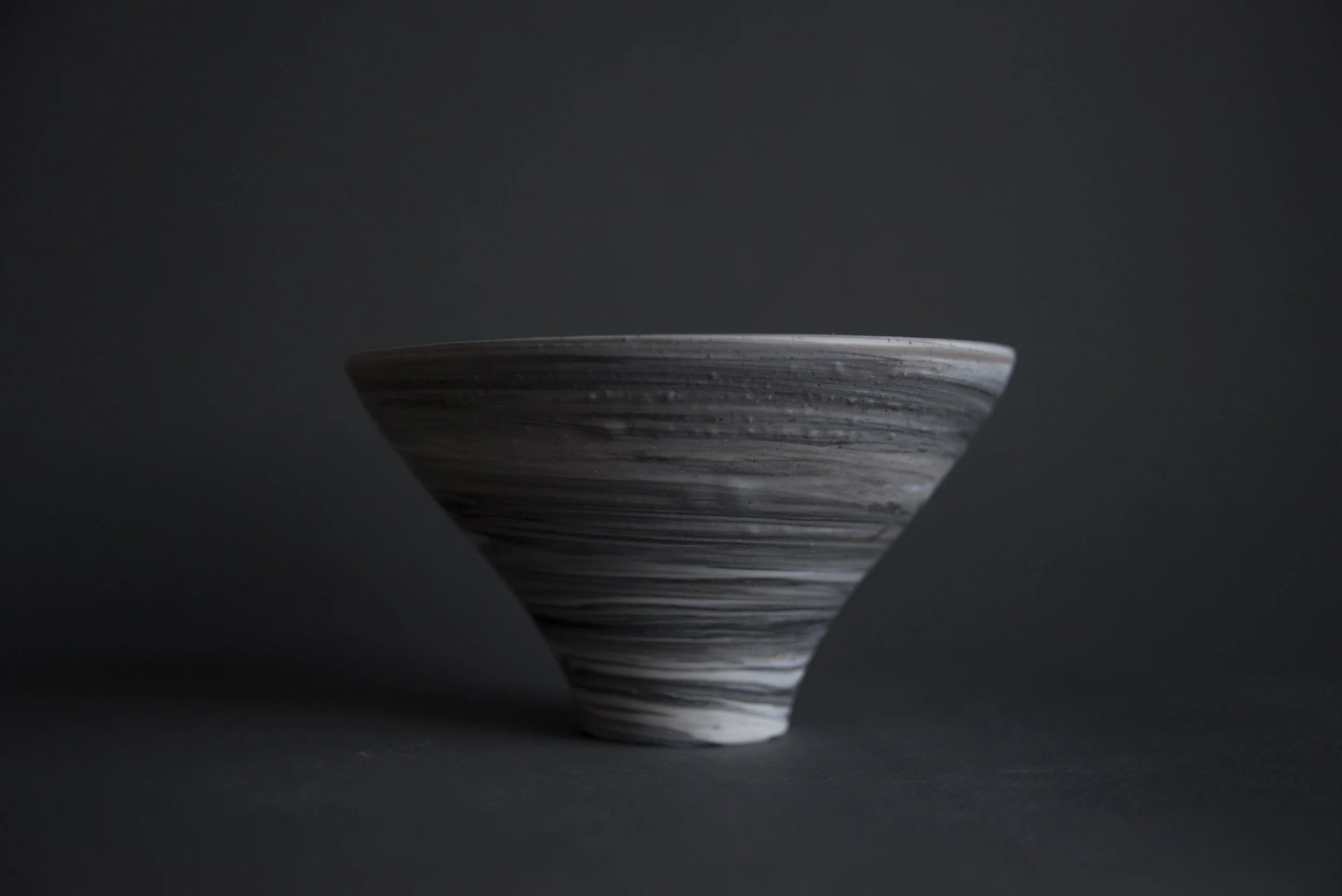
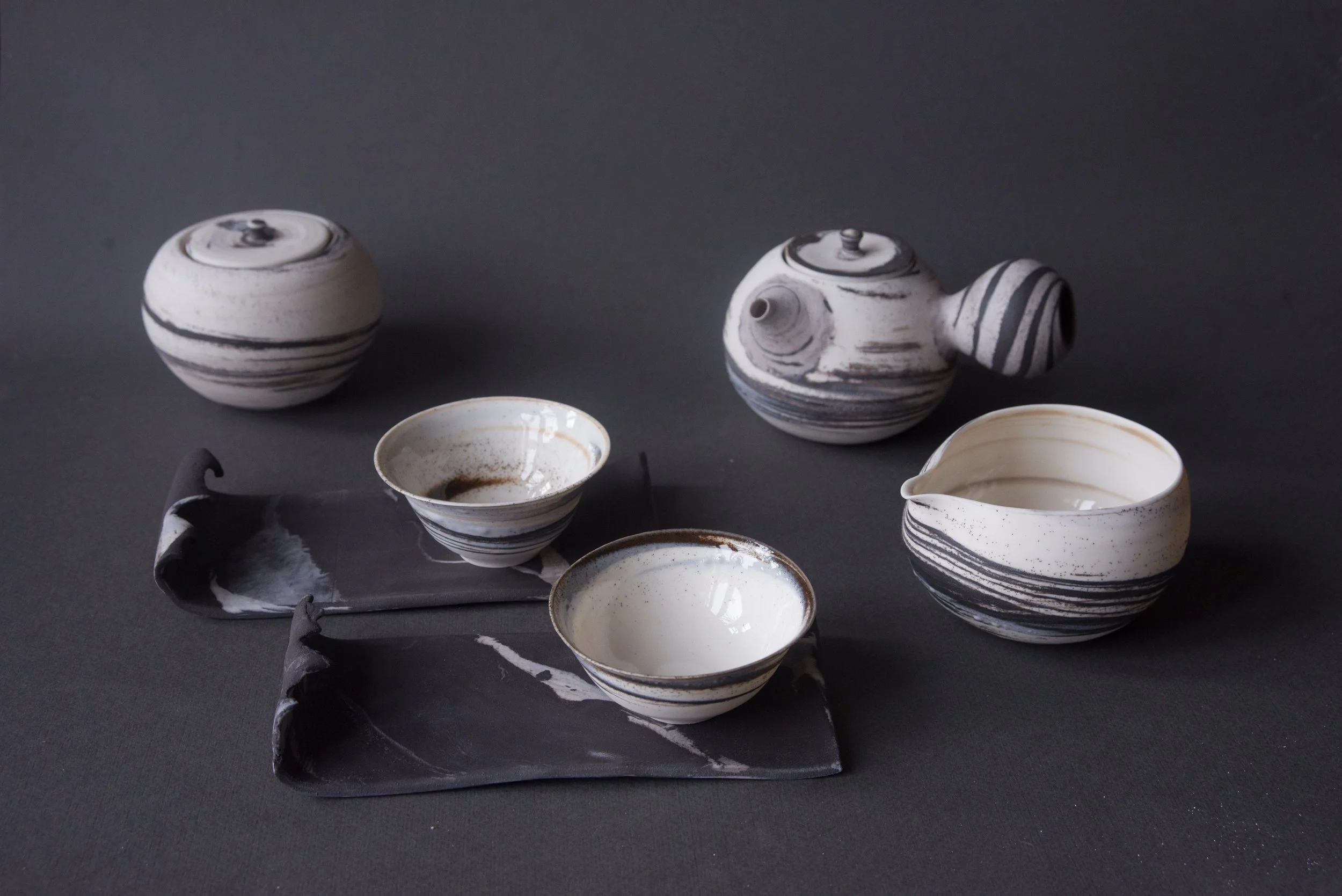
Pictured here - bubbly porcelain bowl- porcelain especially, tends to be less forgiving with not releasing trapped gas from darker bodies.
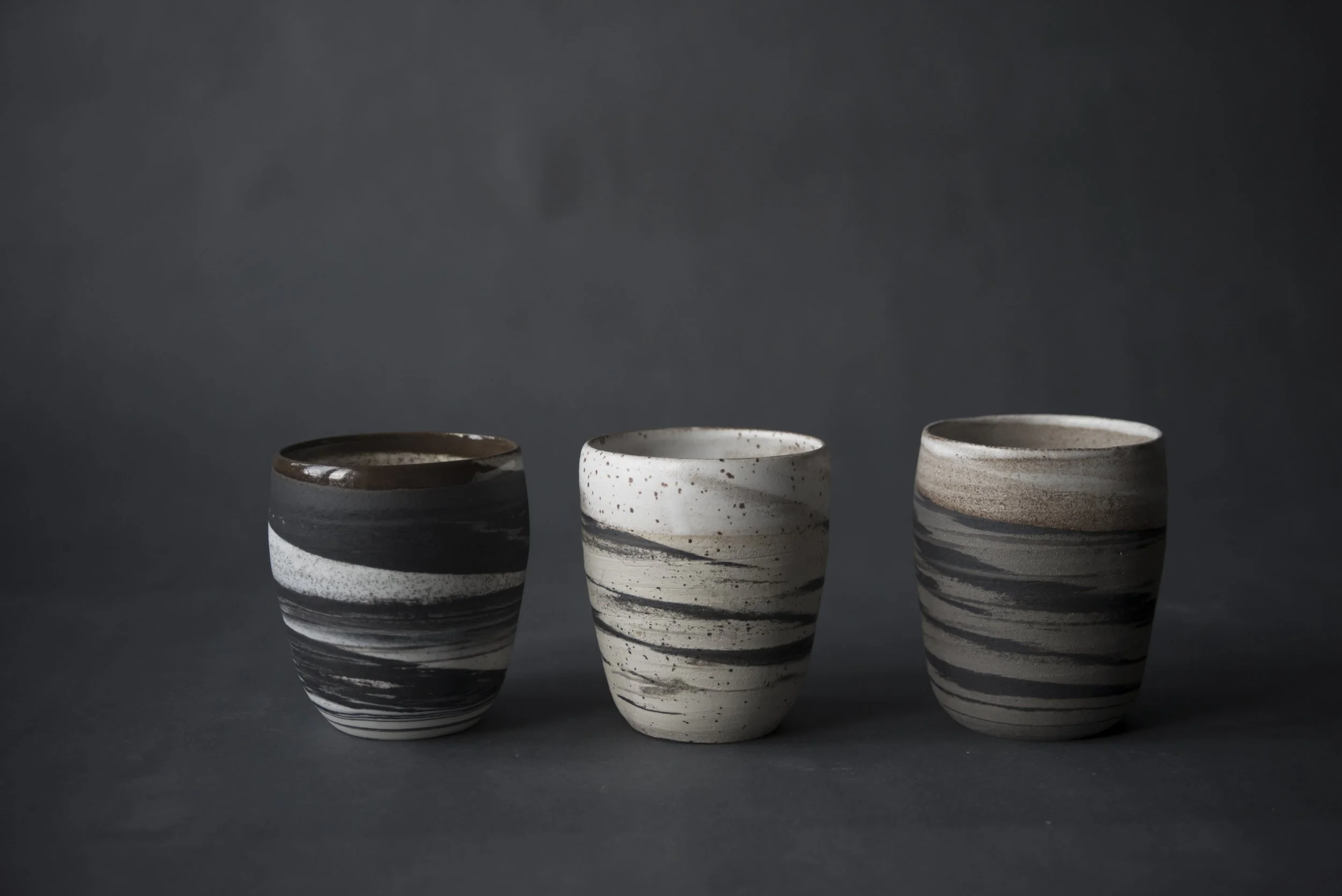
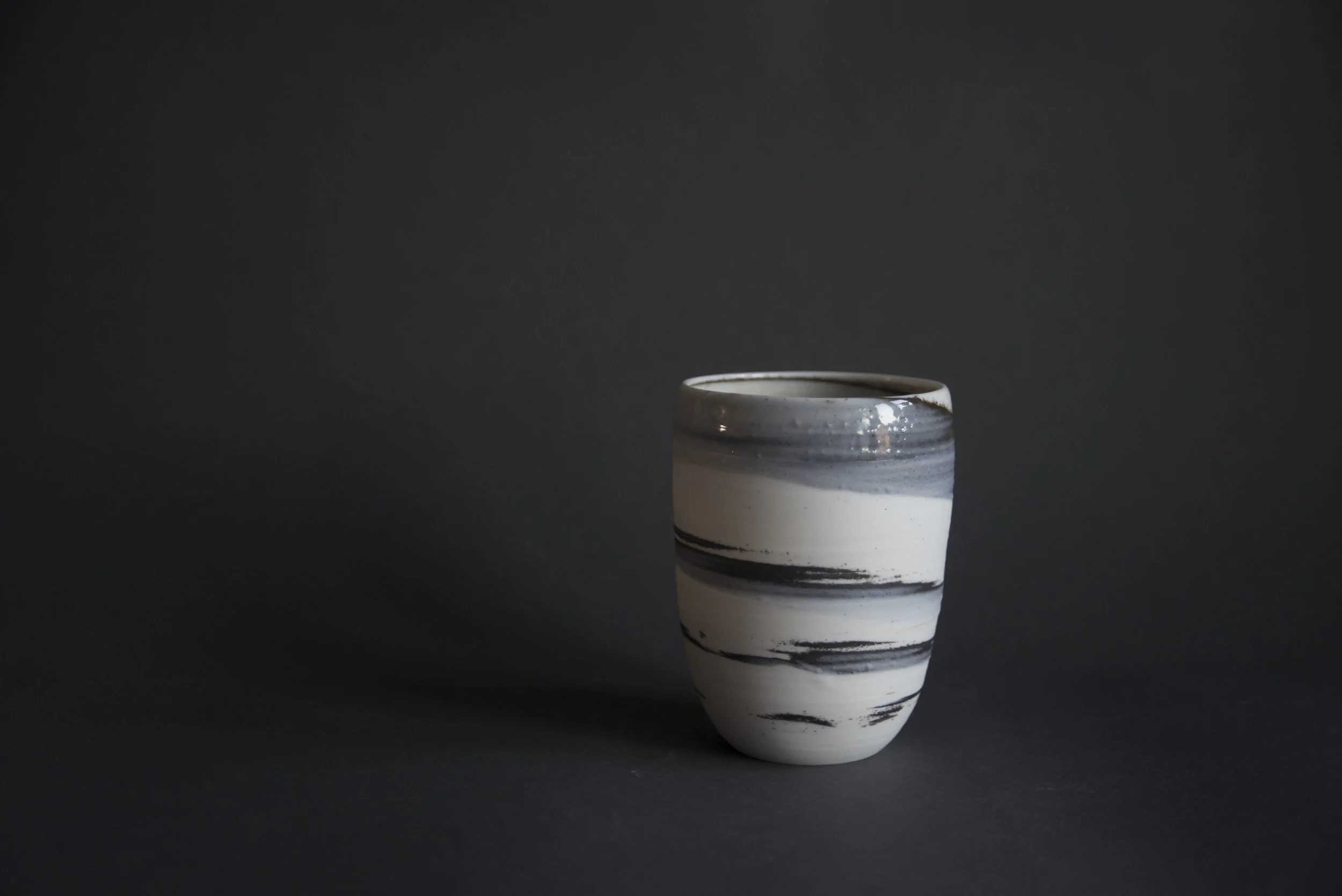
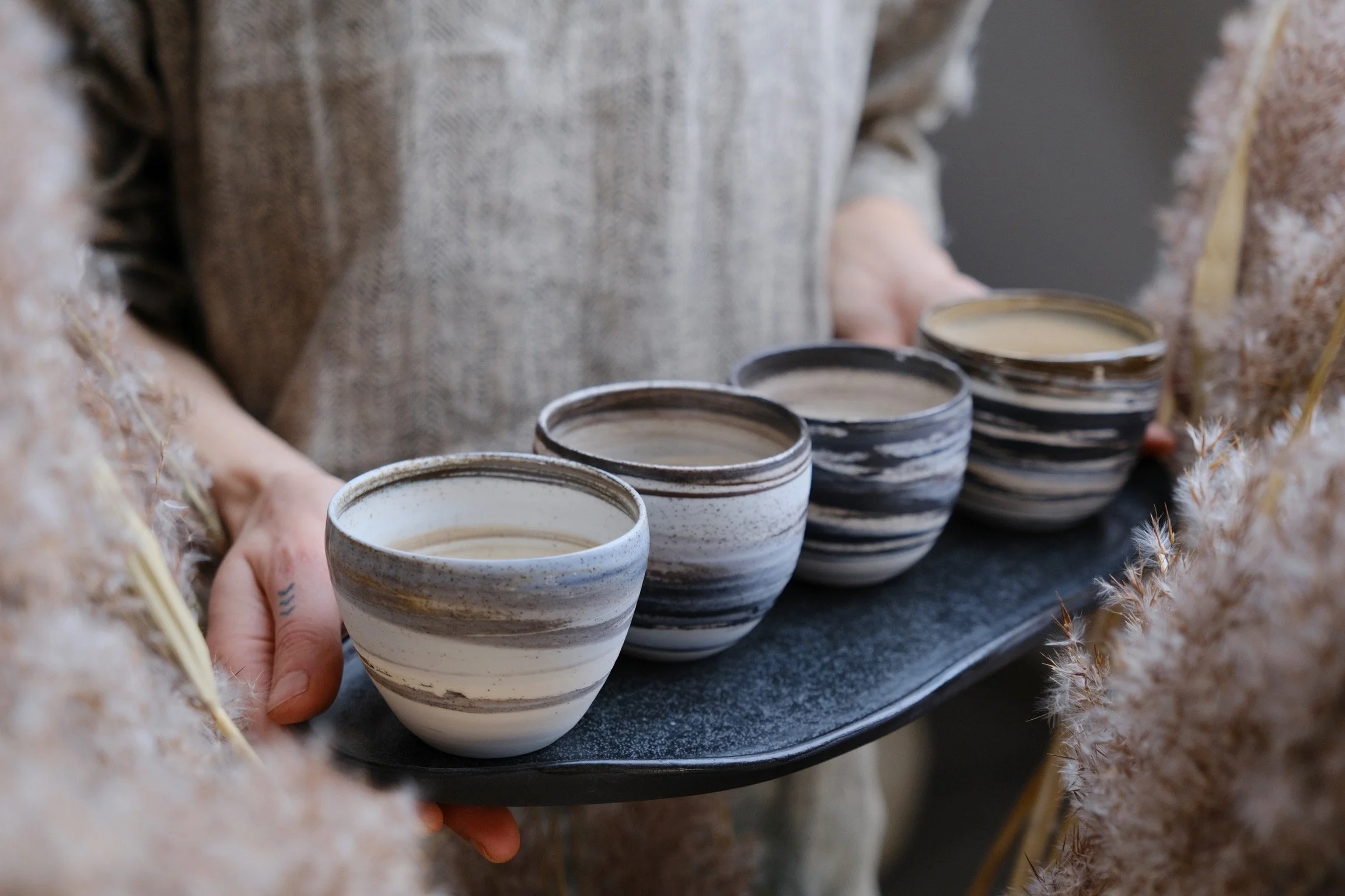
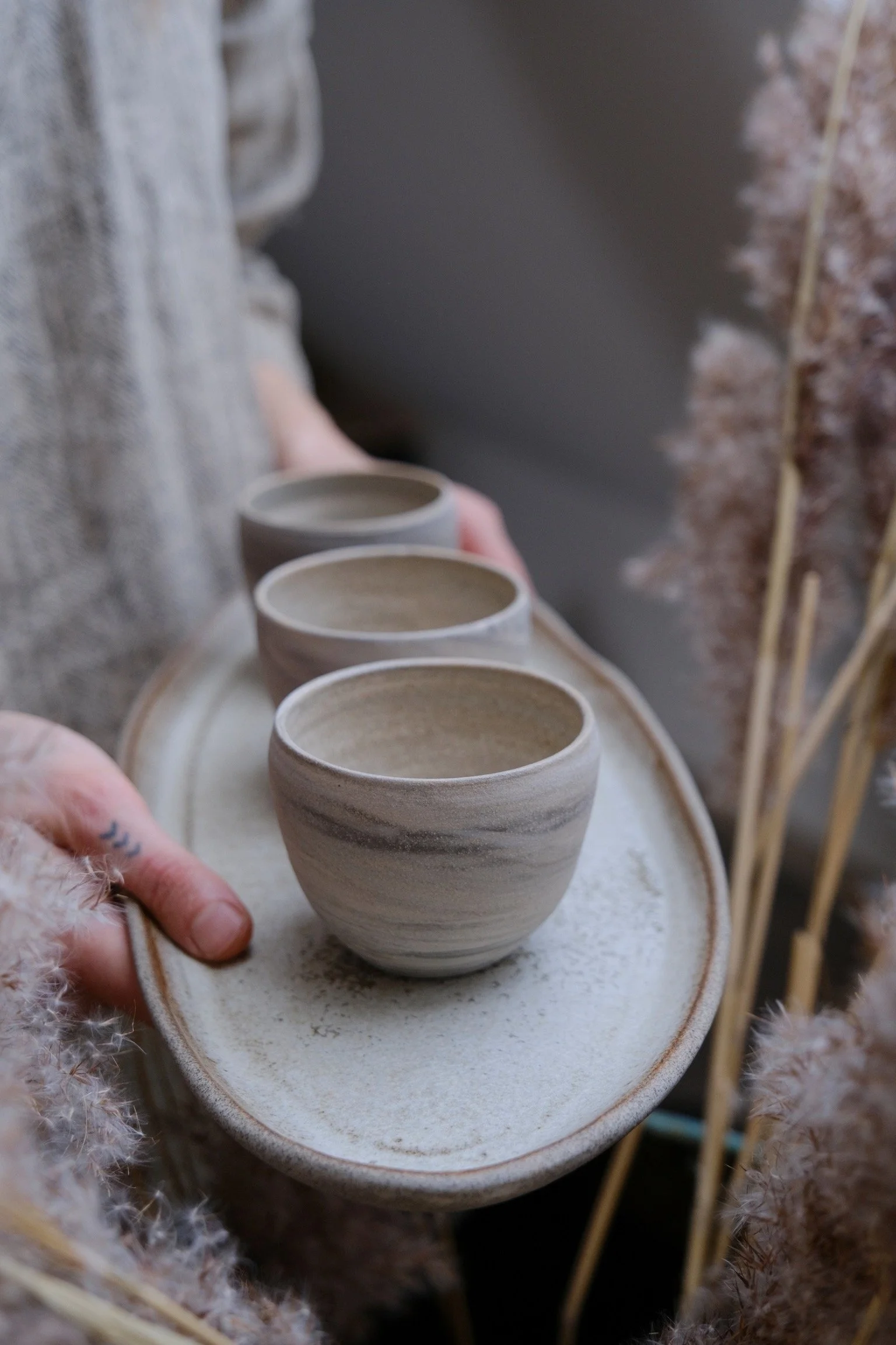
Three cups, three conversations
Here are three simple examples:
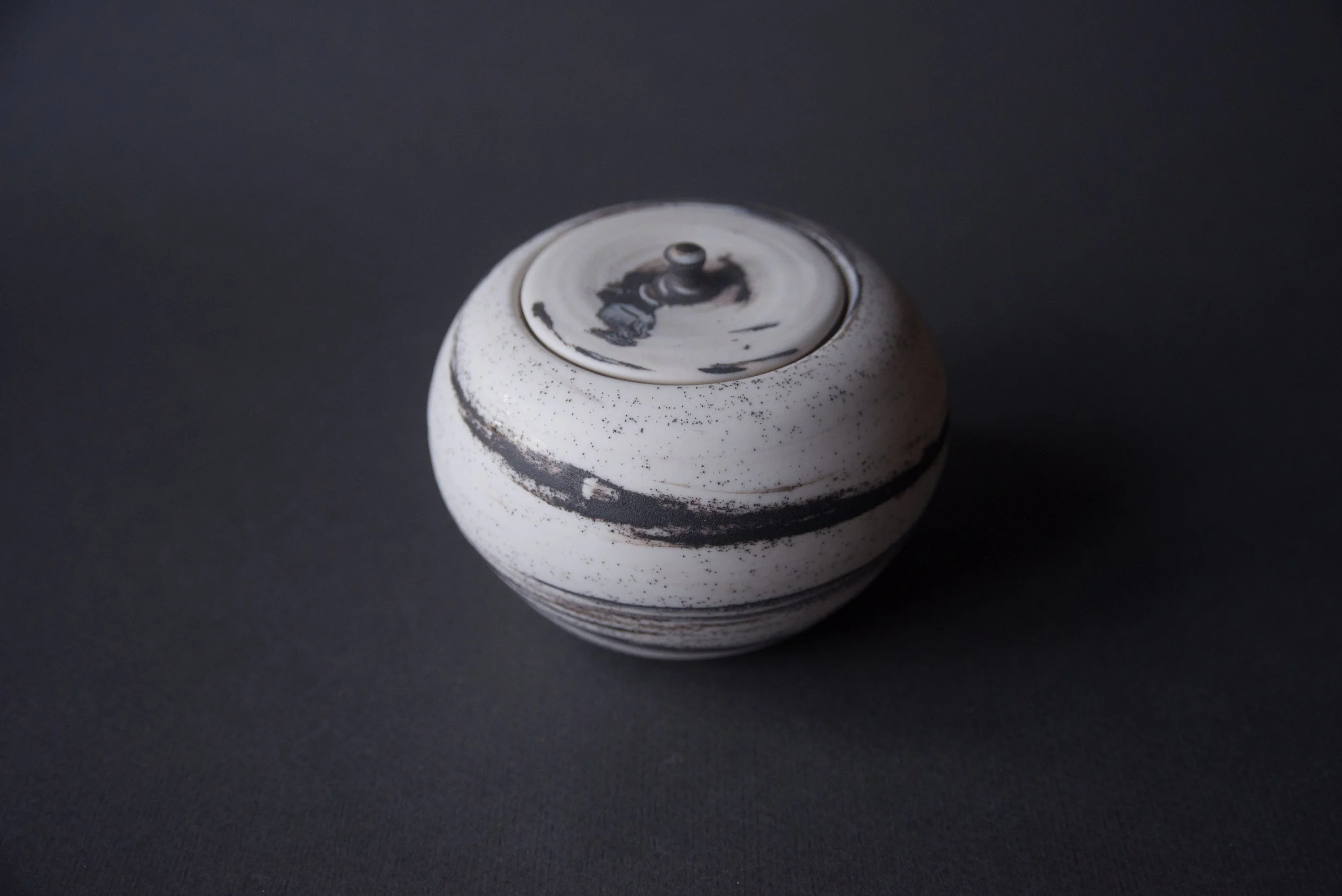
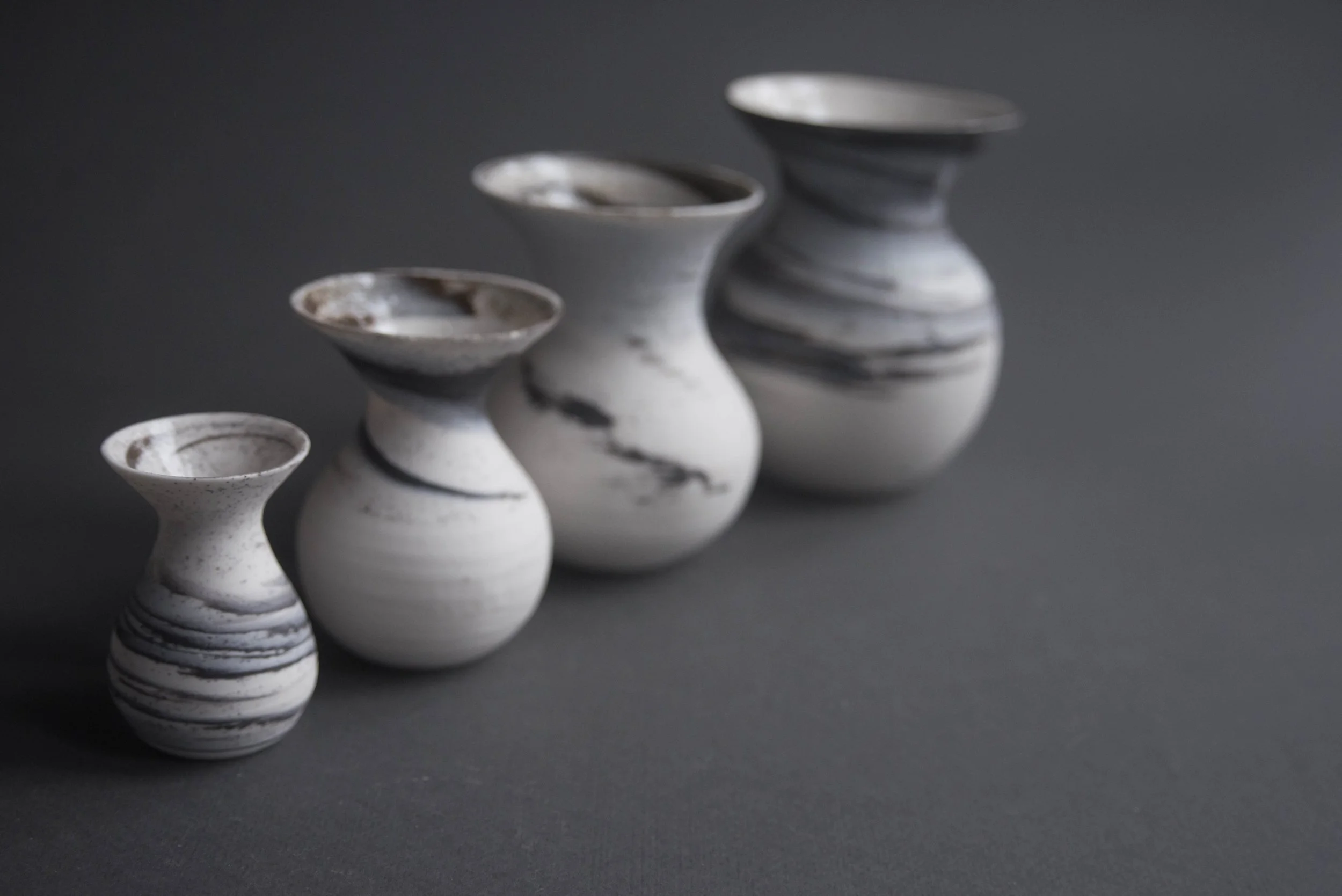
Porcelain with black stoneware → high contrast, graphic lines
Speckled white with black → softer, more organic movement
Anthracite grey with black → quiet, tonal variation
Same idea — different feeling.
A simple workaround from the studio
Instead of fully mixing the clays throughout, I approach it more like layering.
Start with pure porcelain
Add small blobs of black clay on top
Then center and shape on the wheel
This way:
→ The darker clay stays closer to the surface
→ The pattern becomes more striped / directional
→ And most importantly — fewer issues with trapped gases
Stoneware + stoneware
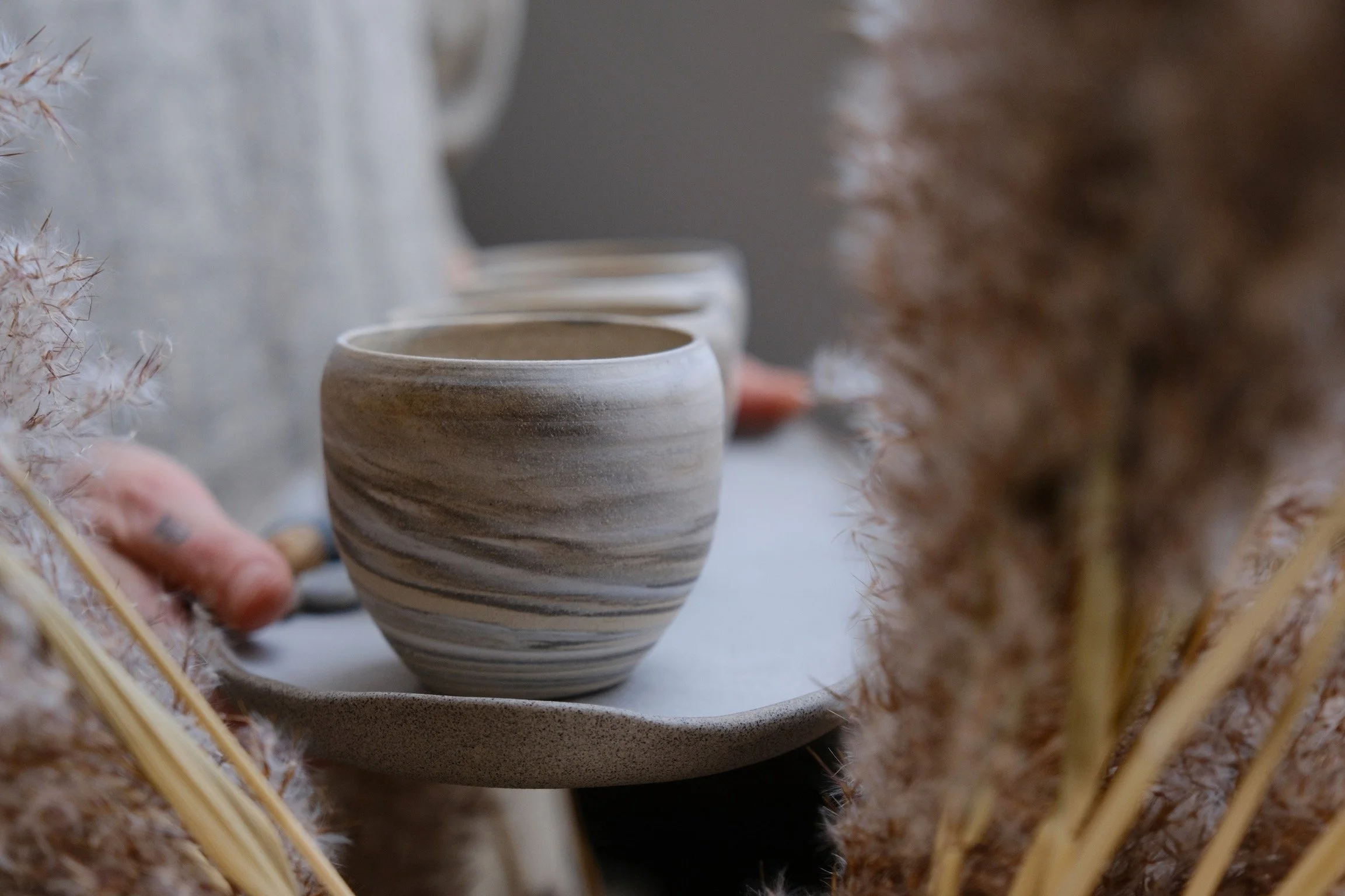
When working with different stoneware bodies, things tend to be more forgiving.
Similar shrinkage
Similar behavior in the kiln
Less risk of bubbling
So if you’re starting out, this is often the easiest place to explore.
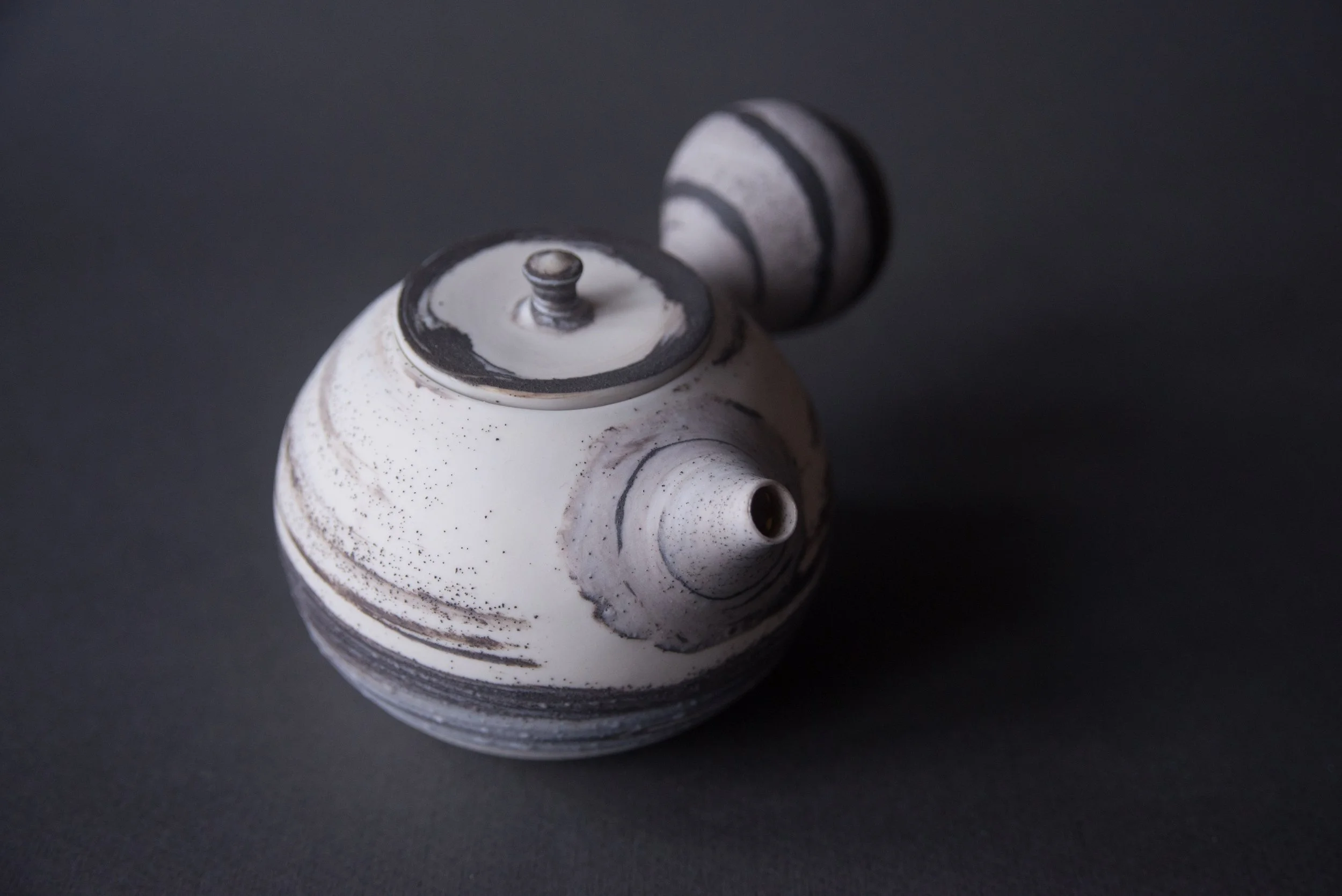
(Pictured white stoneware with small amount of anthracite grey SW and tiny amount of porcelain.)
The glazing dilemma
And then comes the next question:
How do you glaze marbled work without losing the pattern?
Because not all glazes will treat it kindly.
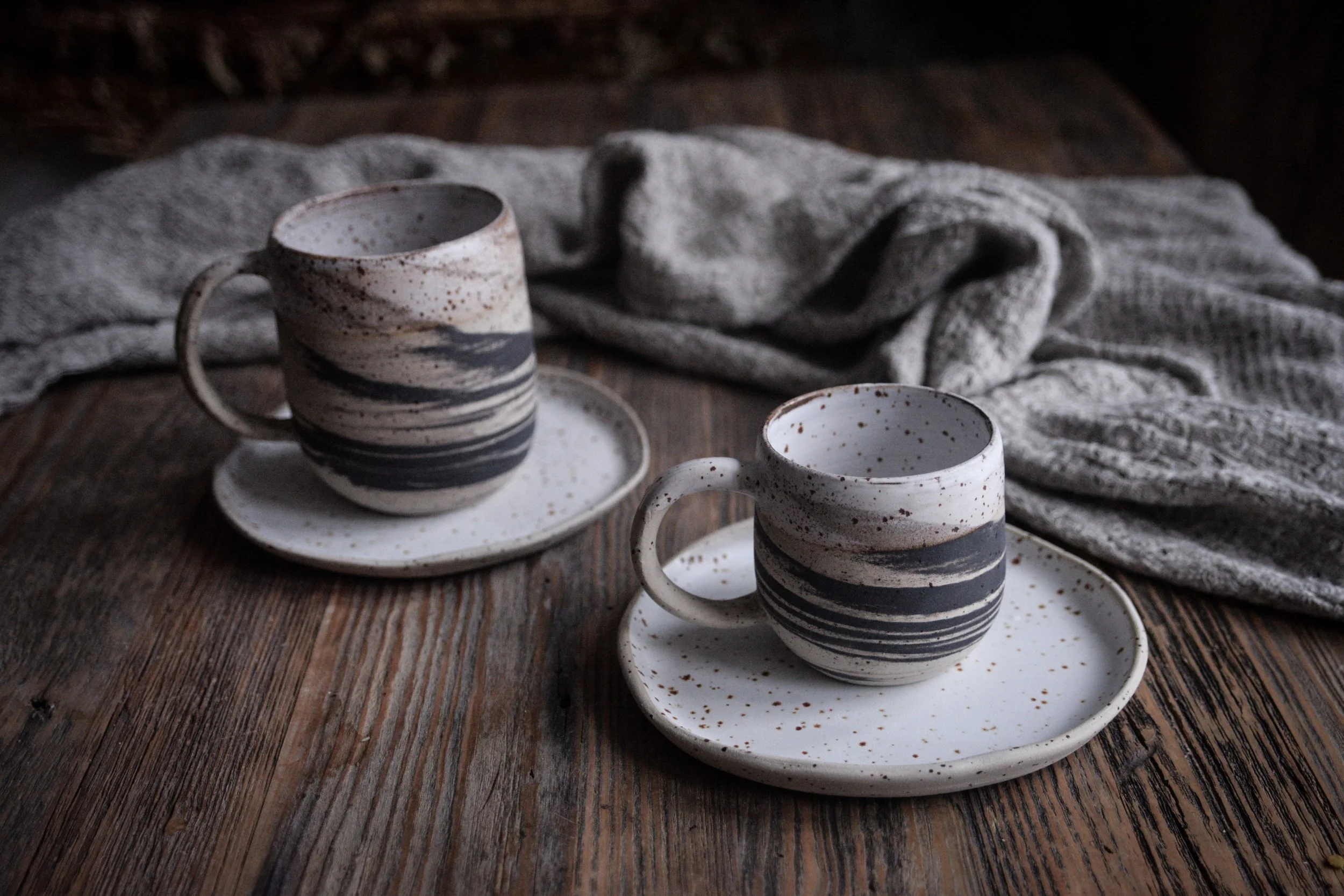
Matte glazes
Soften contrast
Blur detail
Sometimes almost hide the marbling entirely
Beautiful in their own right — but not if the pattern is the main story.
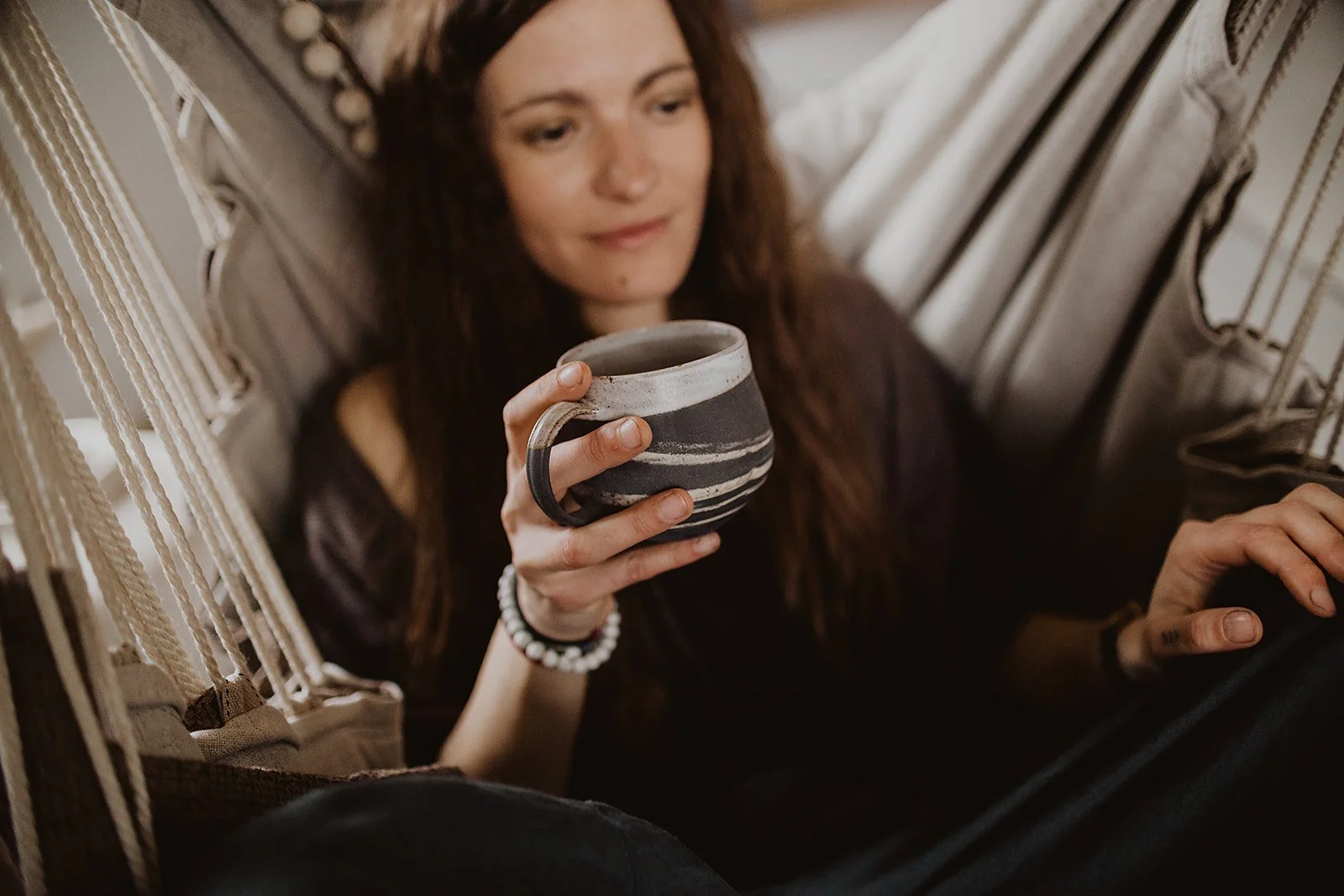
(Pictured: satin matte glaze. It softly covers the marbling inside, which I actually prefer. This isn’t a dry matte — it’s what we call a functional matte, with a smooth, cleanable surface where tea stains wash off easily.
You can find this glaze here: WHITE MATTE GLAZE. Find the recipe here.
Glossy / transparent glazes
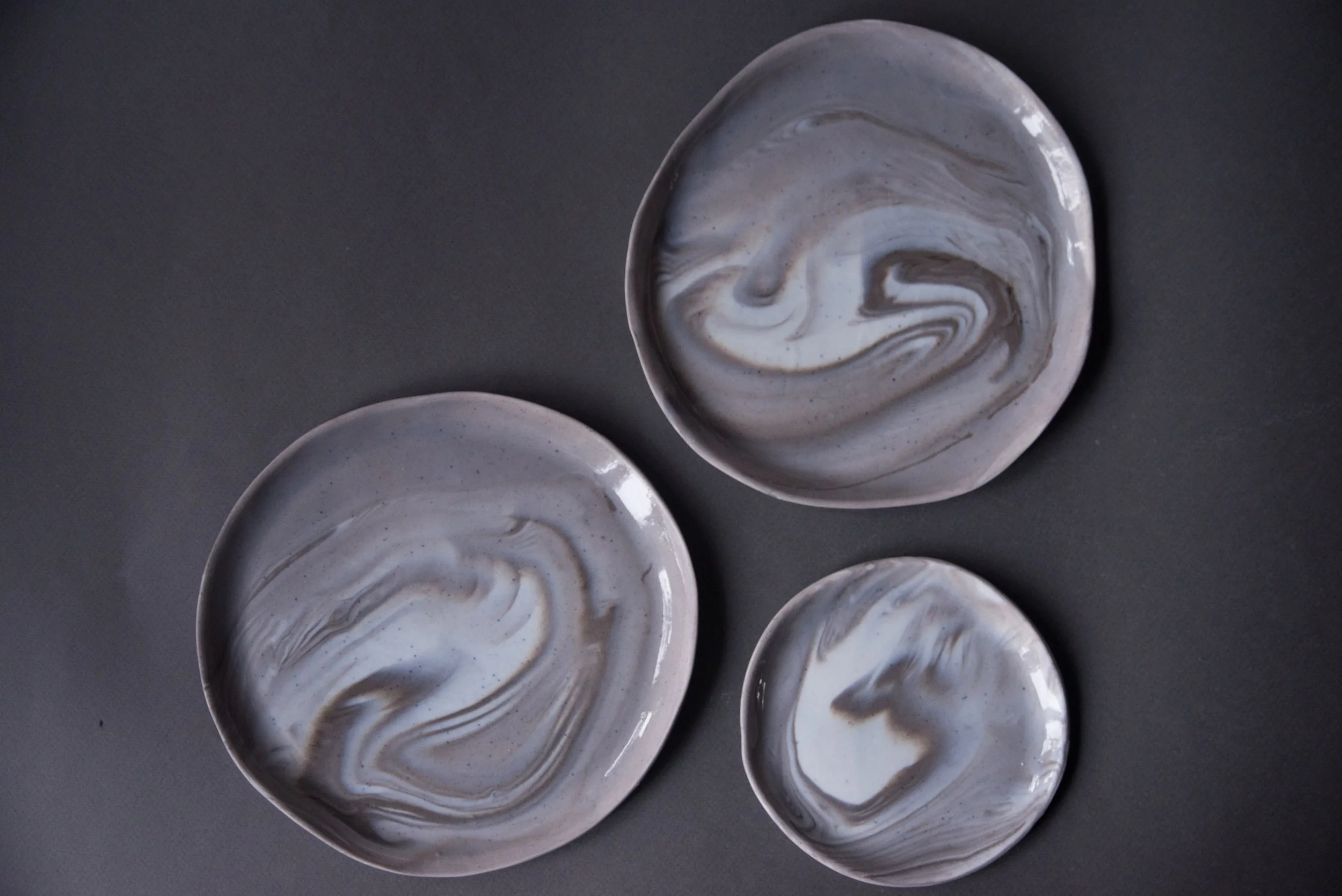
Enhance contrast
Keep lines crisp
Let the clay speak
This is usually the best choice
if you want to celebrate the marbling.
(And yes — small note from our previous discussion: “transparent” and “glossy” often go hand in hand, while matte tends to reduce clarity.)
Link to the glaze pictured: https://www.laimaceramics.com/glazes/p/always-perfect.
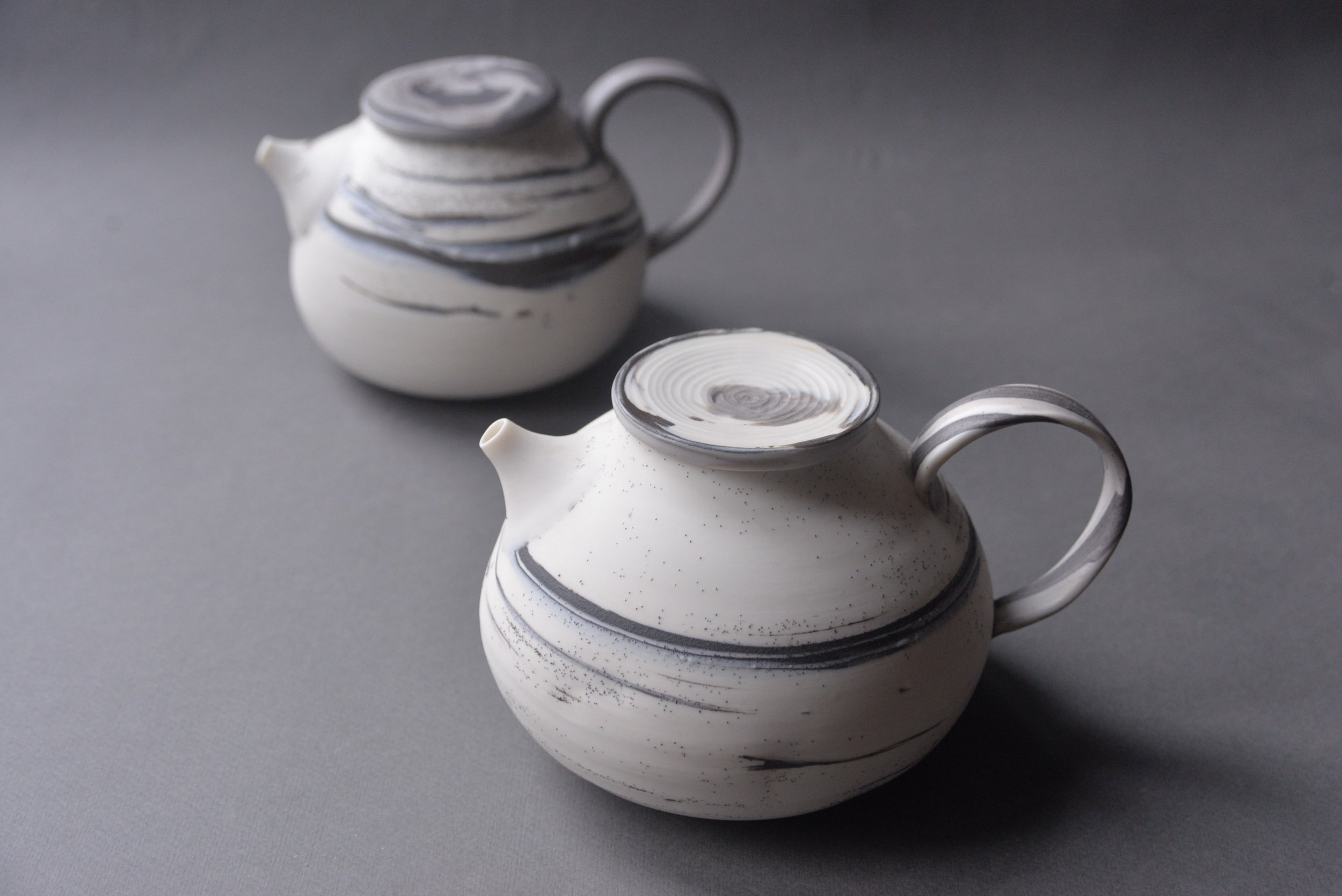
What about unglazed surfaces?
If you leave parts unglazed (which can be very beautiful with marbling),
there is one practical consideration:
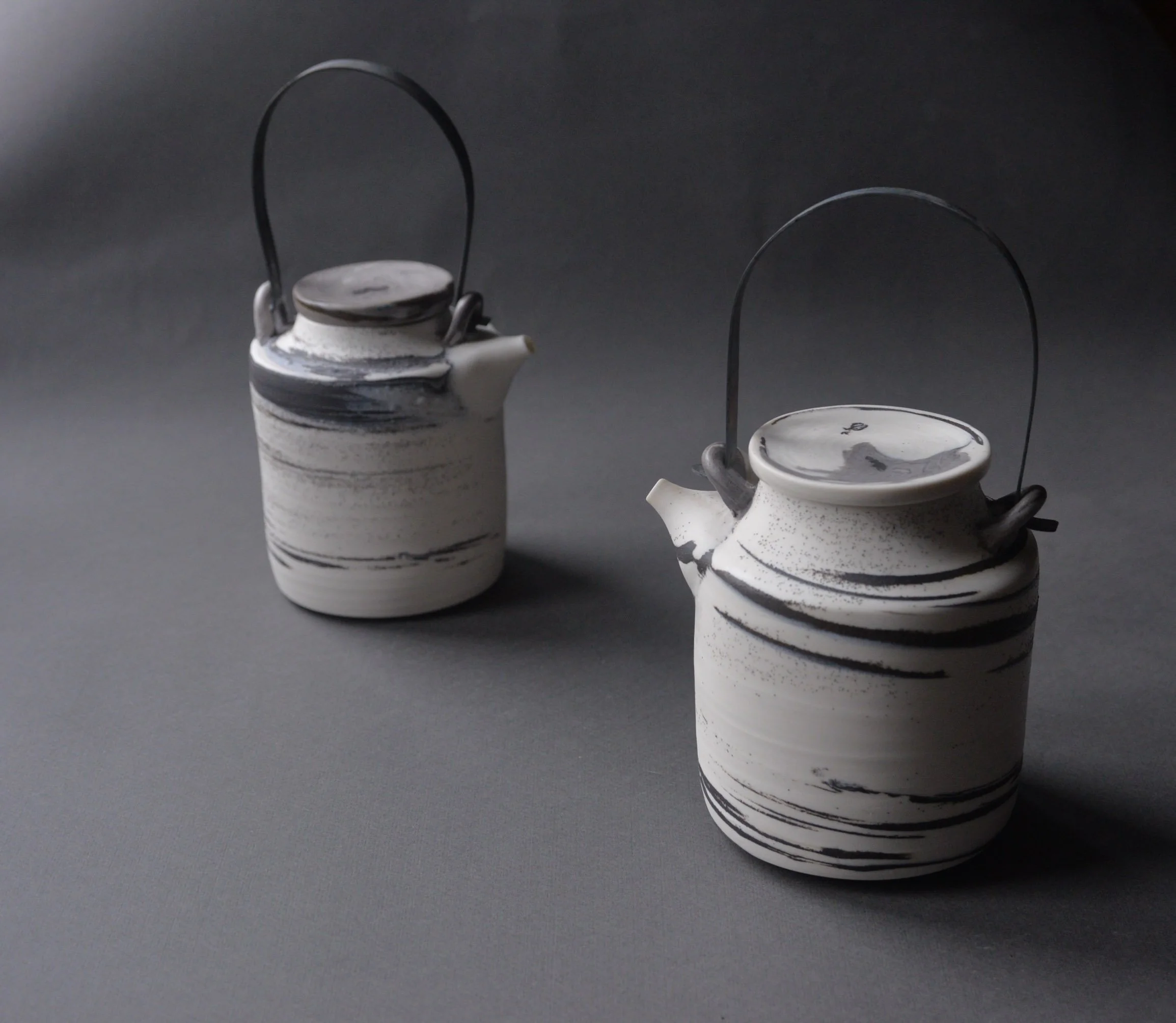
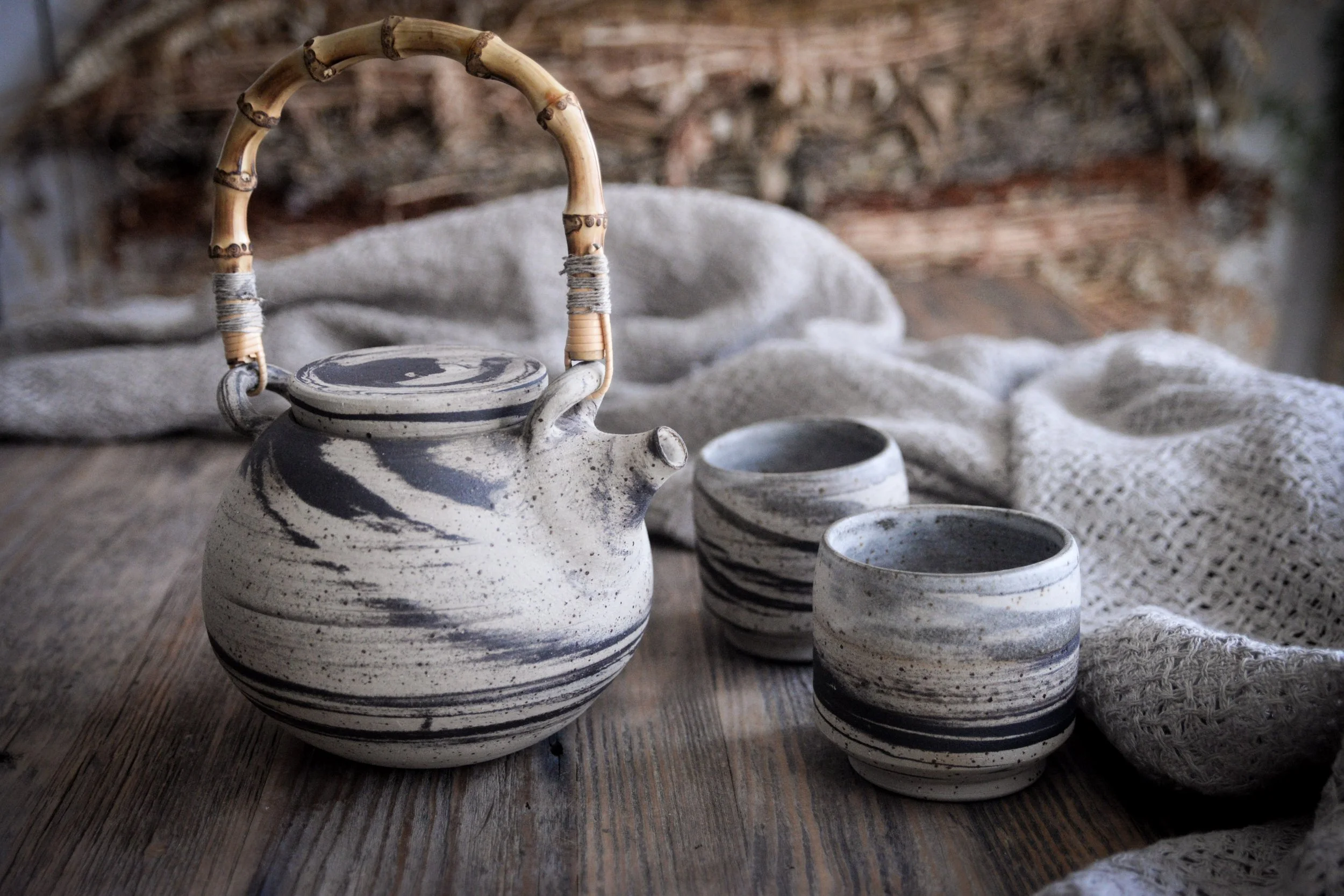
Over time, the surface can absorb oils and stains. like the teapot pictured would certainly stain with tea, but glaze would make it glossy or matte glaze would cover the pattern.
In the studio, we LOVE to use a ceramic sealer for this:
Liquid Quartz™ — a food-safe, invisible sealer that protects porous ceramic without changing its appearance.
You can read how we use Liquid Quartz and where we get it here.