Fire, smoke, and the quiet imprint of the horse
There are many ways to finish a ceramic surface.
Some are controlled, repeatable, refined.
And then there are processes like this —
where you step back, allow unpredictability in,
and let fire and material complete the work.
Horse hair raku is one of those.
What is horse hair raku?
Horse hair raku is a low-temperature alternative firing technique.
The process is simple in structure, but never in result:
The piece is fired to around 900°C
Removed from the kiln while still glowing hot
Horse hair is placed directly onto the surface
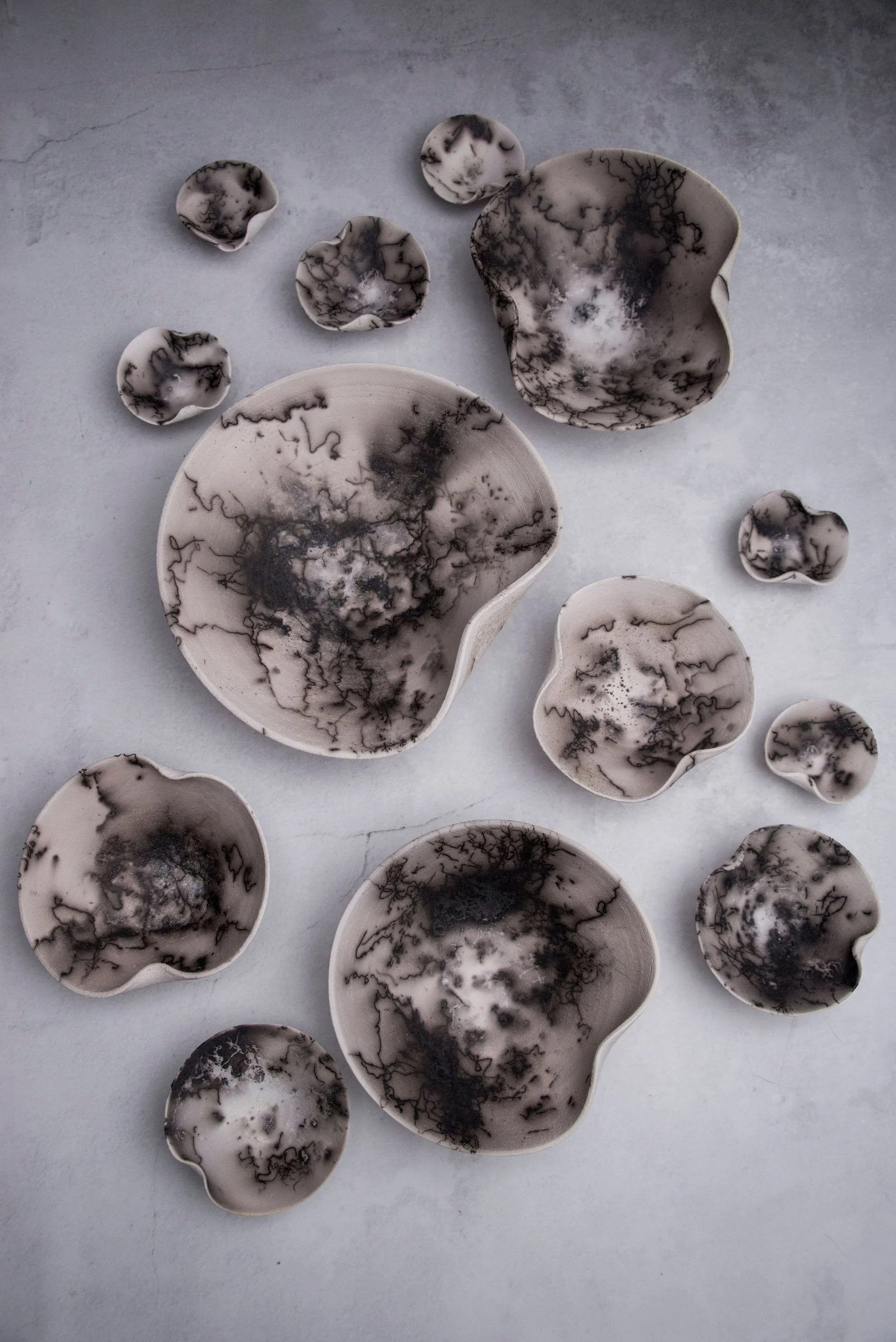
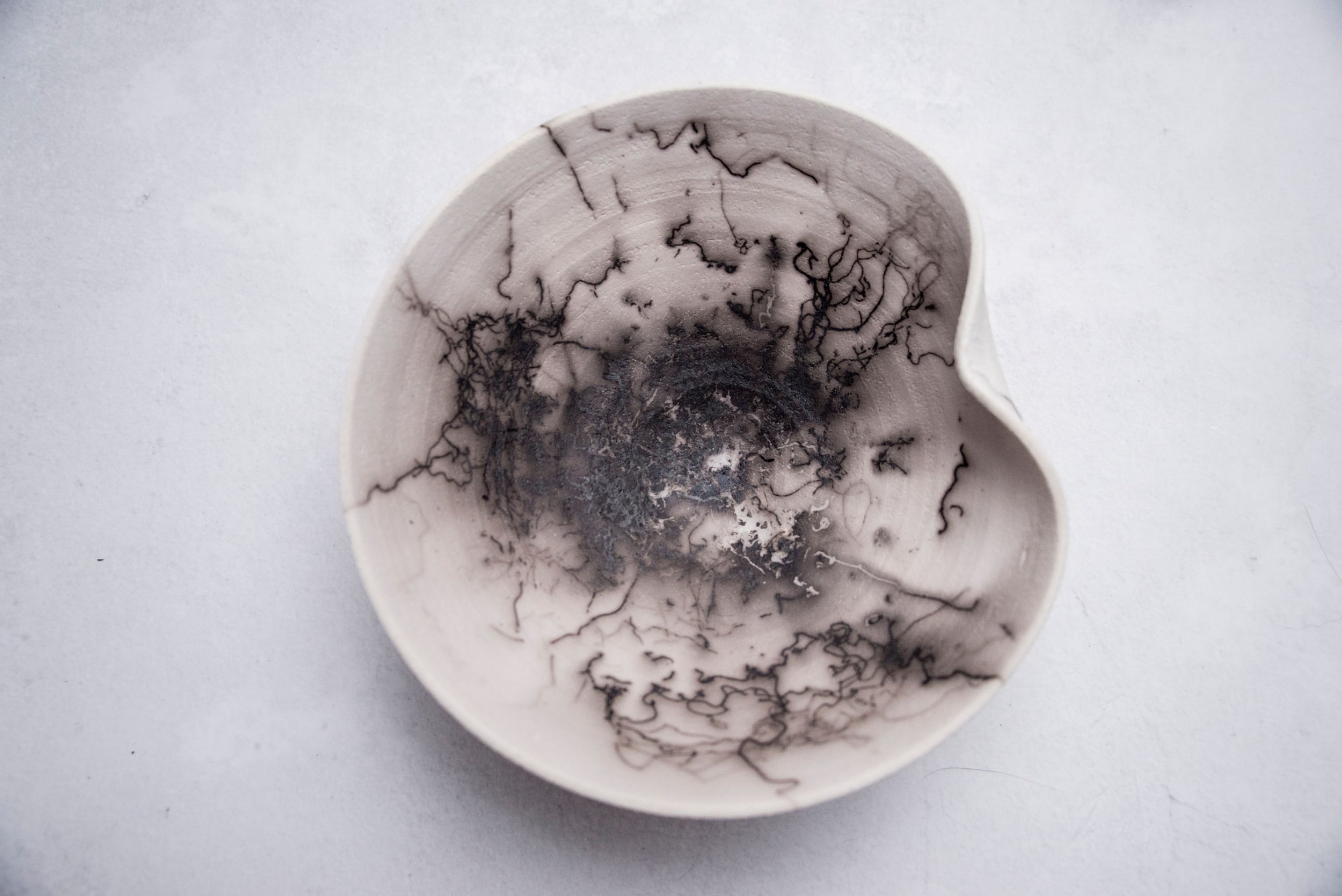
The hair instantly burns, leaving fine carbon lines
Smoke and flame create additional markings and tones
Each strand creates a single, unrepeatable gesture.
No two pieces will ever be the same.
We recommend Raku Body W 3005 K129 (Sibelco) for its flame-resistant qualities.
The quiet origin of the material
In our case, the horse hair doesn’t come from a supplier.
It comes from our own daily rhythm.
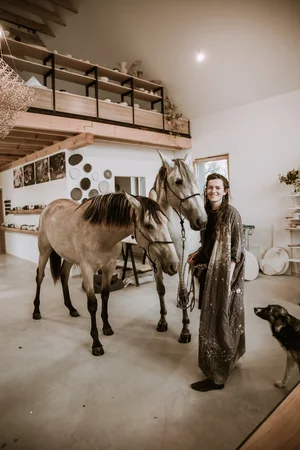
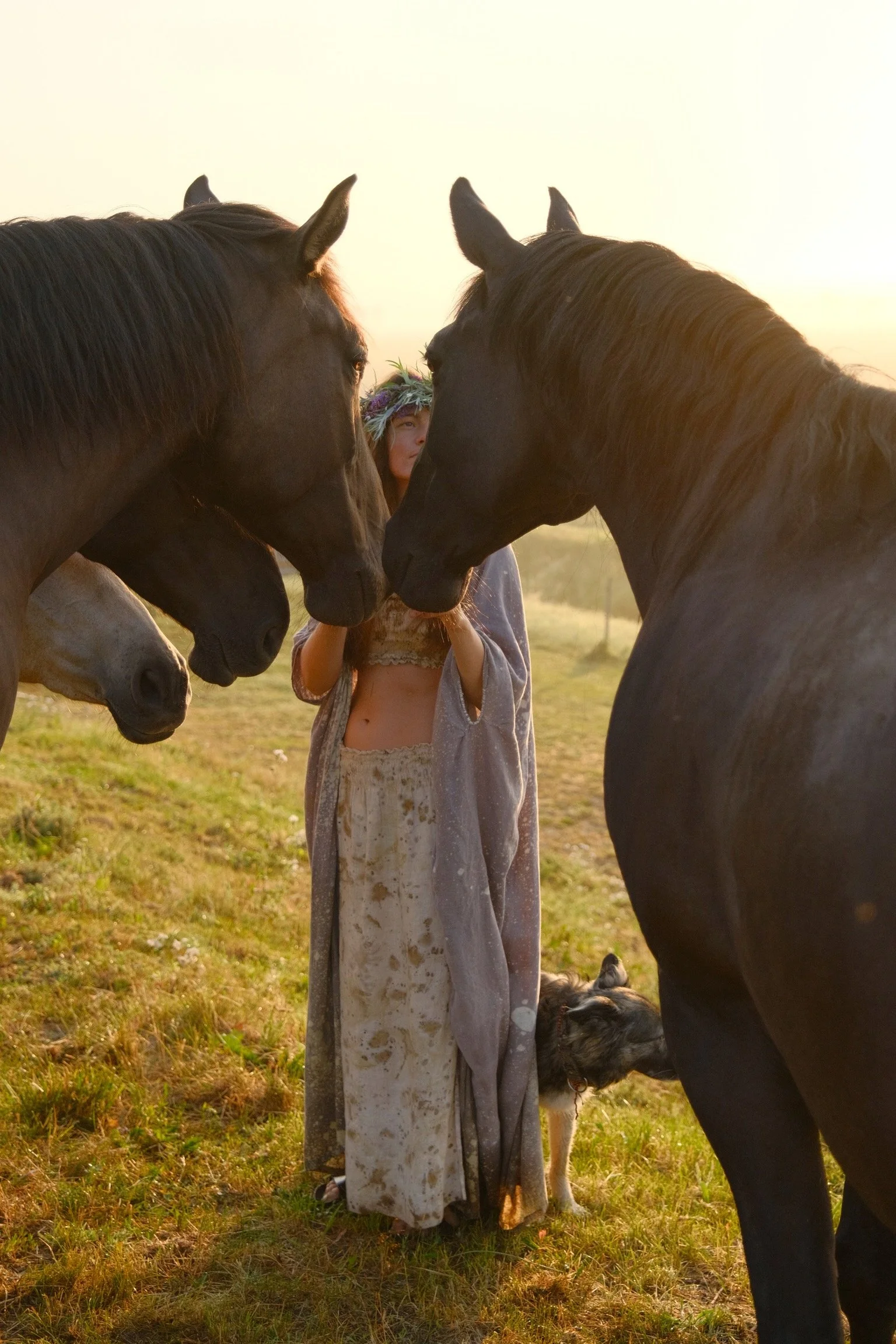
We have four horses, and over many months, the hair is collected slowly — simply through brushing:
From the mane
From the tail
A few strands at a time
Just gathered as part of care. And in a way, that feels important.
Because the final piece carries not only fire — but also time, relationship, and presence.
A technique for objects with intention
Like other low-temperature alternative firings, raku is primarily decorative.
These pieces are not intended for everyday use with food or drink.
But that doesn’t make them less functional — just functional in a different way.
In our studio, we love working at that edge between object and ritual.
Horse hair raku lends itself beautifully to:
Incense holders
Display bowls
Containers for wooden utensils
Tea storage jars
Objects that are used, but not in a purely utilitarian sense.
The moment of transformation
There is always a moment in this process that feels almost ceremonial.
The piece comes out glowing.
You place the hair.
It curls, disappears, leaves a trace.
Smoke rises.
And in seconds — it’s done.
What remains is a drawing made by heat, air, and carbon.
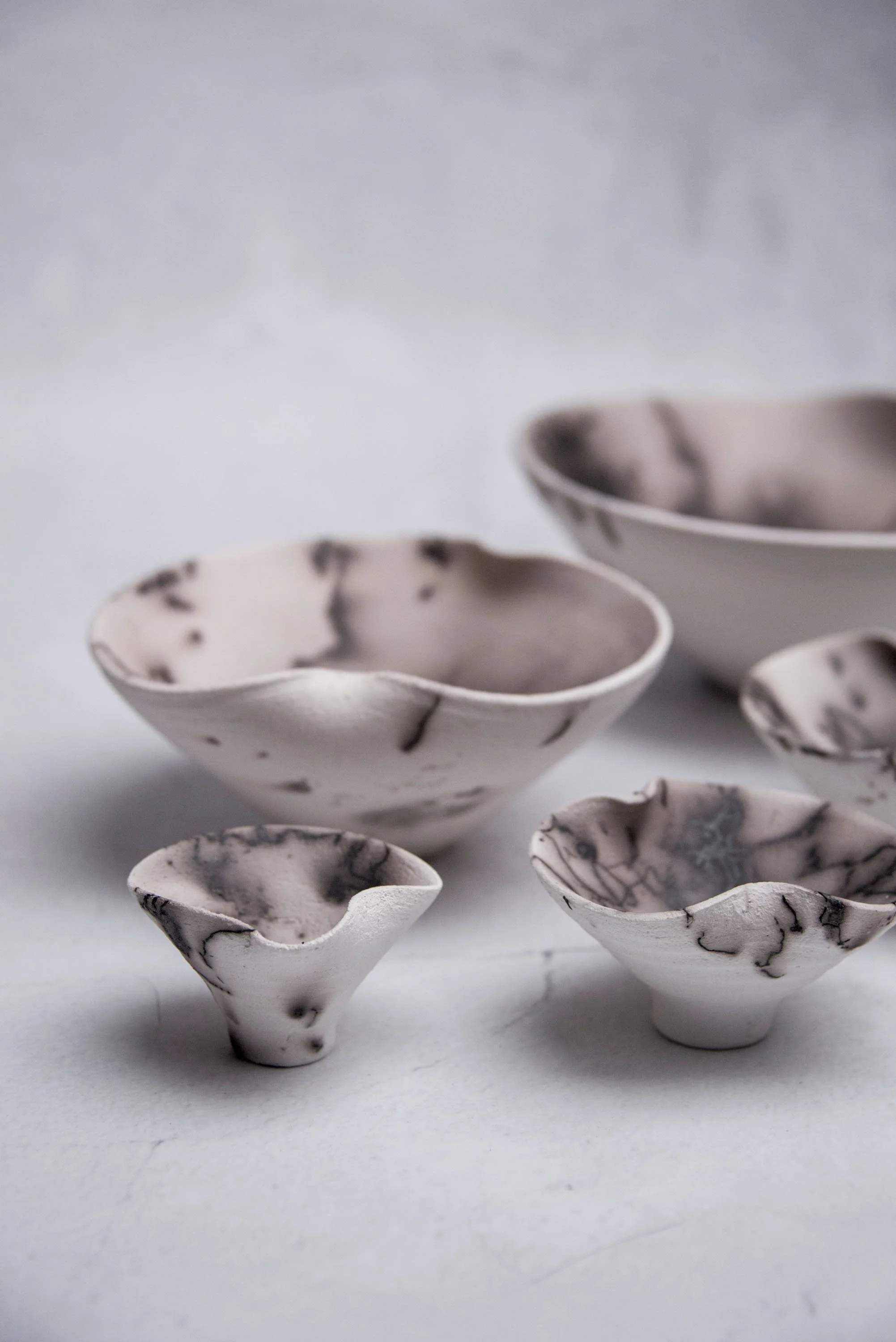
About the surface
The surface of horse hair raku is:
Porous
Sensitive
Markable
Over time, it can absorb oils, moisture, and stains.
Sealing the surface
To make these pieces more stable for long-term use, we use a ceramic sealer:
Liquid Quartz™ — a food-safe, invisible sealer that penetrates the surface without changing its appearance.
It helps protect against:
Moisture
Oils
Everyday handling marks
You can read how we use Liquid Quartz here.
Final thoughts
Horse hair raku sits somewhere between
ceramics and drawing.
Between control and surrender.
You prepare the form.
You choose the moment.
But the final mark —
is never fully yours.
And perhaps that’s why it feels so alive.