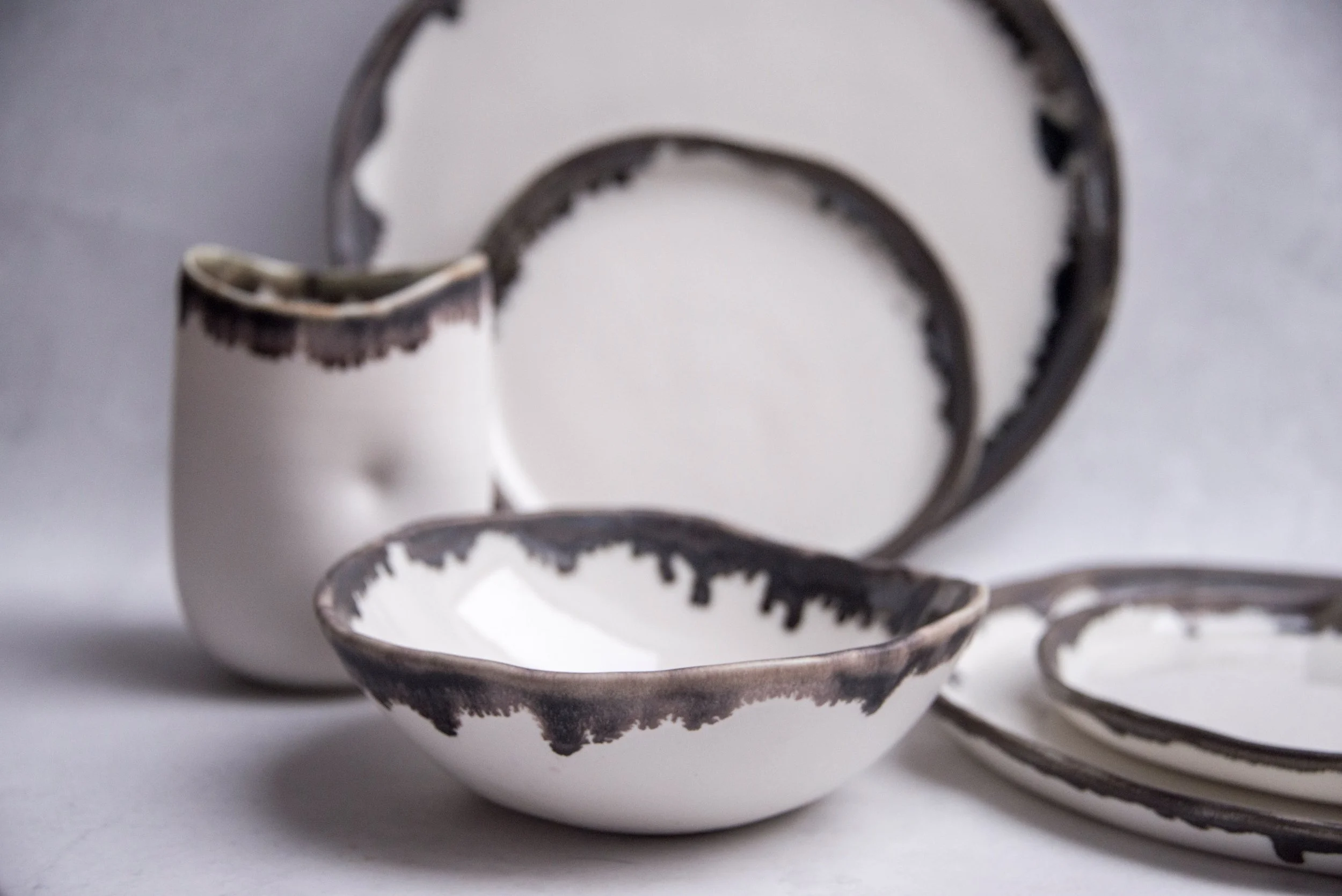
This collection is built on contrast:
Porcelain body
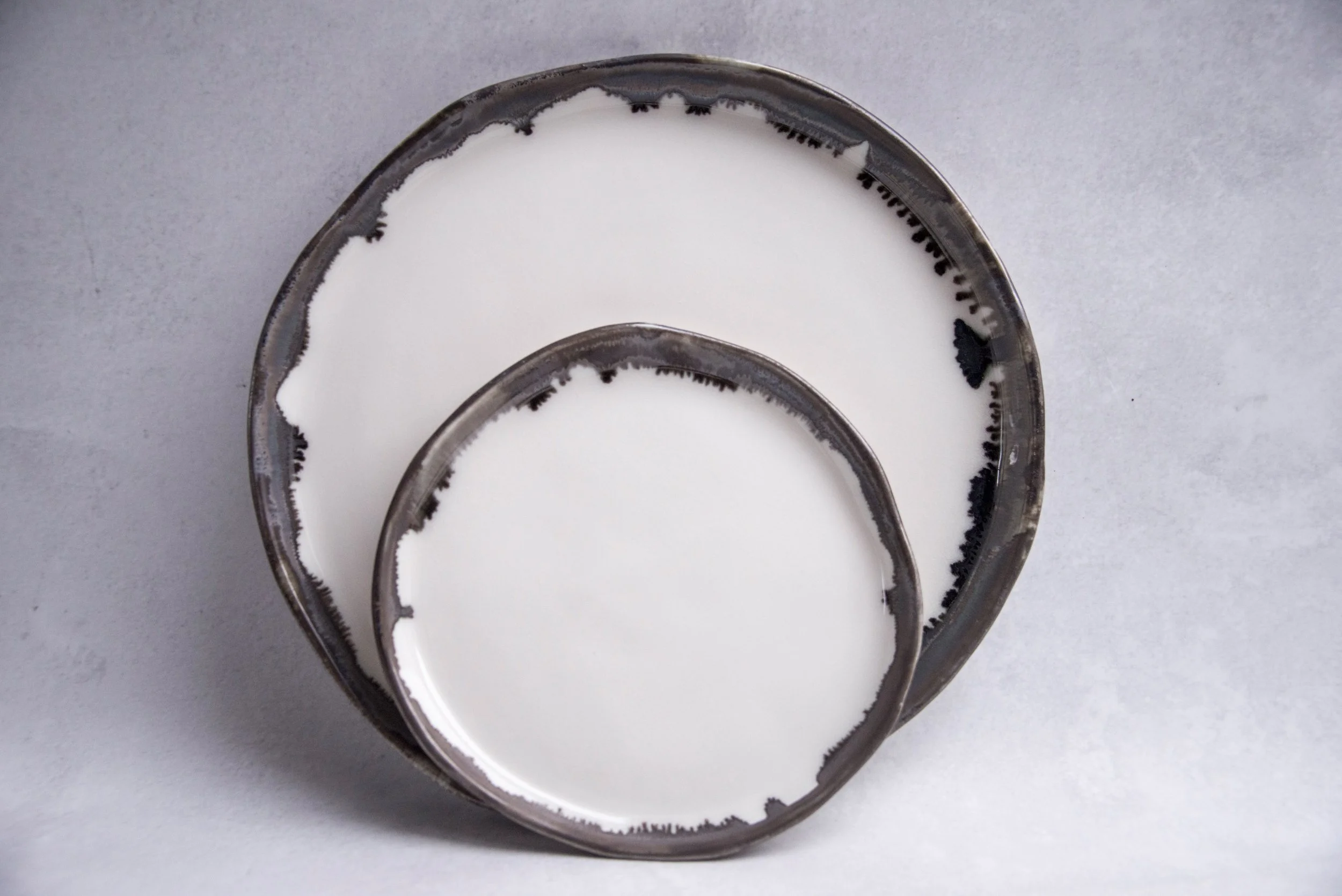
Satin white glaze on the outside
Glossy glaze on the inside
Finished with a flowing bronze rim
Simple elements —
but their interaction creates something much richer.
One glaze, two behaviours
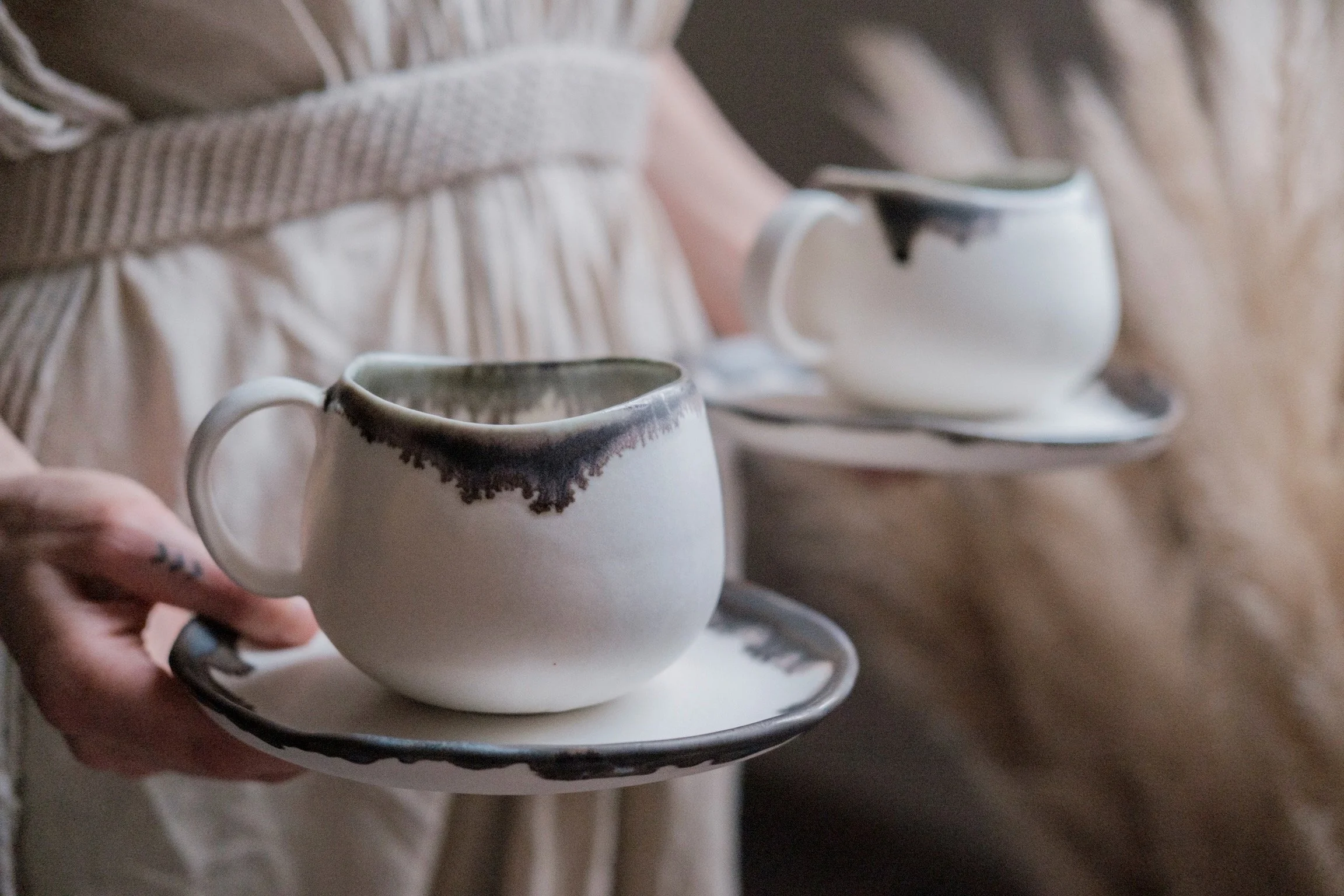
The bronze glaze responds differently depending on the surface it meets.
On the glossy interior:
It flows more freely
Becomes fluid, fracturing into tin branches
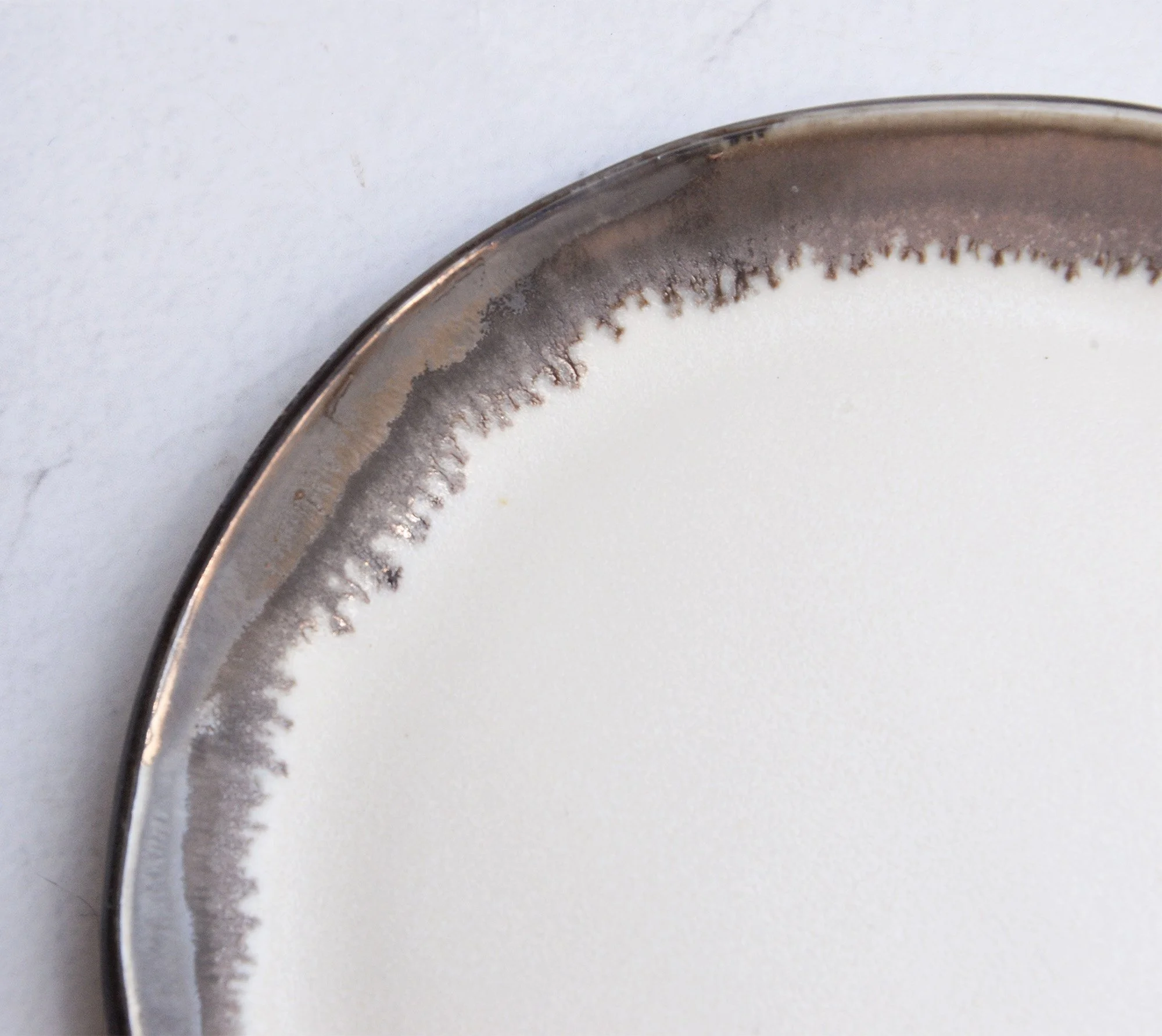
On the satin matte exterior:
It feathers out
Becomes more matte, not shiny
Same glaze. Different worlds.
Why this contrast matters
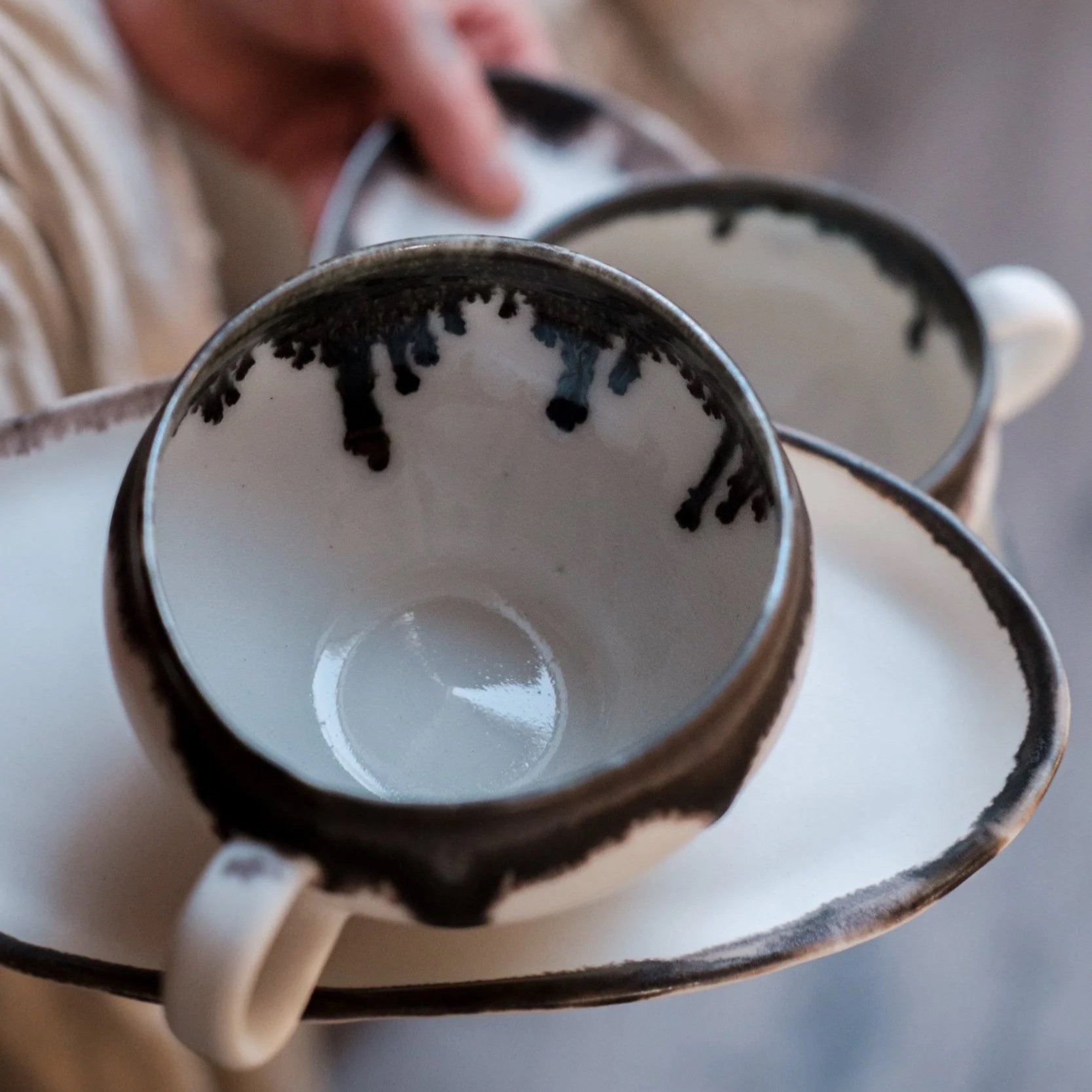
The piece is experienced in two ways:
Outside → soft, satin, warm to the touch
Inside → smooth, glossy, easy to clean
We are often drawn to matte visually, but for daily use — especially in cups —
a glossy interior simply works better.
It resists staining, cleans easily, and feels open and clear.
A longer history behind the bronze rim
While a flowing bronze rim feels contemporary, it sits within a much older ceramic conversation — one that moves between metal, glaze, and the edge of the vessel.
As early as the 9th century, Islamic lusterware introduced metal into ceramics.
Using metallic oxides, potters created surfaces that shimmered and shifted with light.
In Japanese and Korean traditions, the rim has long been treated as a place of quiet transformation:
Glaze thinning at the edge
Iron-rich lines appearing through firing
Subtle shifts where surface meets air
The rim becomes a moment of change.
Artists like Lucie Rie and Hans Coper brought deep attention to: Line, proportion, the tension of the rim.
Later, artists such as Beatrice Wood explored metallic luster glazes —
bringing back that relationship between clay and metal.
Not decoration — but behaviour
What makes the bronze rim feel alive is that it doesn’t just sit on the edge.
It responds.
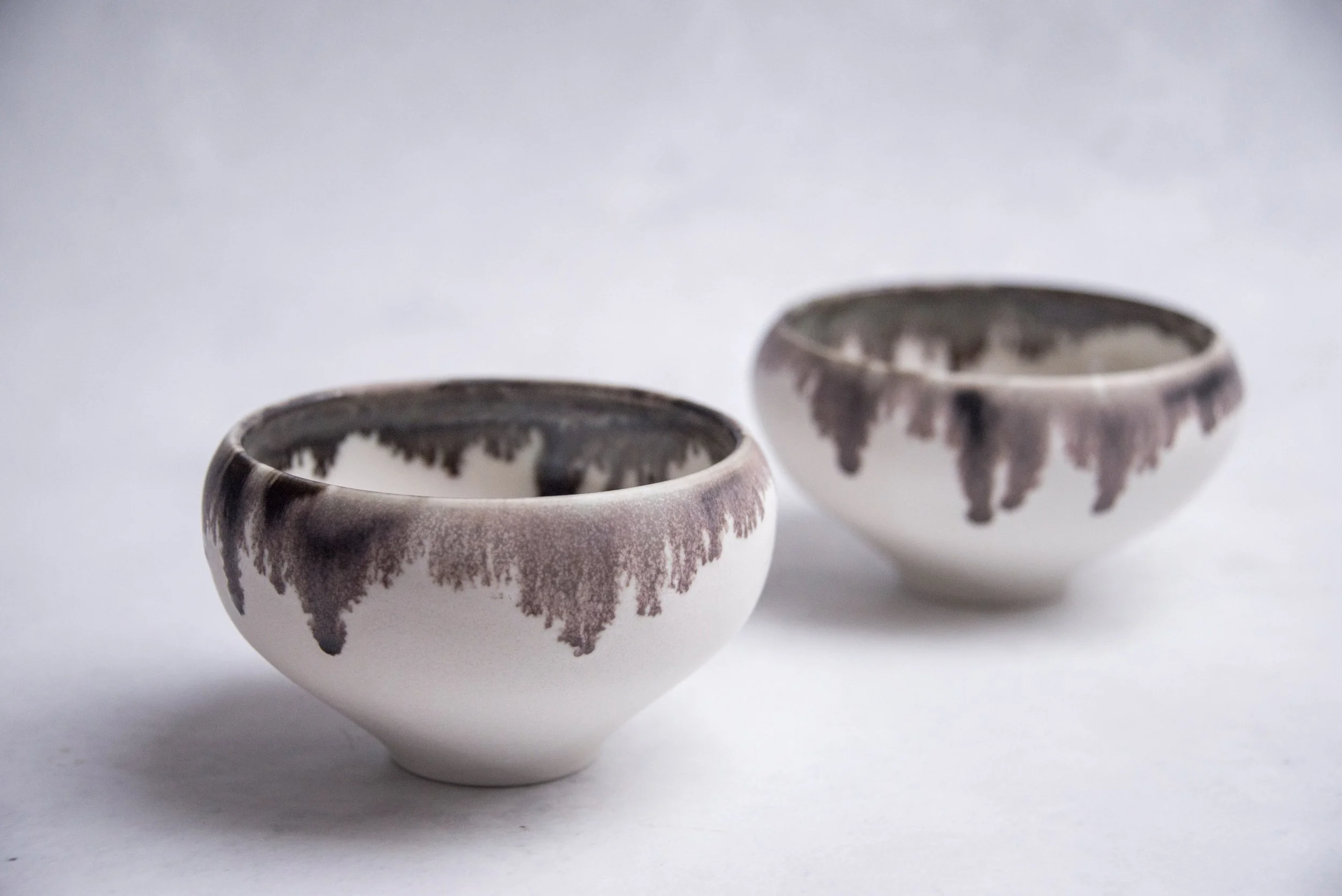
On satin matte → it feathers out, softening into the surface
On glossy → it breaks into fractals, branching and flowing
Same glaze — but the surface beneath shapes its movement.
So the rim becomes more than a line. It becomes a record of interaction.
Here are the three glazes we use in the Bronze Rim range:
BRONZE METALLIC GLAZE - a metallic effect glaze that flows and reacts at the edge; feathers on satin surfaces and breaks into fractal patterns on gloss
ALWAYS PERFECT GLOSSY TRANSPARENT - a clear, high-fire glossy glaze for the interior; enhances depth and keeps surfaces easy to clean
SIKLY VELVET WHITE MATTE - a soft, functional matte used on the exterior; smooth to the touch with a quiet, grounded finish
Find the glaze recipes here.