How We Stopped Guessing Our Horses’ Nutrition — and Started Using Real Data
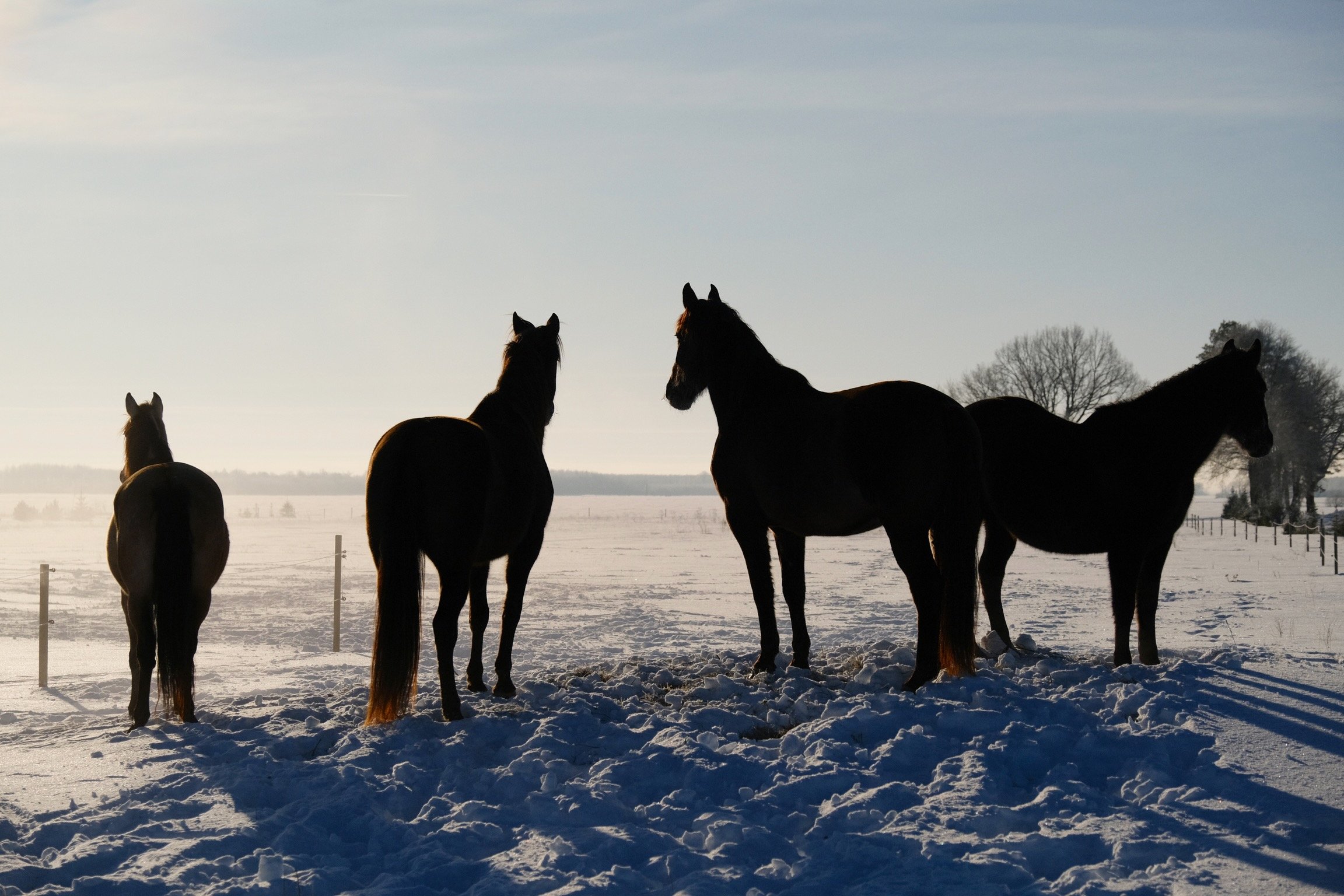
For several years on our farm we tried to give our horses the best supplements we could find.
Mineral balancer, vitamin E, selenium, joint support, herbs — our feed room shelves were full.
And yet something still didn’t feel quite right.
Despite spending around €150 per horse per month on supplements (about €600/month for our four horses), the results weren’t what we expected.
We still saw:
dull coats for 2 older horses
our 2 older horses struggling to maintain topline
fluctuating energy
and blood tests that still showed low selenium levels, even though we were already supplementing it.
That was the moment I realised - we were essentially guessing.
Step 1 — Testing Our Hay
This winter we decided to finally do something we should have done much earlier:
full hay analysis.
And honestly, it completely changed how I think about horse nutrition.
One of our hay batches came back with the following mineral values:
Calcium (Ca): 0.68 %
Phosphorus (P): 0.17 %
This gives a Ca:P ratio of roughly 4:1.
For horses, the optimal ratio is usually around 1.5–2:1.
In other words, our hay contained significantly more calcium relative to phosphorus.
This becomes important because many commercial balancers add additional calcium, as it is a cheap mineral source. When combined with forage that is already calcium-heavy, it can further worsen the imbalance, leaving phosphorus relatively deficient.
Mineral balance is critical because it directly affects:
bone metabolism
muscle function
trace mineral absorption
and overall metabolic efficiency.
Our Second Hay Analysis — Completely Different Results
When we tested another hay batch, the mineral profile was quite different. That was a huge reminder that every hay field and harvest can vary significantly.
Without testing forage, we are effectively building the entire nutrition plan on assumptions.
Protein Matters — Especially With High Forage Intake
Another critical parameter in hay analysis is crude protein.
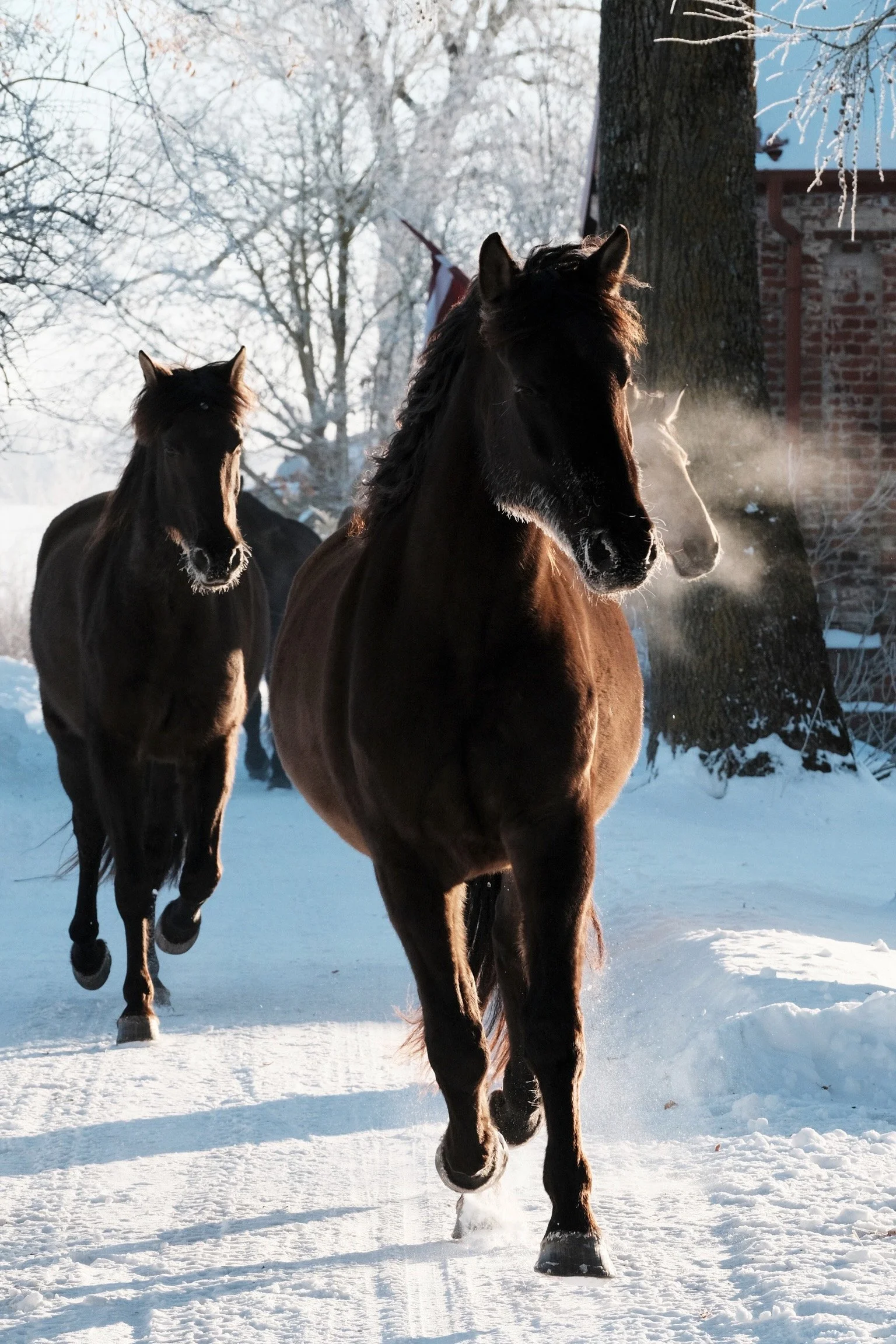
Our horses have access to hay 24/7, fed through slow feeder nets.
In winter conditions like ours (long and cold), each horse typically consumes approximately:
25–30 kg of hay per day.
This level of forage intake is excellent for gut health and natural feeding behaviour — but it also means that the nutritional profile of the hay becomes the dominant part of the diet.
What Our Blood Panels Revealed
To better understand what was happening nutritionally, we also ran large screening blood panels.
One example is the panel for our mare 15yo Harmony, which revealed several important findings.
Key results
Selenium 66.7 µg/L 100–200 µg/L
Iron 4.2 µmol/L 17.9–64.5 µmol/L
Zinc 8.5 µmol/L 5.0–14.4 µmol/L
Copper 10.9 µmol/L 7.9–21.0 µmol/L
Phosphate 0.5 mmol/L 0.7–1.5 mmol/L
Urea 2.7 mmol/L 3.8–6.7 mmol/L
The most striking finding was selenium, which was significantly below the reference range.
This was surprising because we were already supplementing selenium in the diet and well above the maintenance dose.
However, several factors can explain why deficiencies still occur despite supplementation.
Minerals do not act independently. Absorption can be affected by:
calcium–phosphorus balance
iron levels in forage or water
copper–zinc ratios
overall protein and amino acid availability
In our case, hay analysis revealed a calcium-heavy forage profile (Ca:P ratio around 4:1) with relatively low phosphorus levels.
This aligns with the low phosphate value seen in the blood panel.
Another interesting marker was low urea, which can indicate relatively low dietary protein availability.
The Selenium Story
In our region, soils tend to be very low in selenium, and our horses’ blood tests confirmed this.
Even while supplementing selenium (2mg per horse, which is above average), levels were still below optimal for 2 out of 4 horses.
We realized that the issue might be that product we used had inorganic selenium source, which are less bioavailable.
What Our Monthly Supplement Plan Looked Like
Before changing our approach, our typical monthly supplement plan per horse looked something like this:
Well Horse Leisure Balancer €36
Vitamin E + Selenium €24
Magnesium €20
Extras (diff for each horse) Joint/MSM/Mycosorb, Devils Relief, Herbs €30-60
Base feed (alfalfa / meadow grass pellets, linseed)~€40
Total: ~€150 per horse / month
And even with this level of supplementation, we were still missing key nutritional targets.
Why We Switched to Forageplus
After diving deeper into forage analysis and mineral balancing, we discovered the approach used by Forageplus.
Their philosophy is simple but powerful:
analyse the forage first — then balance the diet accordingly.
We decided to switch to their Performance Winter Equine Balancer.
What immediately stood out to me was how technically complete the formulation is.
Connecting the Dots
When we compared:
the blood panel results
the hay mineral analysis
and the existing supplementation program
it became clear that we had been trying to correct deficiencies without first understanding the forage baseline.
Once we approached nutrition from a forage-first perspective, the strategy suddenly became much clearer.
What Makes This Formula Different
Chelated Copper and Zinc (Bioplex)
The copper and zinc are provided in chelated organic forms, which significantly improves absorption and bioavailability compared to cheaper inorganic mineral salts.
This is particularly important for:
hoof quality
coat condition
immune function
connective tissue integrity.
Organic Selenium (Yeast-Based)
The selenium is provided as organic selenium yeast, which is better retained and utilised by the horse’s metabolism compared to inorganic sources like sodium selenite.
Key Limiting Amino Acids Included
Two of the most important limiting amino acids are already included:
Lysine
Methionine
These are essential for muscle development and topline, and are surprisingly missing from most balancer formulations.
A Proper Magnesium Dose
One thing that really surprised me was the magnesium level.
For comparison:
Our previous balancer supplied about 84 mg magnesium.
This formula provides 12 g magnesium.
That means we no longer need to add separate magnesium supplementation, which previously cost us €20 per horse per month.
Full Vitamin E Coverage
The formula also includes 3000 IU of Vitamin E, which is extremely helpful for horses on hay-based winter diets.
Previously we purchased Vitamin E+ Selenium separately, costing us €23 per horse per month.
Even Salt Is Included
It might seem like a small detail, but the formula also includes salt.
That means one less separate scoop to feed.
And when you are feeding multiple horses every day, those extra scoops add up quickly.
Essentially — A Complete Base Formula
For the first time I’ve seen a balancer that genuinely covers all the core nutritional bases:
trace minerals
macro minerals
vitamins
essential amino acids
magnesium
selenium
vitamin E
salt
Which means:
fewer separate supplements
fewer chances for imbalance
simpler feeding.
And for us, significantly lower overall cost (the main base formula is around 70eur per month per horse).
How This Turned Into a Passion
The deeper I went into hay analysis, mineral balancing, and equine nutrition science, the more fascinated I became with this whole topic.
What I love about this approach is that it relies on actual data rather than guesswork.
Because of that, I eventually became such a strong supporter of this system that I decided to become a Forageplus affiliate partner, so I can share this approach with other horse owners who want to simplify and improve their horses’ nutrition.
If You Want to Try This Approach
If you’d like to try Forageplus, you can use our affiliate discount code:
LAIMA10 for 10% off
Sponsored post — but all opinions are based on our own experience analysing hay and blood panels in our horses.
#forageplus
#equinenutrition
#forageanalysis
#horseminerals
#ad
#sponsored