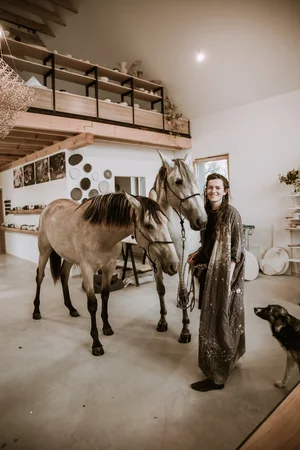
The Hidden Craft of Shipping Ceramics
Complex, yes — but learnable, doable, and worth it
Shipping ceramics is often the part that feels the most intimidating — especially for potters who are just beginning to look beyond their local market.
Fired ceramics are fragile. Distance adds complexity. And yet, shipping is not an impossible barrier — it’s a skill, one that can be learned step by step.
Over the years, we’ve come to understand shipping as a second craft alongside making. Different tools, different thinking — but just as grounded in care, repetition, and problem-solving.
This text is for fellow potters who feel hesitant about shipping — and for clients who are curious about what actually happens between the kiln and their door.
When Shipping Is Done Well, People Notice
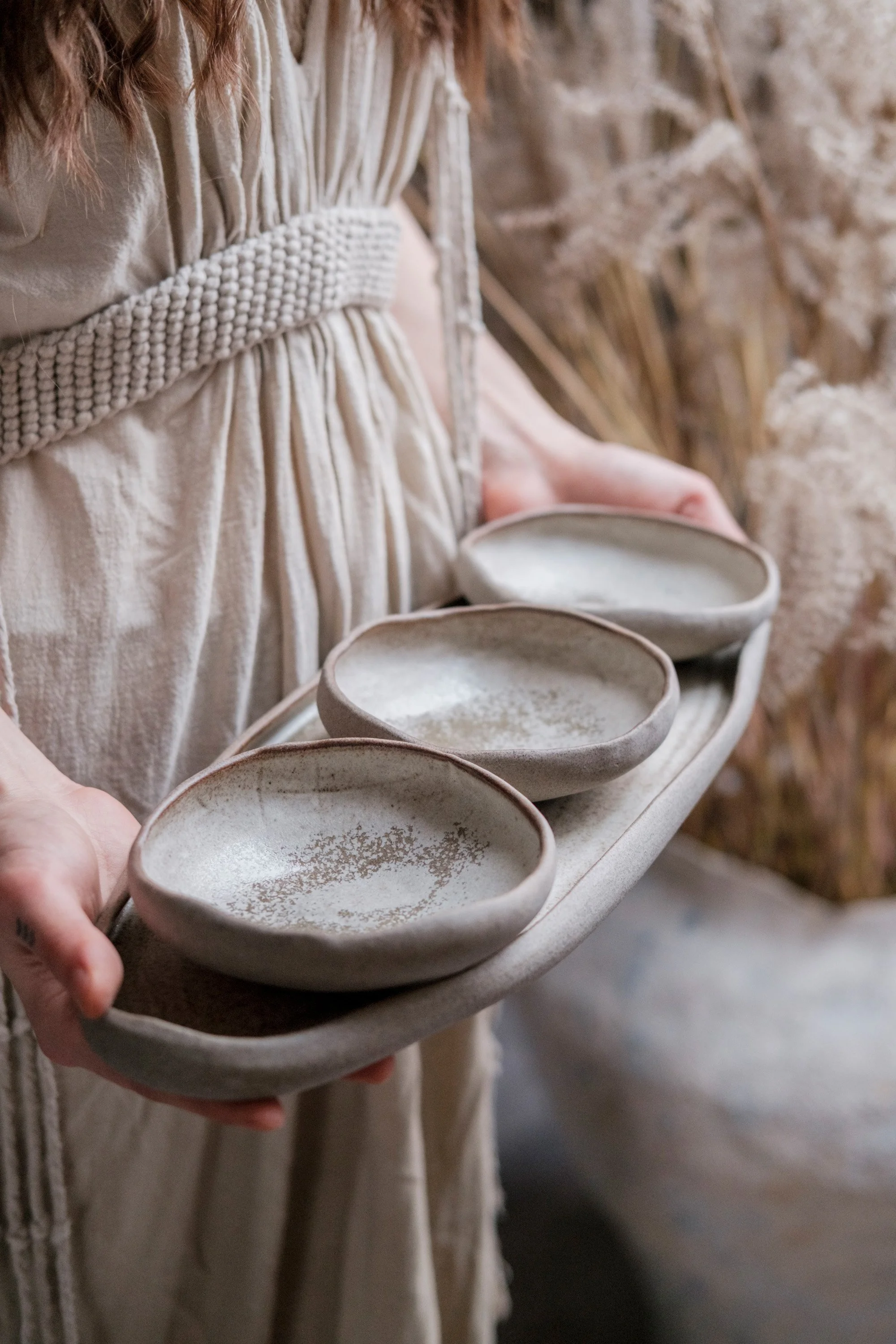
If you spend time reading through our five-star reviews on Etsy, a pattern appears almost immediately. Again and again — sometimes alongside comments about the ceramics themselves, and sometimes almost exclusively — customers mention packaging and shipping.
Here are just a few examples, shared as written:
“WOW..These are just fabulous...So beautifully made, packaged with the utmost care, arrived swiftly & safely 🙏 I cannot recommend this shop highly enough & I’m already planning my next purchase 💜”
“Cute little bowl, and perfect for storing little trinkets on my end table so that they don't get lost. Shipping was also very secure, so it survived the trip overseas in absolute safety. Very happy with this purchase!”
“Shipping was quick, and very securely packaged. The bowl itself is a nice size, and the interior glaze really does resemble a seashell's interior. It's a lovely bowl, and I'm very happy with this purchase!”
Sometimes reviews mention glaze, form, or use. Sometimes they don’t. Occasionally, packing and safe arrival are the only things mentioned — which always makes us smile.
Shipping is invisible when it works.
But when ceramics arrive safely across oceans, people remember.
Why Shipping Feels Like the Biggest Barrier
Living and working in Latvia, we often see fellow potters relying almost entirely on the local market.
The hesitation is rarely about the work itself.
More often, it’s about shipping.
Not just the packaging — but the administrative layer: invoices, customs forms, courier rules, destinations, codes, values. It’s a language you don’t learn in ceramics school, and it can feel overwhelming at first glance.
But this is where we want to be clear and encouraging:
Shipping is complex — but it is learnable.
The Invisible Work Behind Each Parcel
International shipping still involves a surprising amount of manual work.
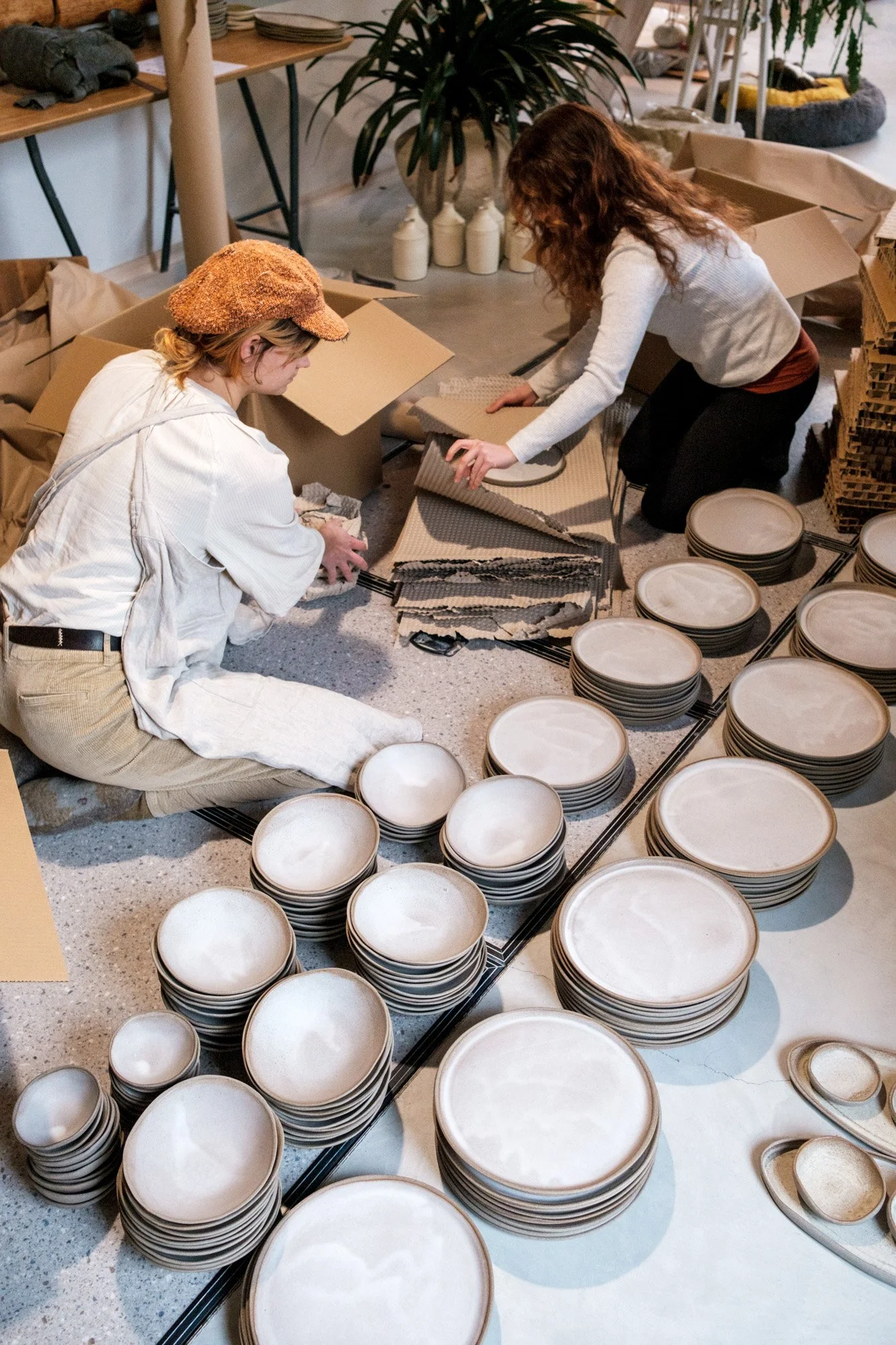
For example, when we ship with FedEx, the automatically generated invoices from platforms like Etsy, our website, or even our wholesale page on Faire cannot be used as-is. Each shipment requires a new shipping invoice, created manually — even if the order is just a single small bowl.
My assistant Oksana prepares these invoices one by one: item descriptions, values, destinations, and codes carefully checked each time.
This work happens after the piece is already made, fired, photographed, packed, and labeled.
Shipping isn’t a button you press.
It’s a system you build.
Seeing Shipping as a Question, Not a Wall
This mindset shapes how we respond to unfamiliar requests.
When a potter from Azerbaijan inquires about purchasing 50 kg (110 lbs) of glaze powder, we don’t shy away simply because we’ve never shipped there before. We treat it as a logistics question, not a reason to say no.
It becomes a matter of researching routes, comparing couriers, understanding customs requirements, and finding the best-value shipping option.
Once shipping is understood as something to figure out rather than something to fear, whole regions open up. Materials can travel. Knowledge can travel. Studios can grow beyond geography.
Large Pieces Ask Bigger Questions — Not Impossible Ones
The same applies to large-scale floor vases.
Making them is one challenge.
Sending them safely into the world is another.
Dimensions, weight, balance, custom protection, routing — each large piece asks a second question after it leaves the kiln: how will it travel?
In Latvia, there’s a saying:
“Acis darba izbijās — rokas darba nebijās.”
The eyes feared the work; the hands did not.
At first glance, packing and shipping a monumental piece can feel overwhelming. But once the hands begin — measuring, reinforcing, layering protection, researching transport — the fear dissolves into action.
What matters is starting.
What Shipping Actually Costs
Shipping is not only complex — it’s also the studio’s largest expense.
Shipping: approx. €20,000 per year
(postal services, FedEx, DPD, EU cargo transport, freight logistics)Packaging: approx. €4,000 per year
By comparison, the actual ceramic materials and glaze powders we use cost around €2,500 per year.
This figure often surprises people.
Around 80% of our ceramics travel internationally, and even the remaining 20%— sold within Latvia— usually still need to be shipped. We are, after all, quite literally in the middle of nowhere.
Packaging as Care, Not Branding Noise
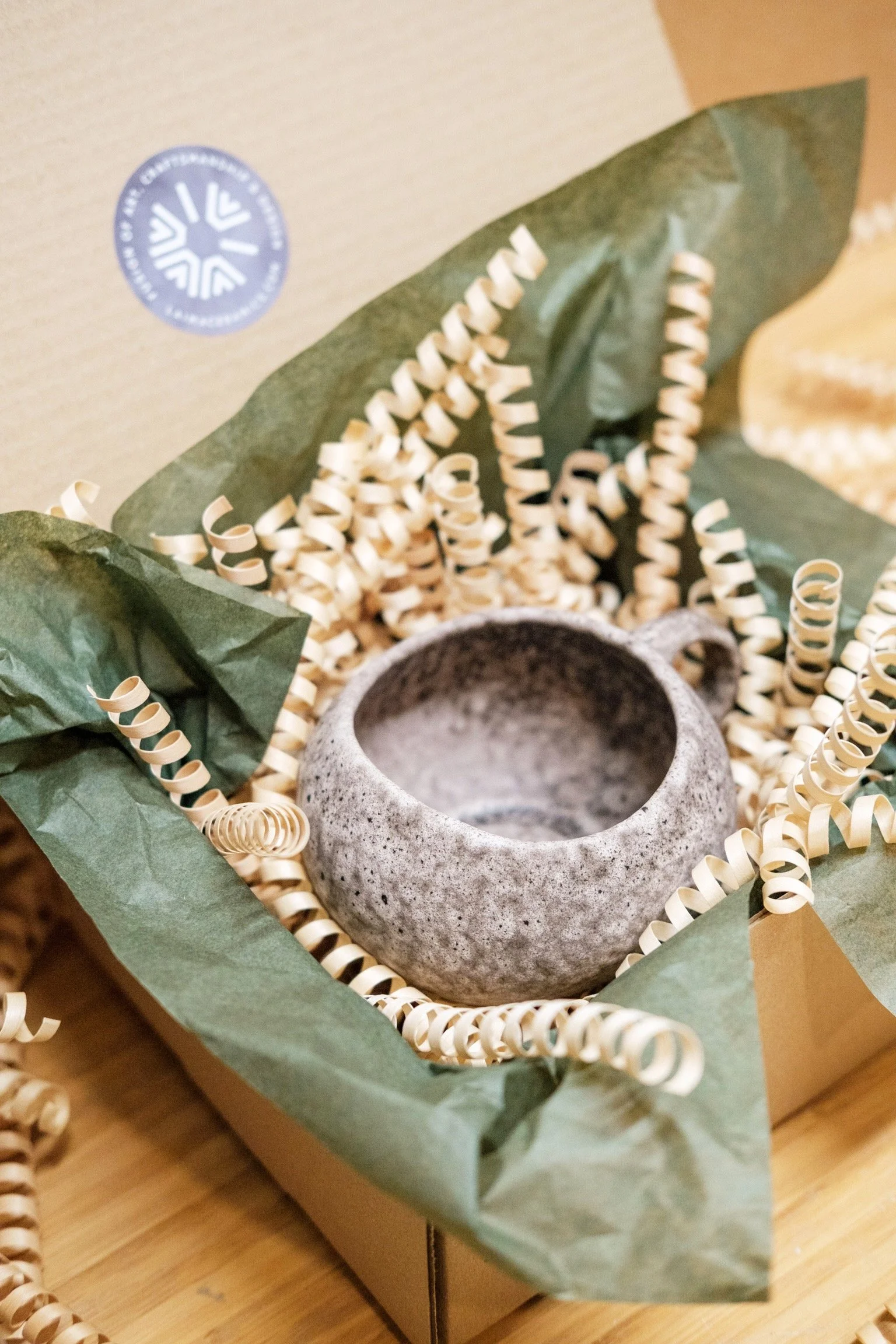
We use entirely paper- and cardboard-based packaging — no plastic fillers — designed to protect each piece responsibly.
Our main materials include:
Cardboard boxes from SUPAKUOTA and SUPERBOX
Honeycomb cardboard from KORIO (Lithuania) as our main outer protective shell
RAIKU wood-spiral filler instead of plastic peanuts
Inside the box, we use colorful tissue paper, adding a small moment of warmth and care when the parcel is opened.
Rather than printed, branded boxes, we use simple boxes personalized with round stickers. Handmade ceramics vary endlessly in shape and size — fixed printed packaging rarely makes sense. Stickers allow us to brand flexibly, beautifully, and simply, without forcing the work into rigid formats.
Good packaging is invisible when it works — but essential.
Shipping is complex.
It does require responsibility.
And it will feel intimidating at first.
But it is also doable, adaptable, and — once learned — deeply empowering.
For us, learning how to ship well allowed Laima Ceramics to grow beyond borders, stay resilient during uncertain times, and connect with people and studios we never could have reached otherwise.
Sometimes the eyes fear the work.
But if the hands begin, the path appears.