
Dinnerware Sets, Made for Everyday Life
Making dinnerware sets is one of our greatest strengths — and one of our greatest joys.
Restaurant tableware is an important part of what we do, but creating dinner sets for families holds a special place in our hearts. We know these pieces will become part of everyday rituals, long conversations around the table, and all the ordinary moments that make a life.
We believe handmade dinnerware should be used every day, not saved for special occasions.
That is why we work with two of the finest materials available to the studio potter: porcelain and high-fired stoneware. Fired to 1260°C, our ceramics undergo substantial shrinkage during firing — around 15–18% — resulting in dense, fully vitrified pieces designed for everyday use.
Our dinnerware is made to handle the realities of daily life: the dishwasher, the microwave, regular stacking and years of use. Beautiful enough to make an ordinary meal feel special, yet practical enough to become the dishes you reach for without thinking twice.
Beautiful. Functional. Durable.
When I made my first dinner set in 2013, I asked the client a question:
- Would you prefer thin, refined edges, or a set that was extra strong and durable, allowing them to stack the plates high?
Their answer was simple: Both.
And that has been my motto ever since.
I set out to create dinnerware that didn't ask you to choose between elegance and practicality. Pieces with refined proportions and delicate-looking edges, yet the strength to stand up to everyday life.
That is what we continue to work towards with every set we make.
1. Choose Your Material
The first step in creating your dinnerware set is choosing the clay body. We work with porcelain and several types of stoneware, each with its own character.
Porcelain — the finest canvas for colour
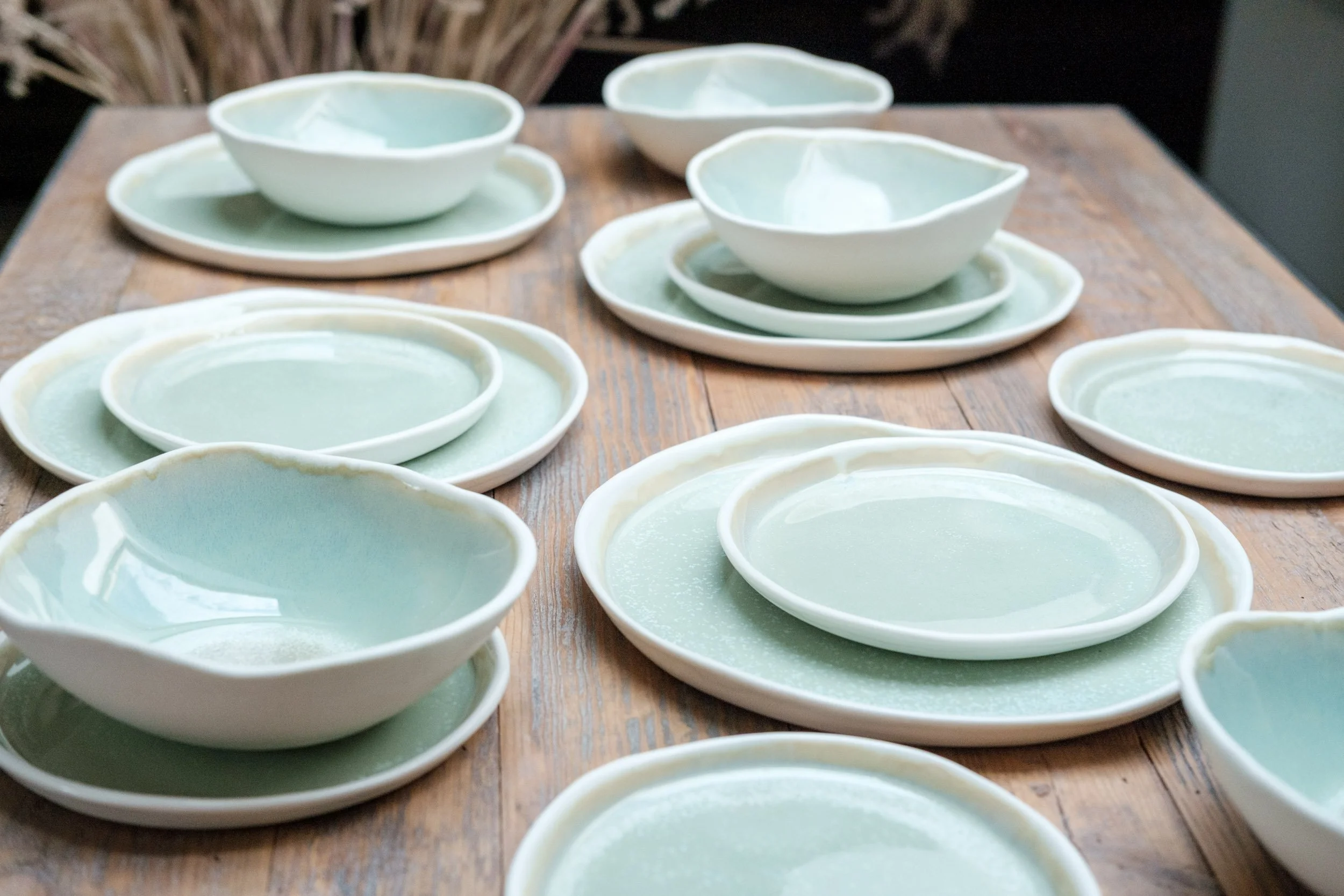
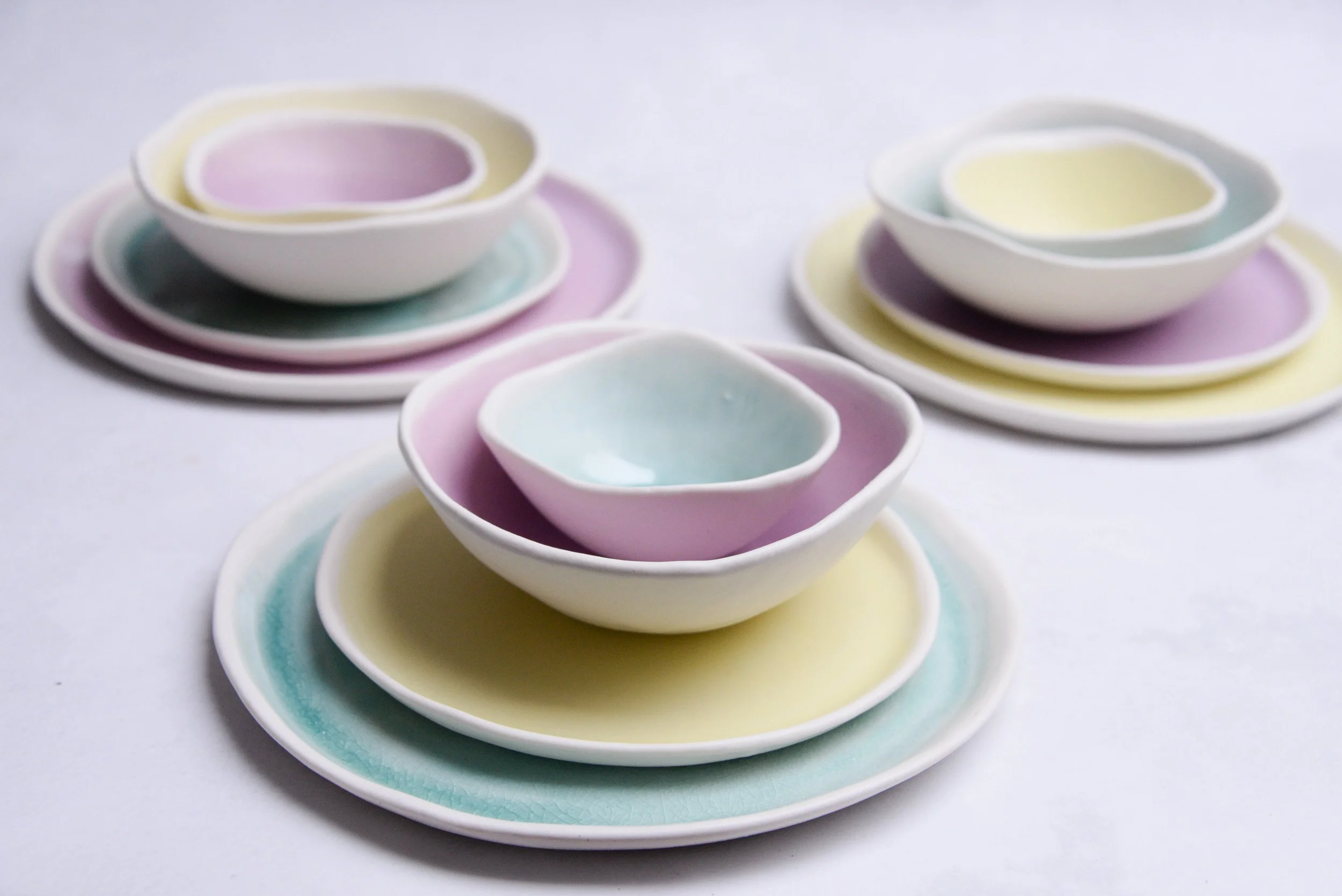
Porcelain is the whitest and finest of the ceramic materials we work with. Think of it like watercolour paper: even if you don't intend to leave it white surface provides the perfect background for colour, allowing glazes to appear vivid and luminous.
Stoneware — character in the clay itself
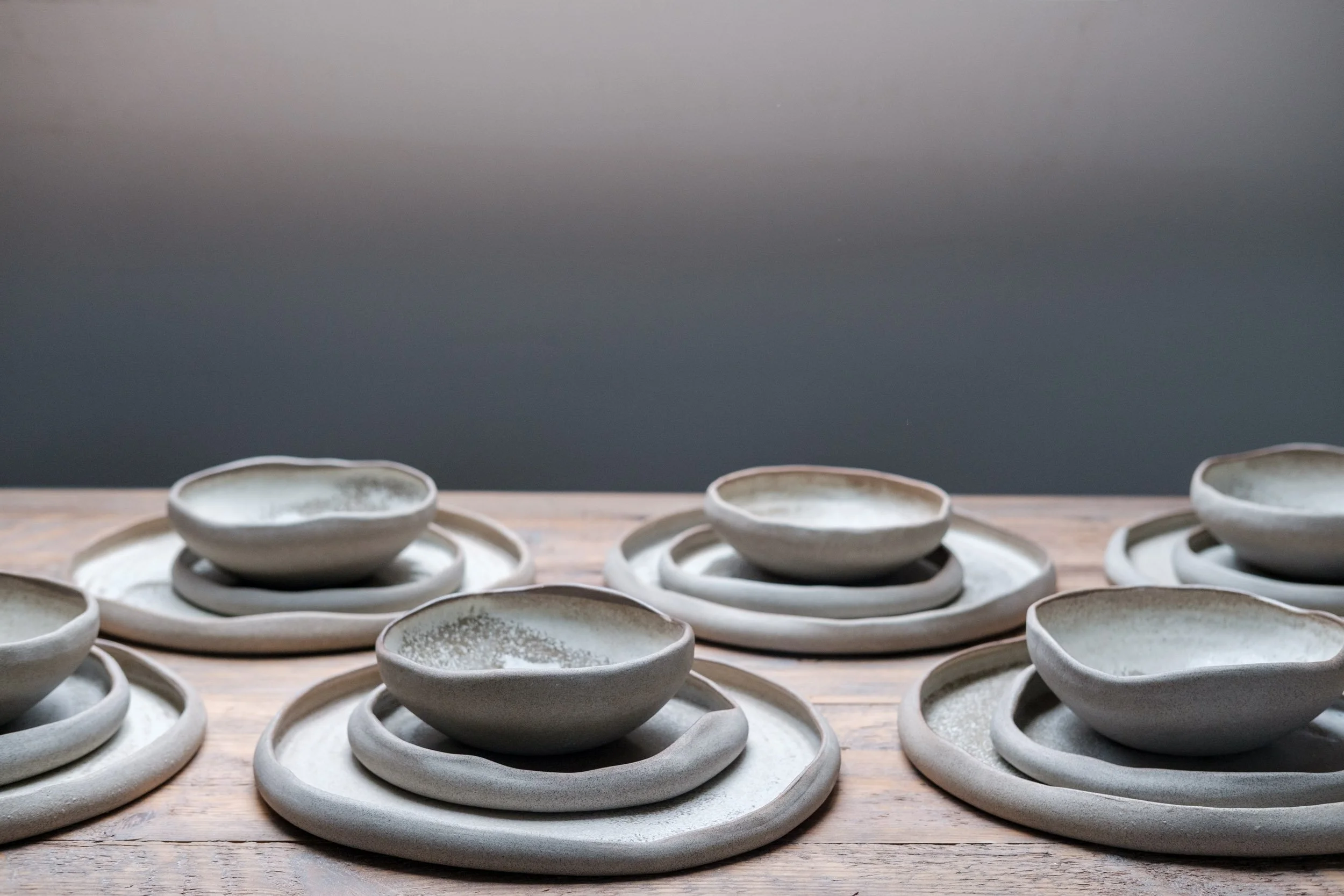
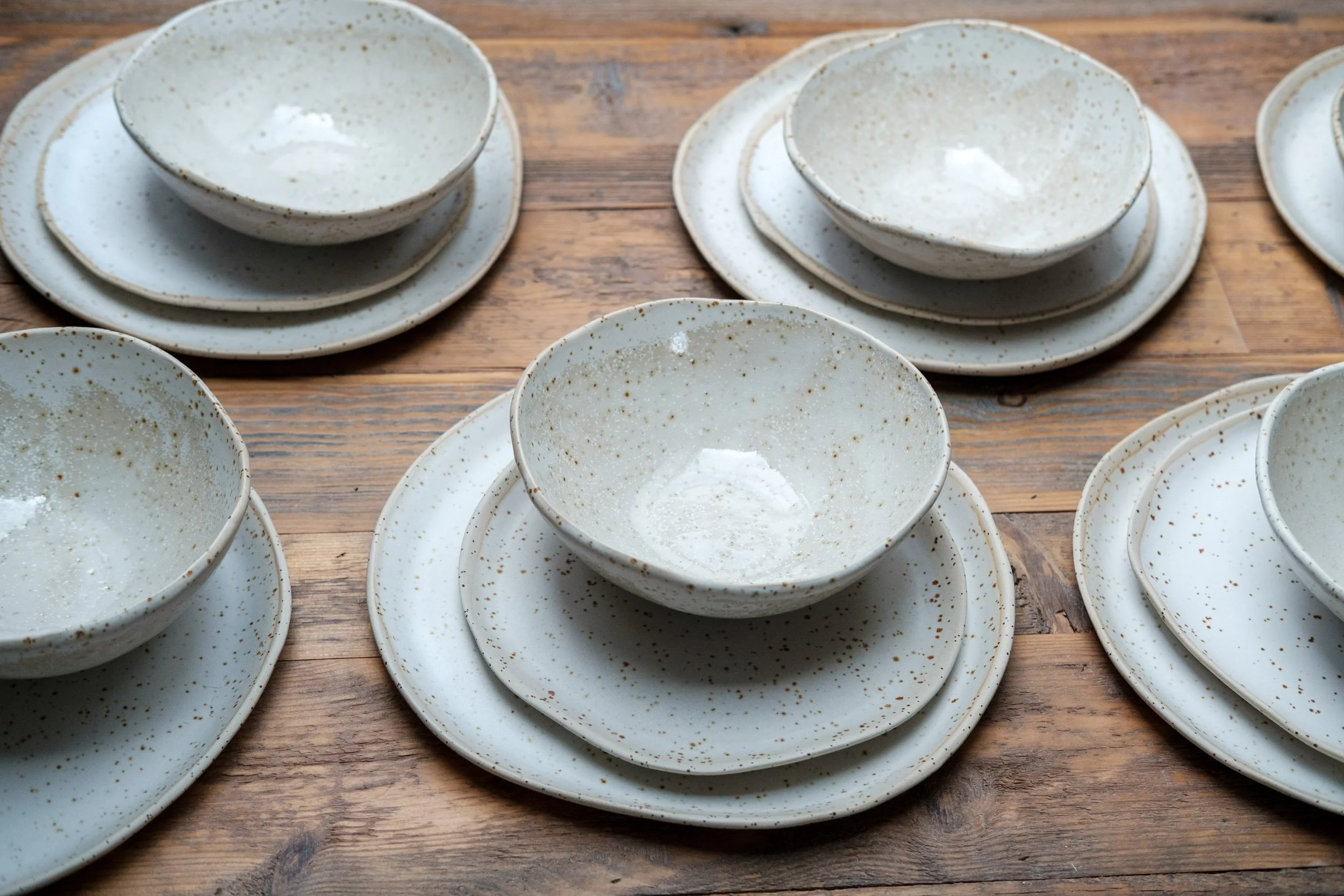
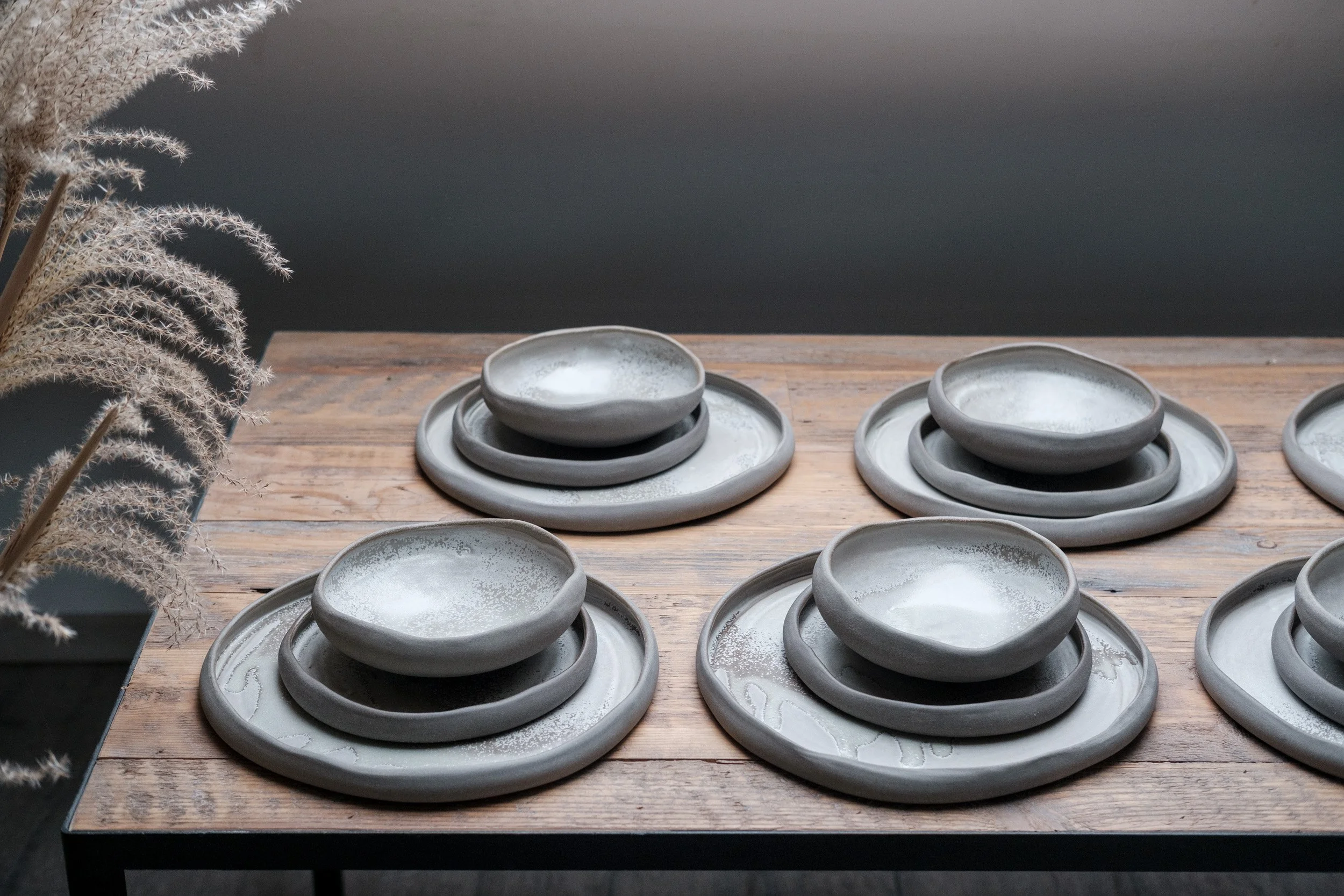
Our stoneware comes in several natural tones, from white and speckled white to light concrete grey and dark grey. Each body brings its own personality to the finished piece.
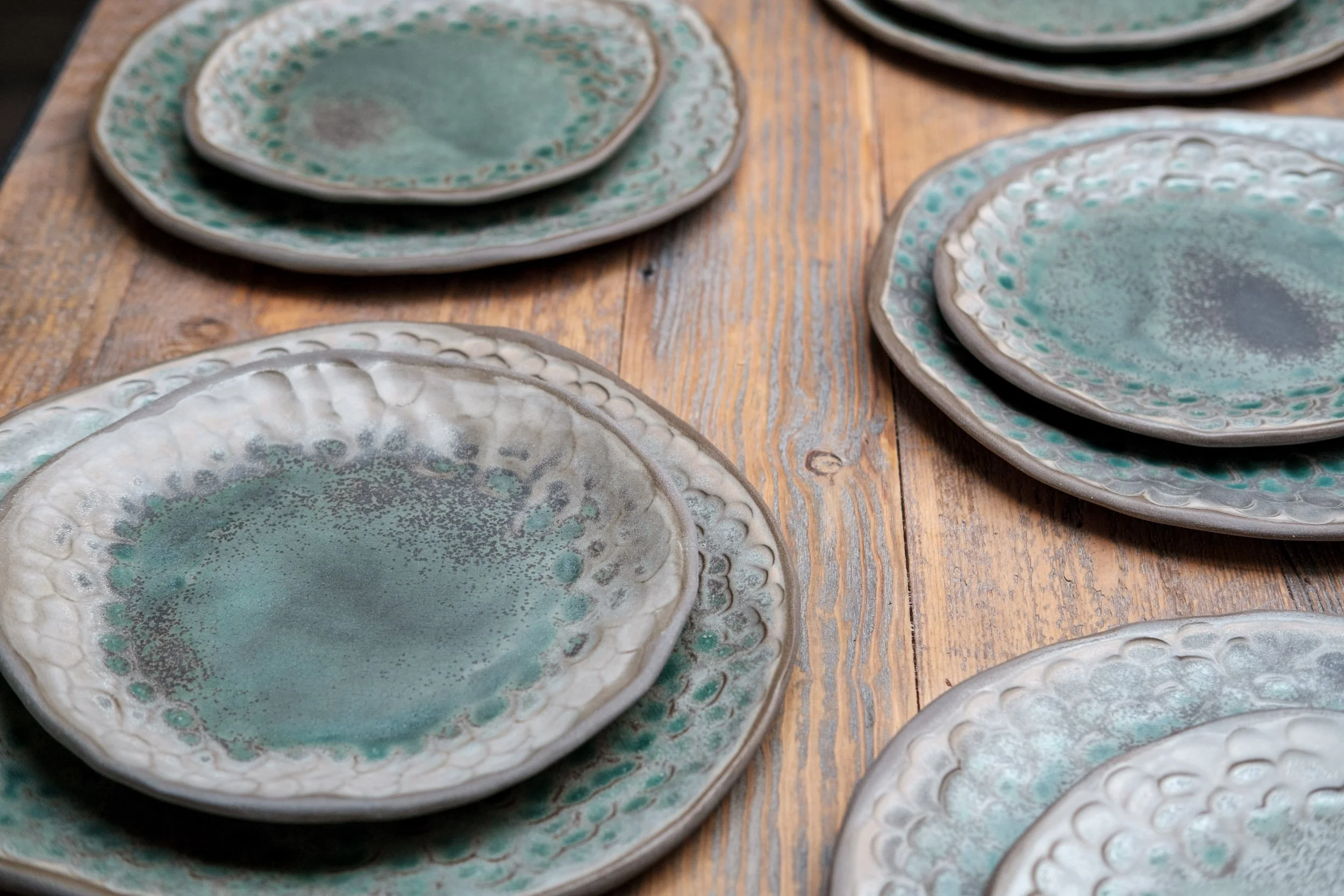
The clay itself becomes part of the design. A glaze that looks bright and luminous on white porcelain might appear softer or more muted on grey stoneware. Edges, carved details and unglazed surfaces create different contrasts depending on the body beneath them.
There is no single right choice — it depends on the atmosphere you want your dinnerware to bring to the table.
See the difference
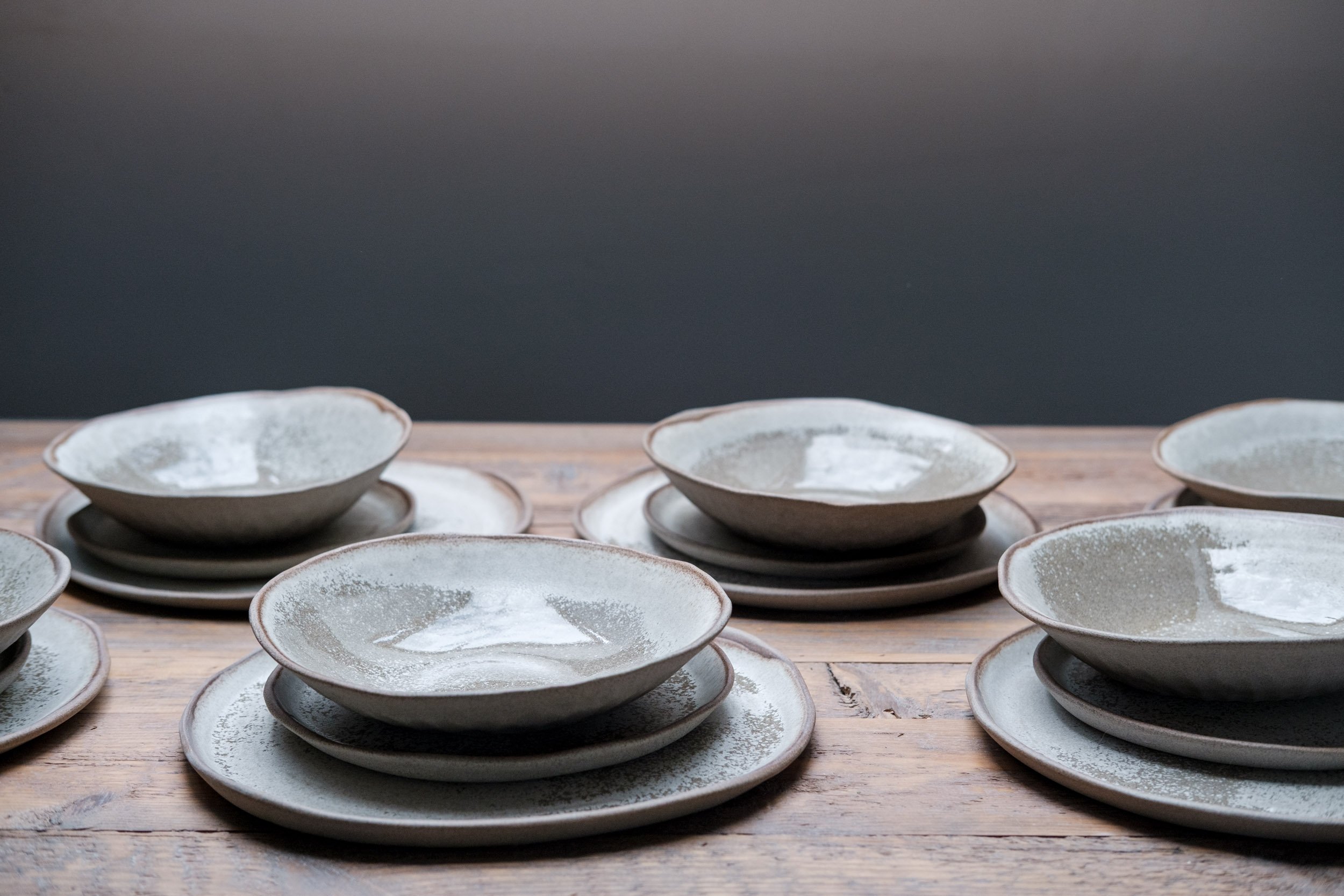
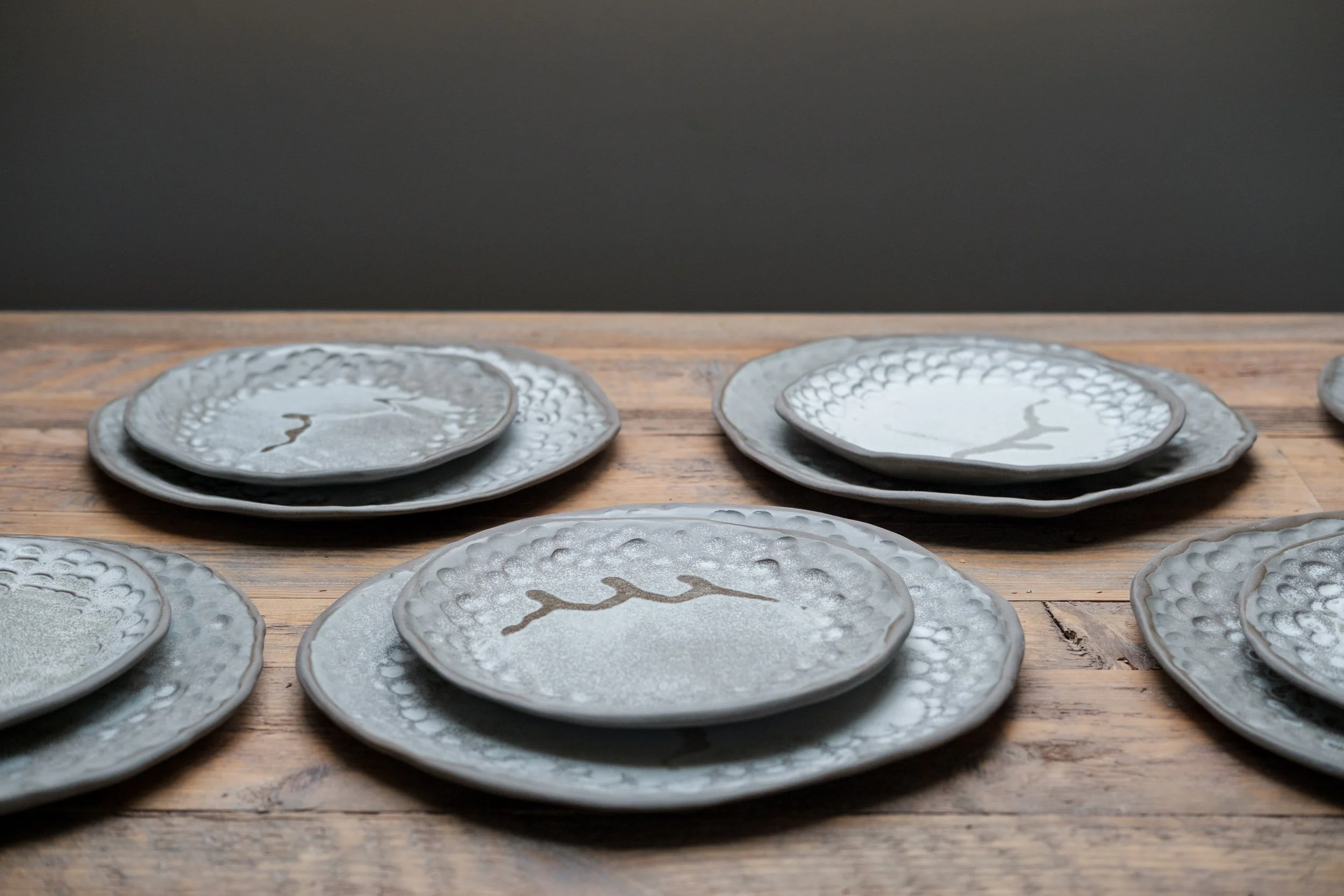
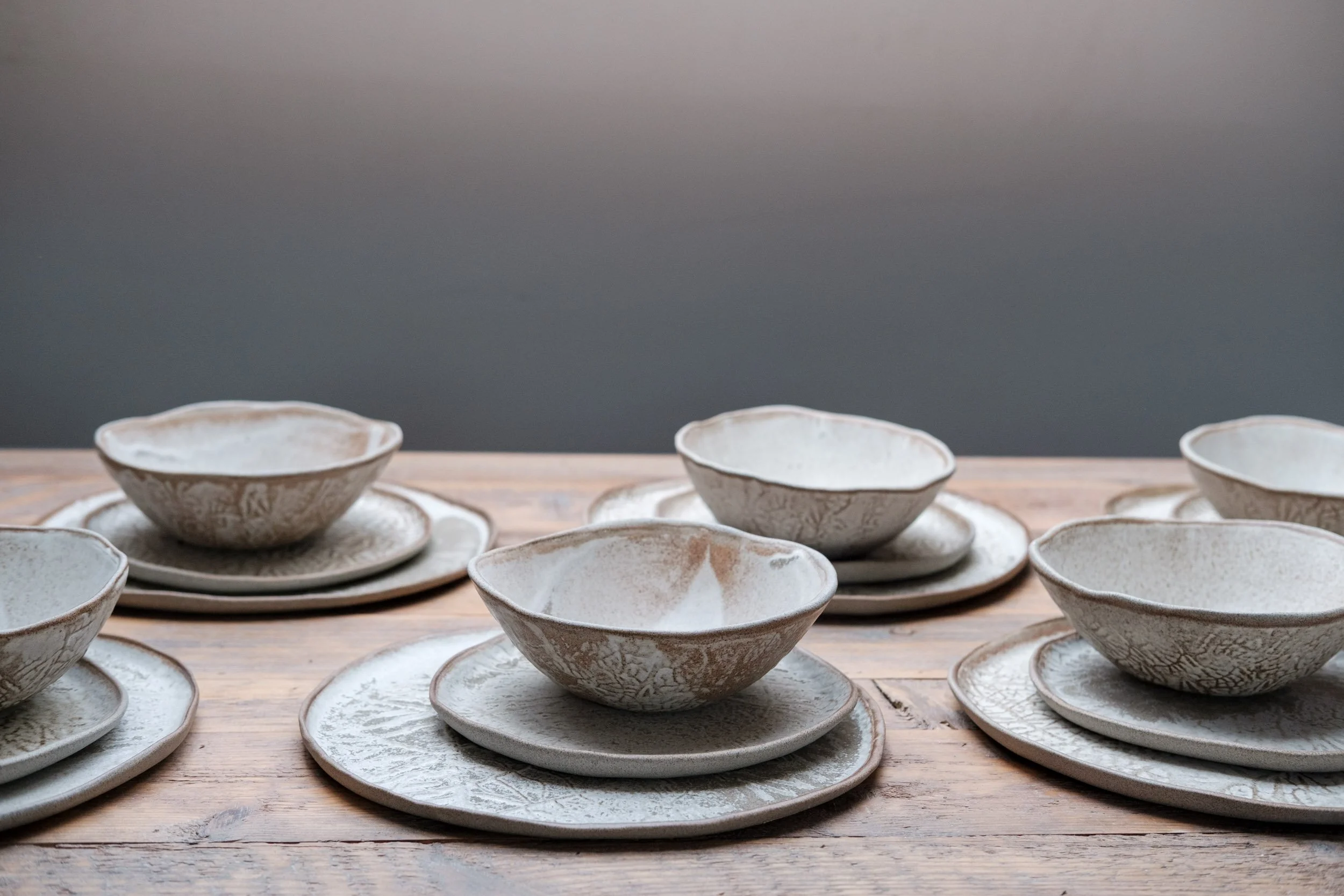
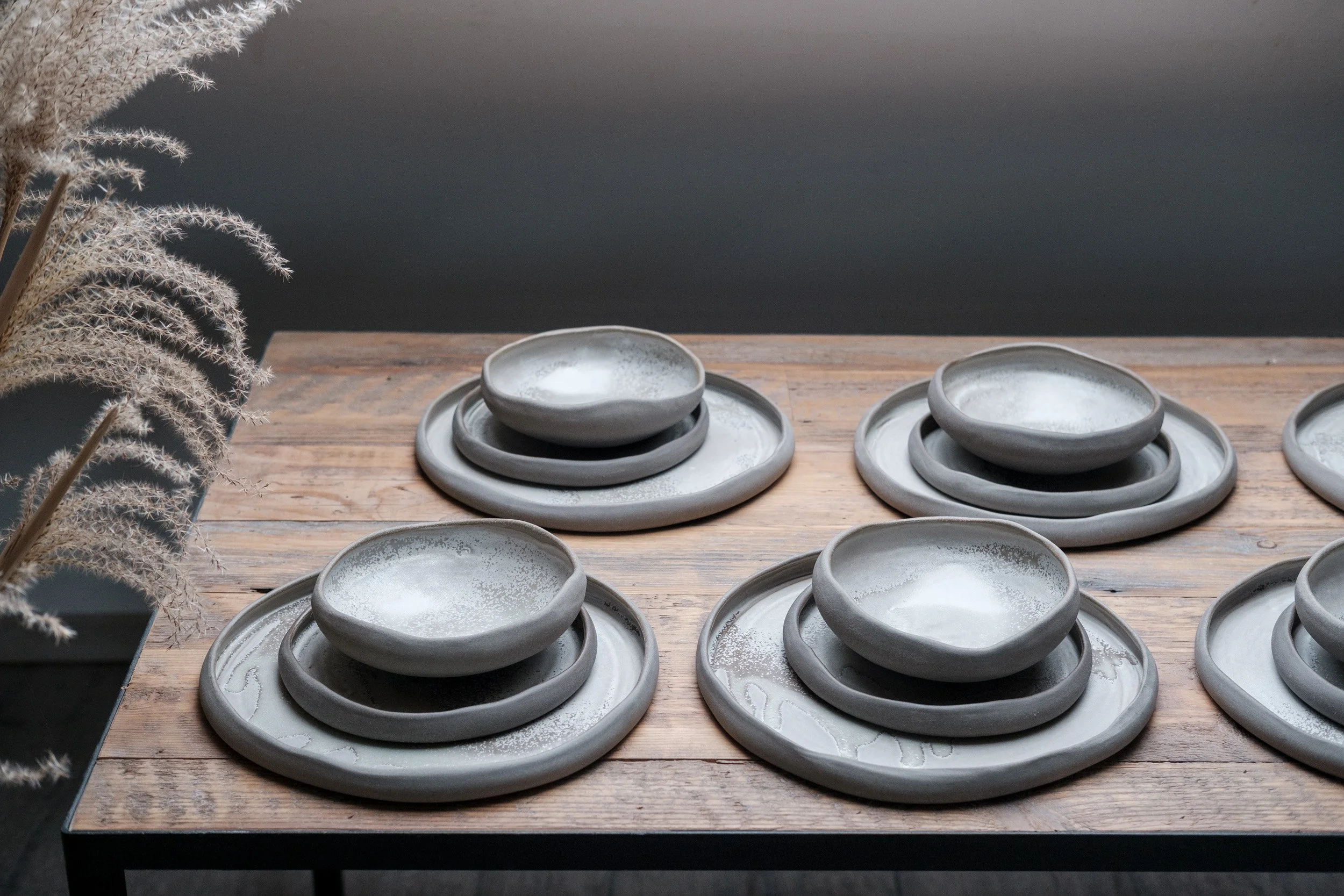
Below, you'll find examples on porcelain and our different stoneware bodies. Notice how the clay colour changes the appearance of each glaze, the contrast along the edges and the overall character of the finished piece.
Take your time exploring the combinations. The material you choose will become the foundation of your dinnerware set.
MATERIAL: PORCELAIN
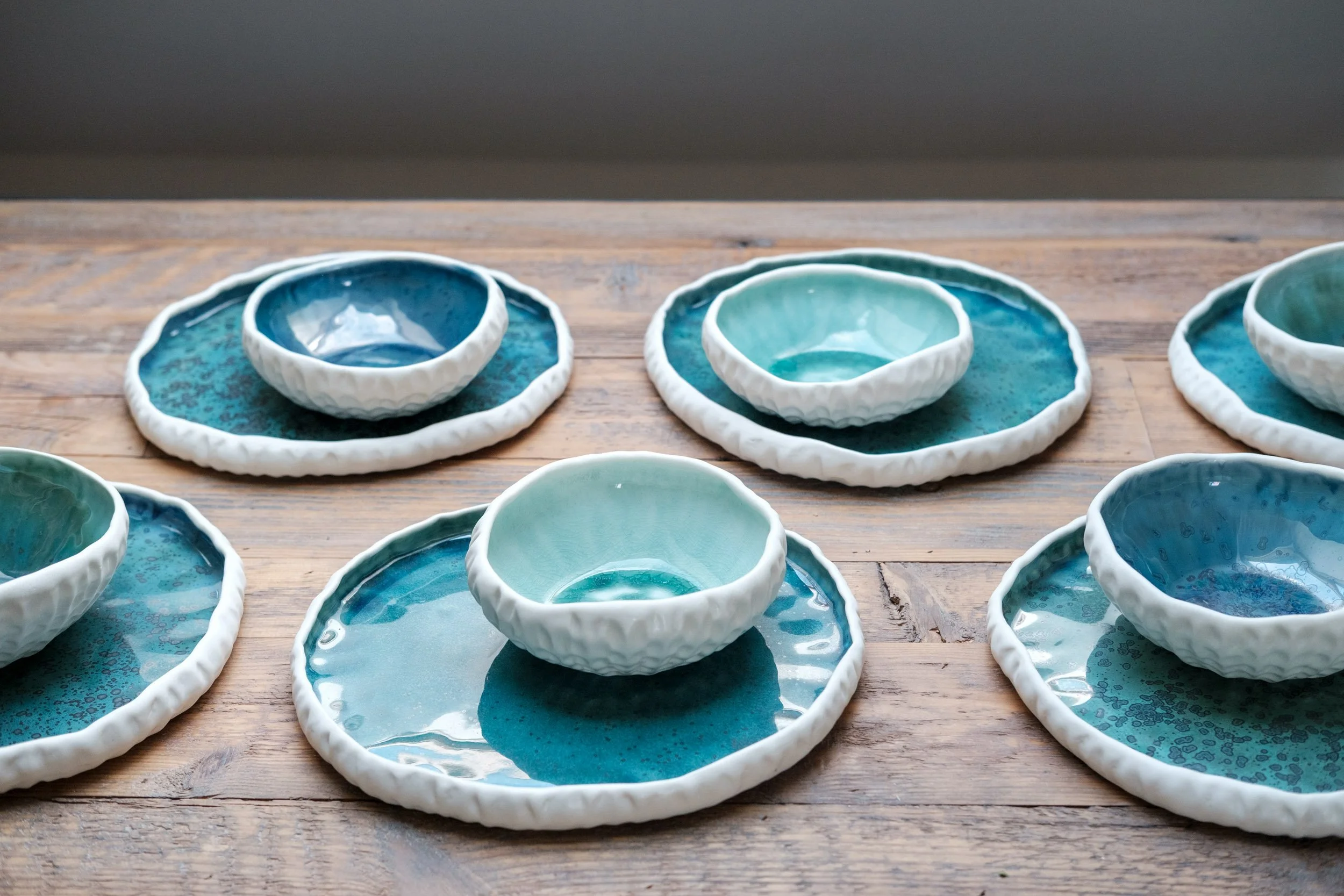
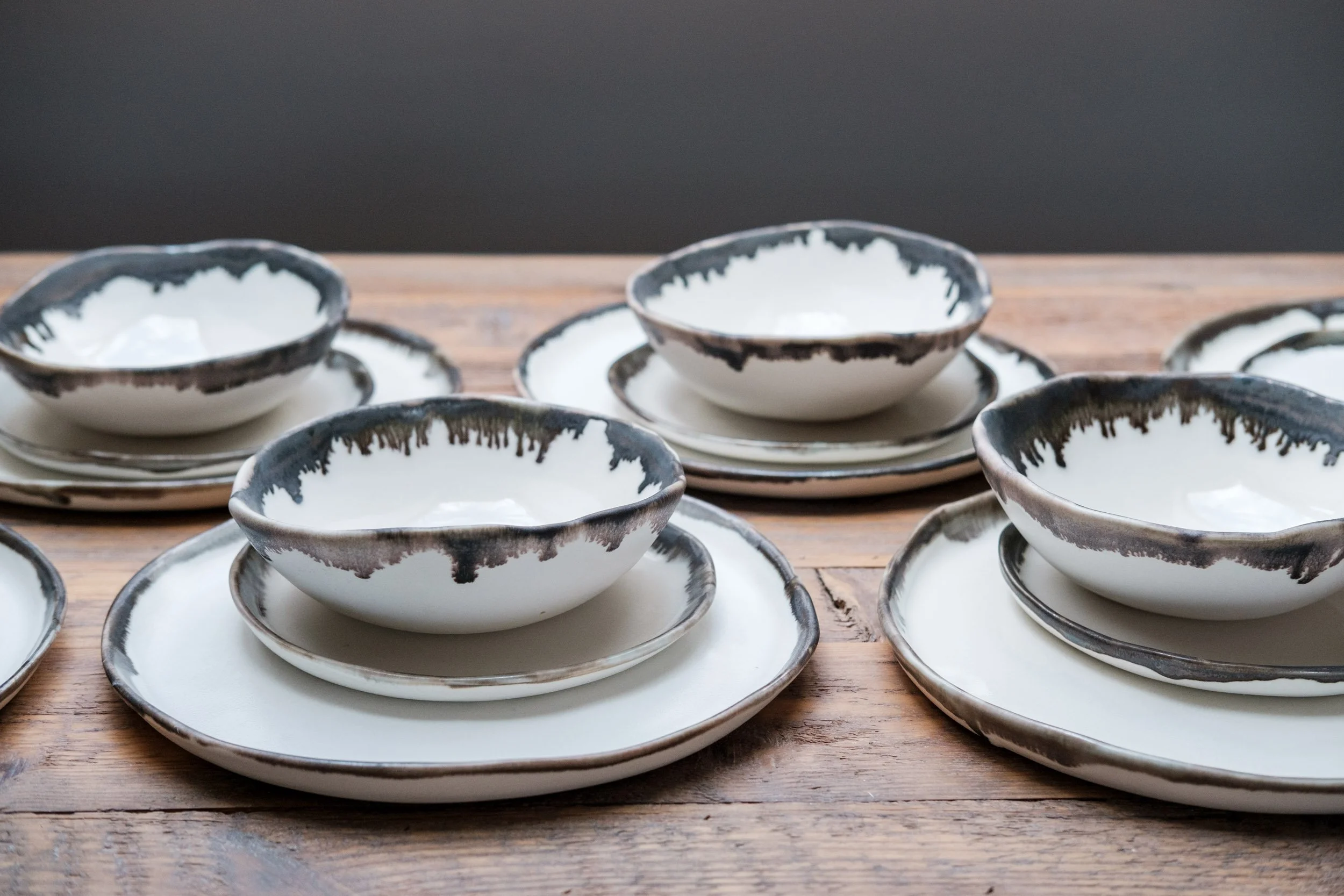
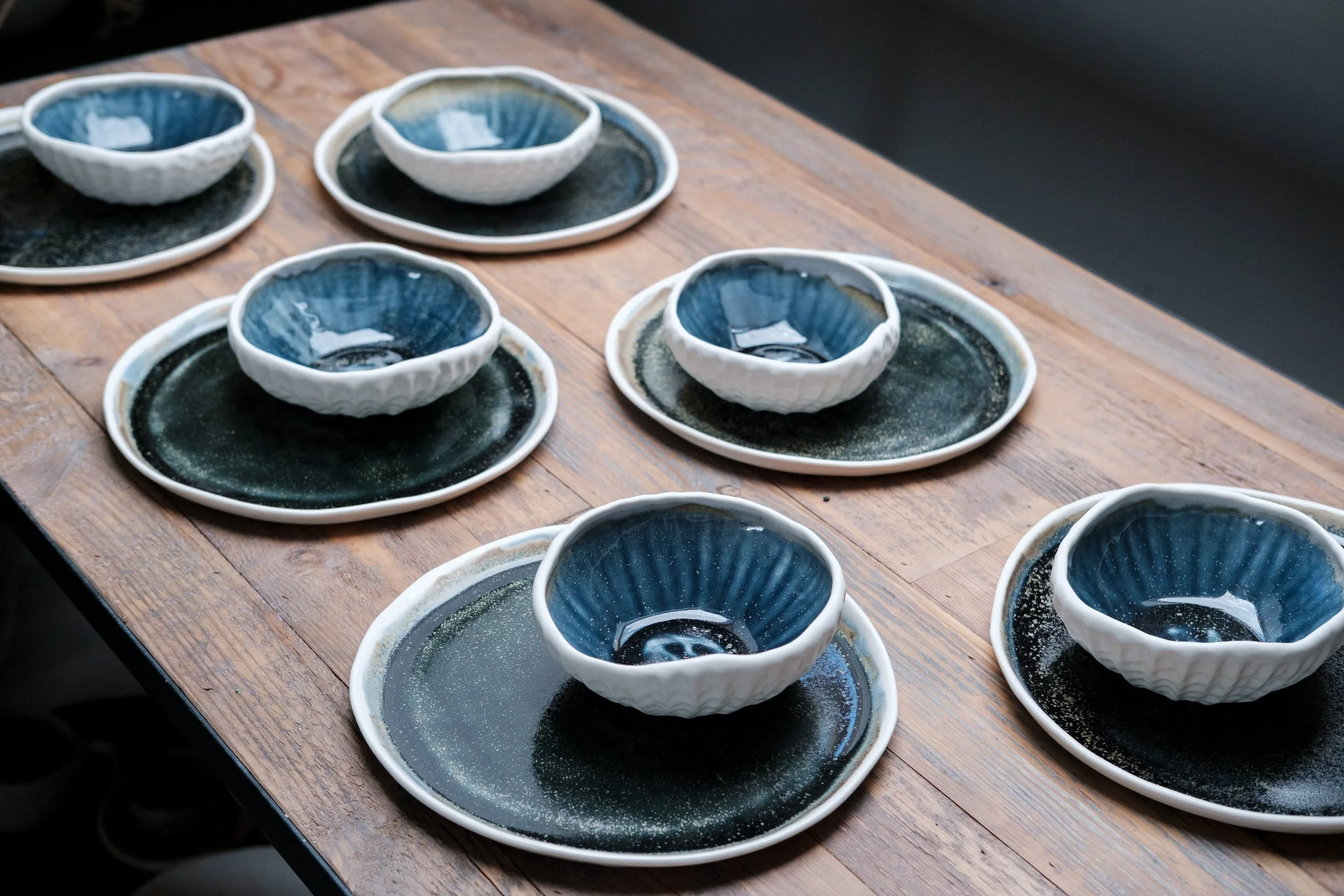
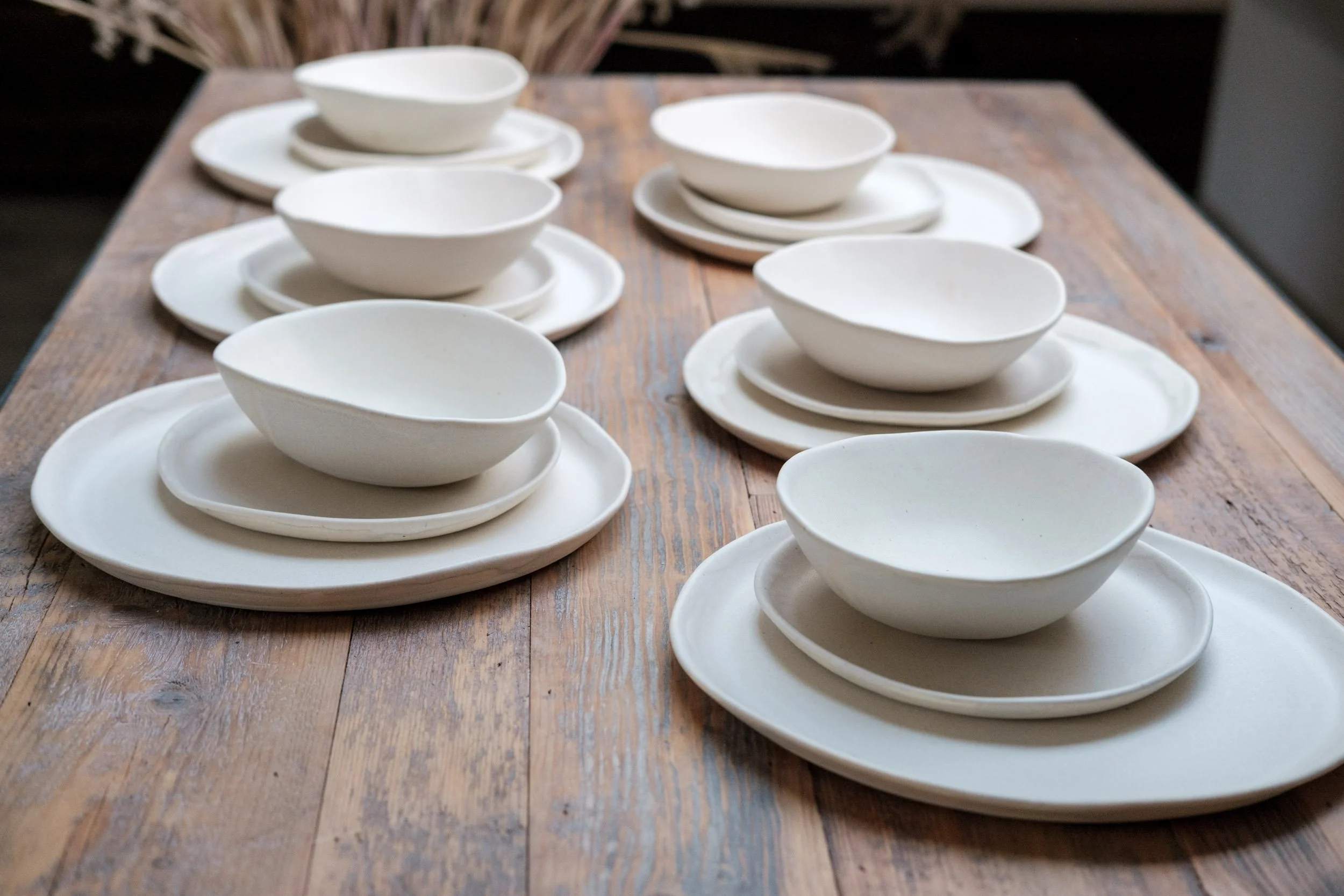
MATERIAL: STONEWARE
2. Choose Your Profile
The profile is the shape of your dinnerware — the curve of the plate, the height of its edge and the way each piece sits in your hand. It affects not only the look of your set, but also how you use it, stack it and store it.
We offer three main profiles, each with its own character.
Profile 1 — Classic
Our most practical, versatile and popular profile.
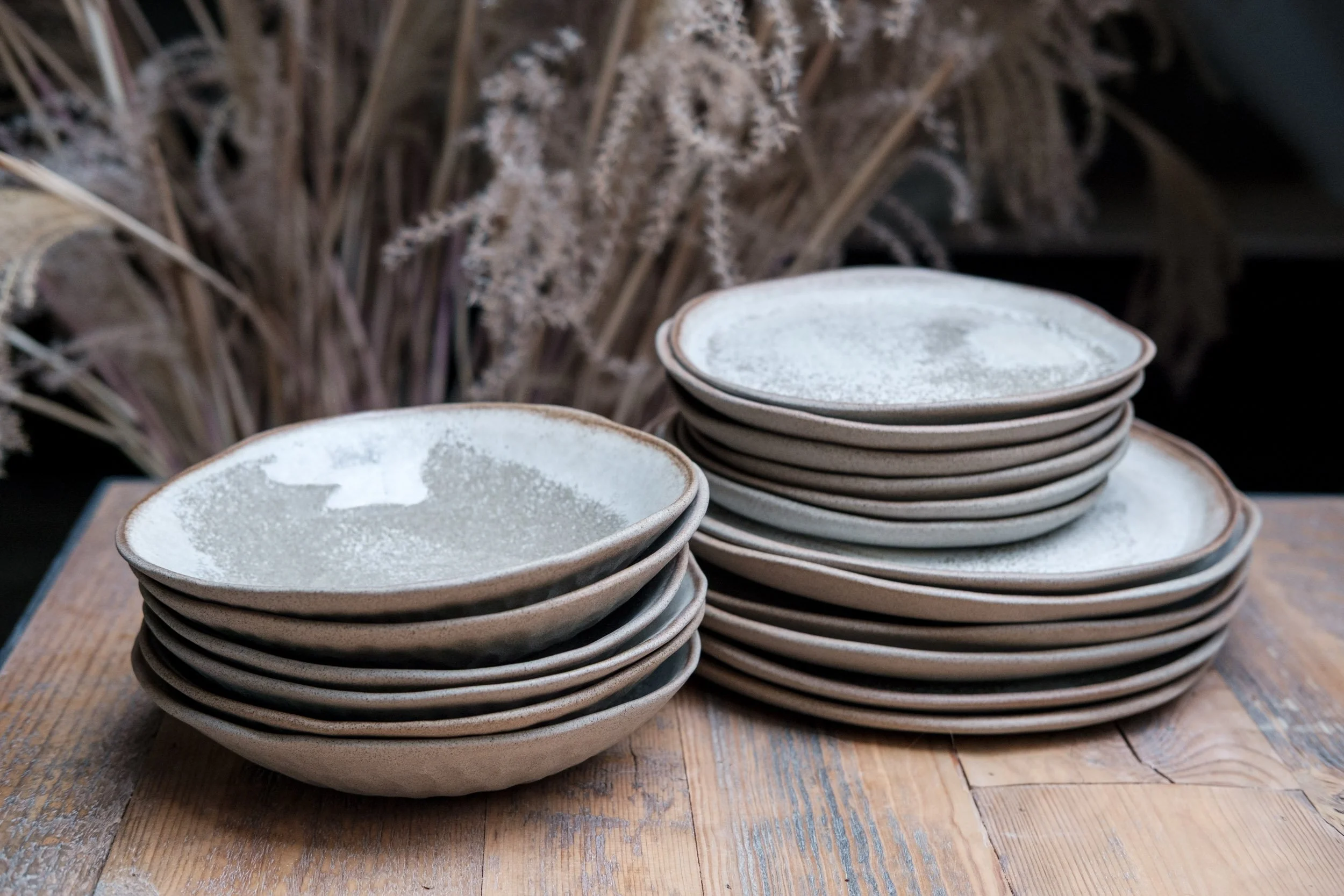
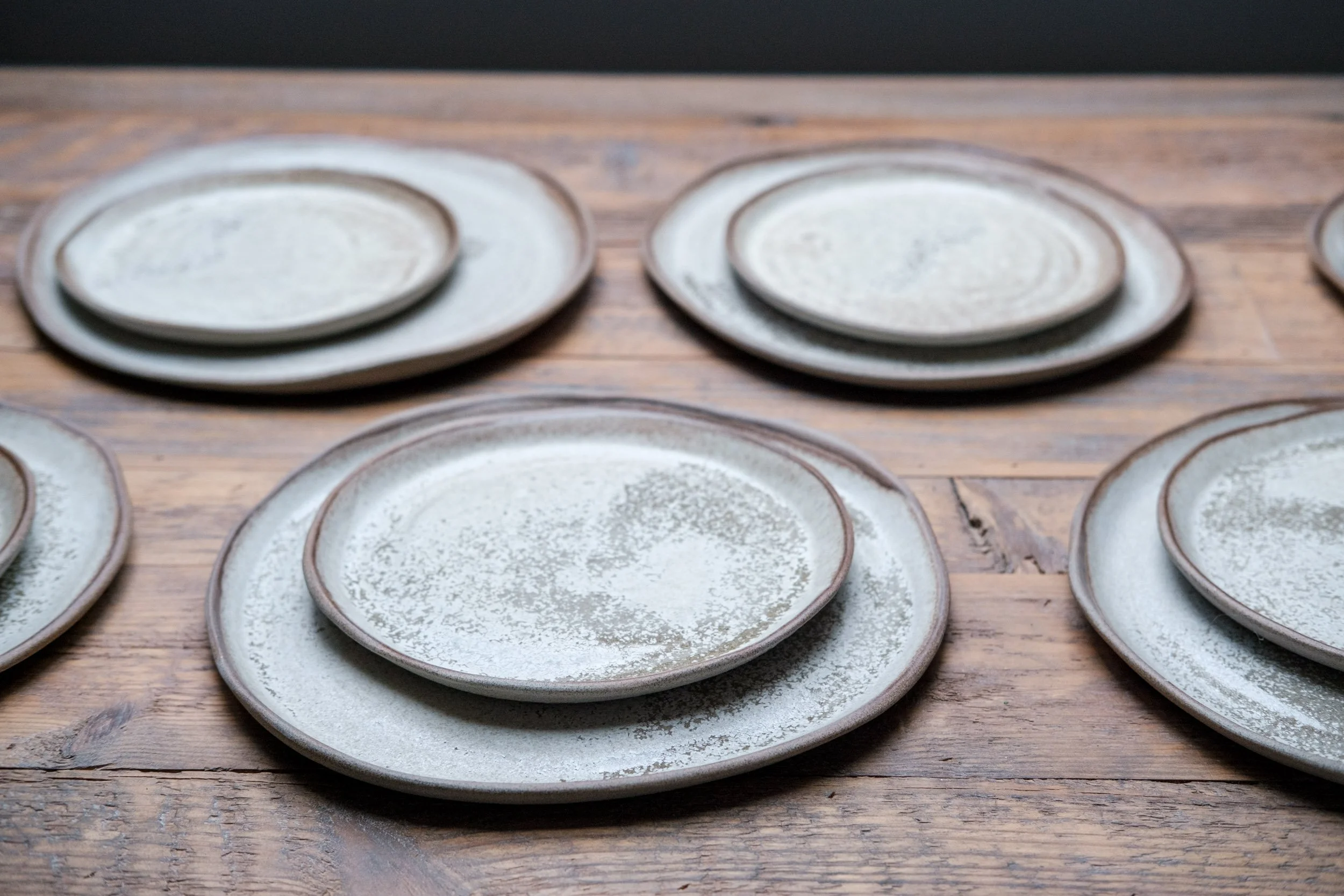
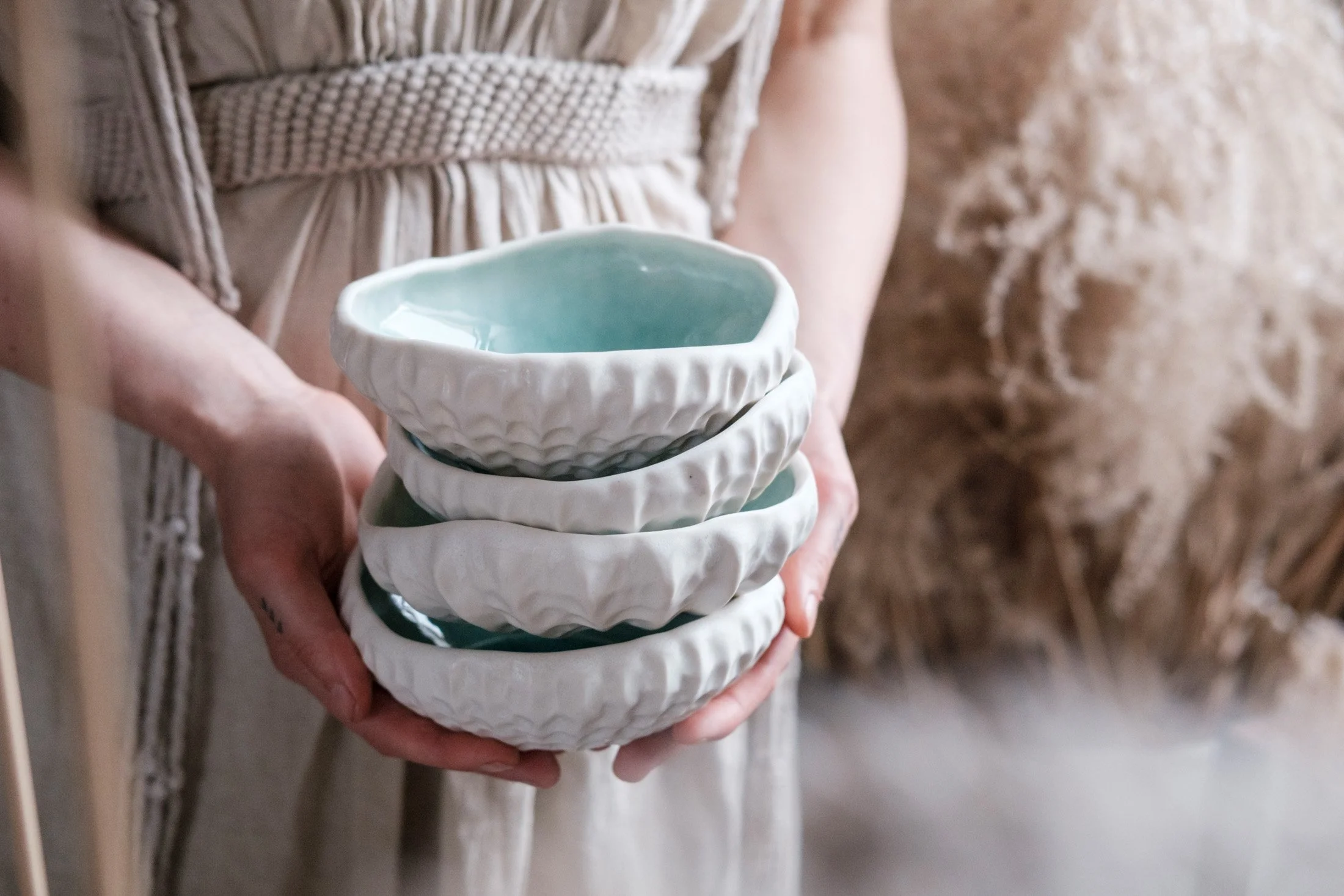
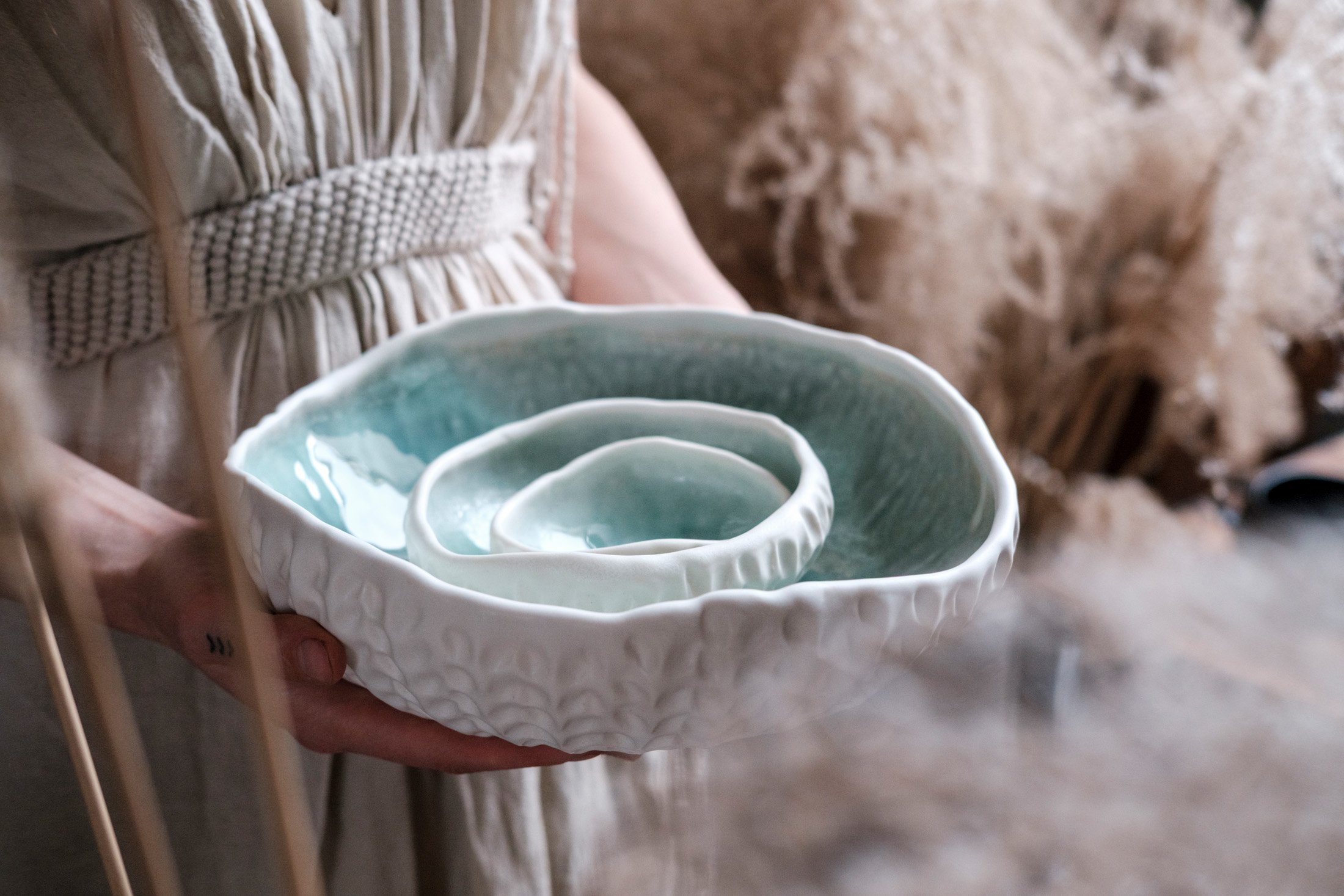
The Classic is designed around simplicity and efficiency. Its softly rounded shape and gently open edges allow the pieces to stack neatly on top of one another, while bowls nest comfortably inside each other to save space in your cupboards and drawers.
The plate rim is just wide enough to keep food comfortably contained, without taking up unnecessary space in the dishwasher.
It's a profile that gets all the little details right. You can stack your plates high, fit plenty into your cupboards and use every piece without having to think twice about it. It's the profile we make most often, and for good reason.
Available in porcelain and all our stoneware colours.
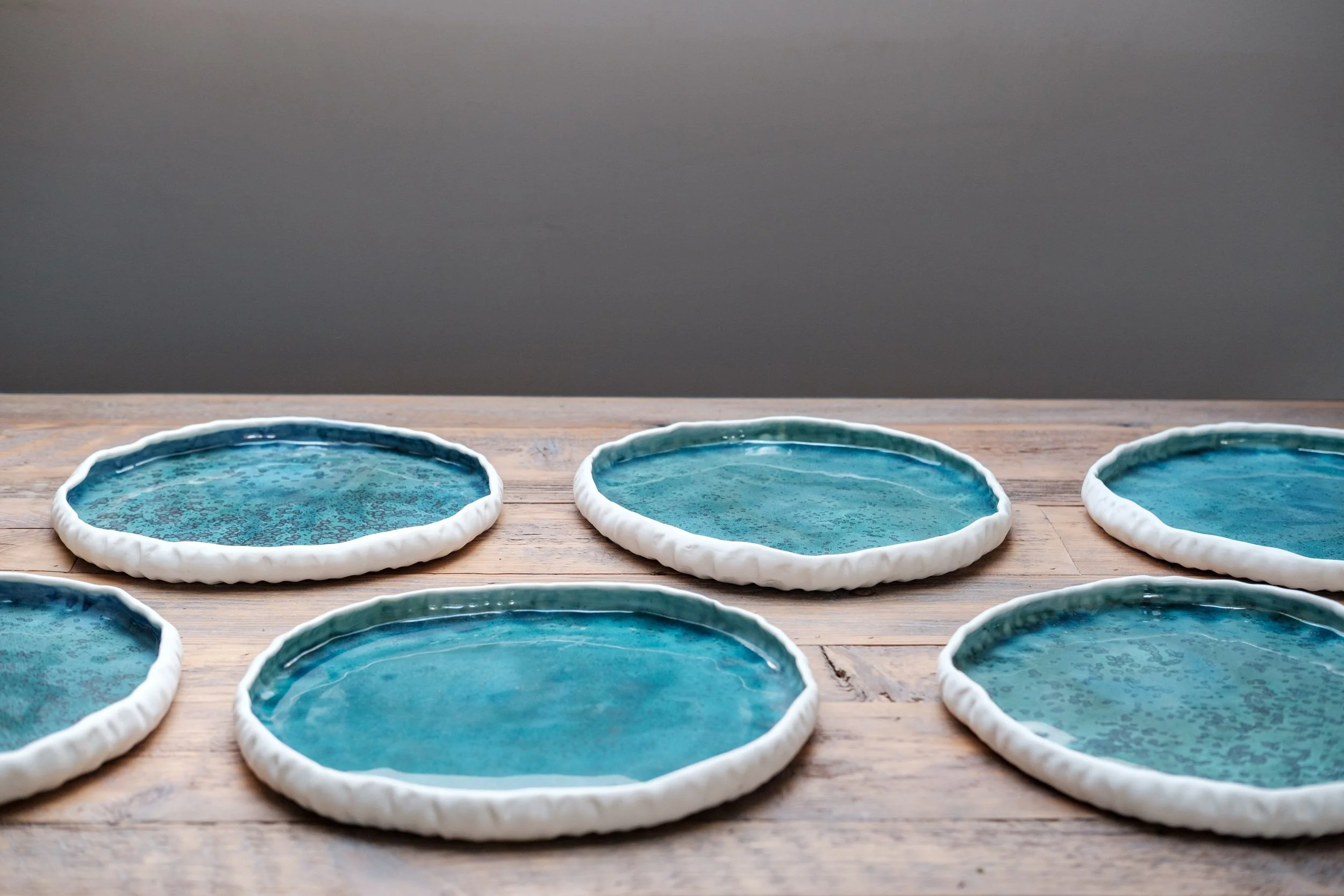
Profile 2 — Organic / Open
A more sculptural shape, inspired by nature.
Our large open profile, seen in the Dragon collection, takes the basic idea of the Classic — an open shape that stacks — and gives it a more organic, irregular character.
The circles are less perfectly round, the edges are higher, and the silhouette feels freer and more sculptural. We often enhance this profile with added texture, allowing the surface to catch the light and emphasise its natural contours.
These pieces remind me of lily pads floating on a pond: broad, open shapes with softly irregular edges.
This profile is for those who want their dinnerware to feel a little less conventional and a little closer to nature, while still being designed for everyday use.
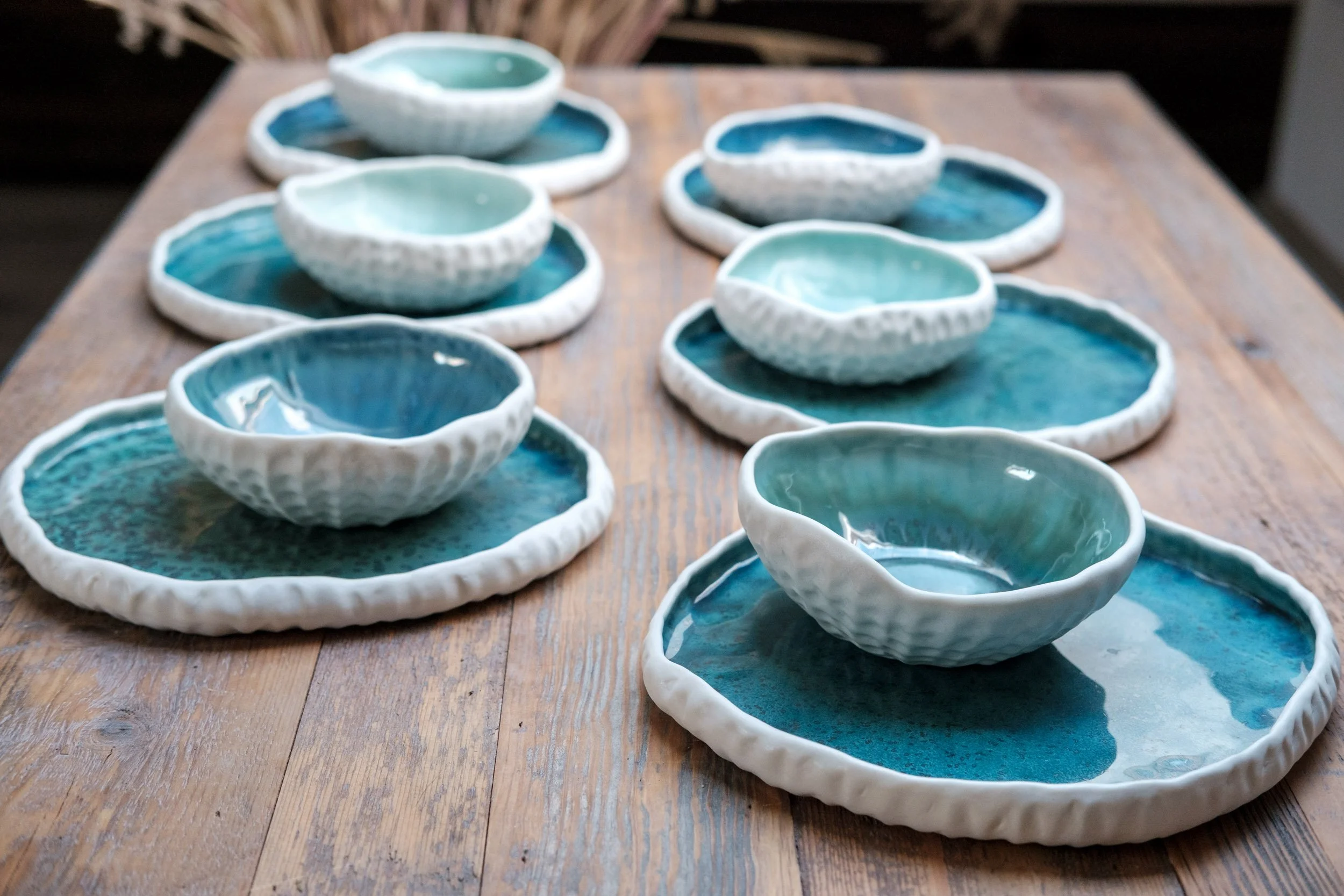
Profile 3 — Dune / Coral
For those who appreciate a little more character at the table.
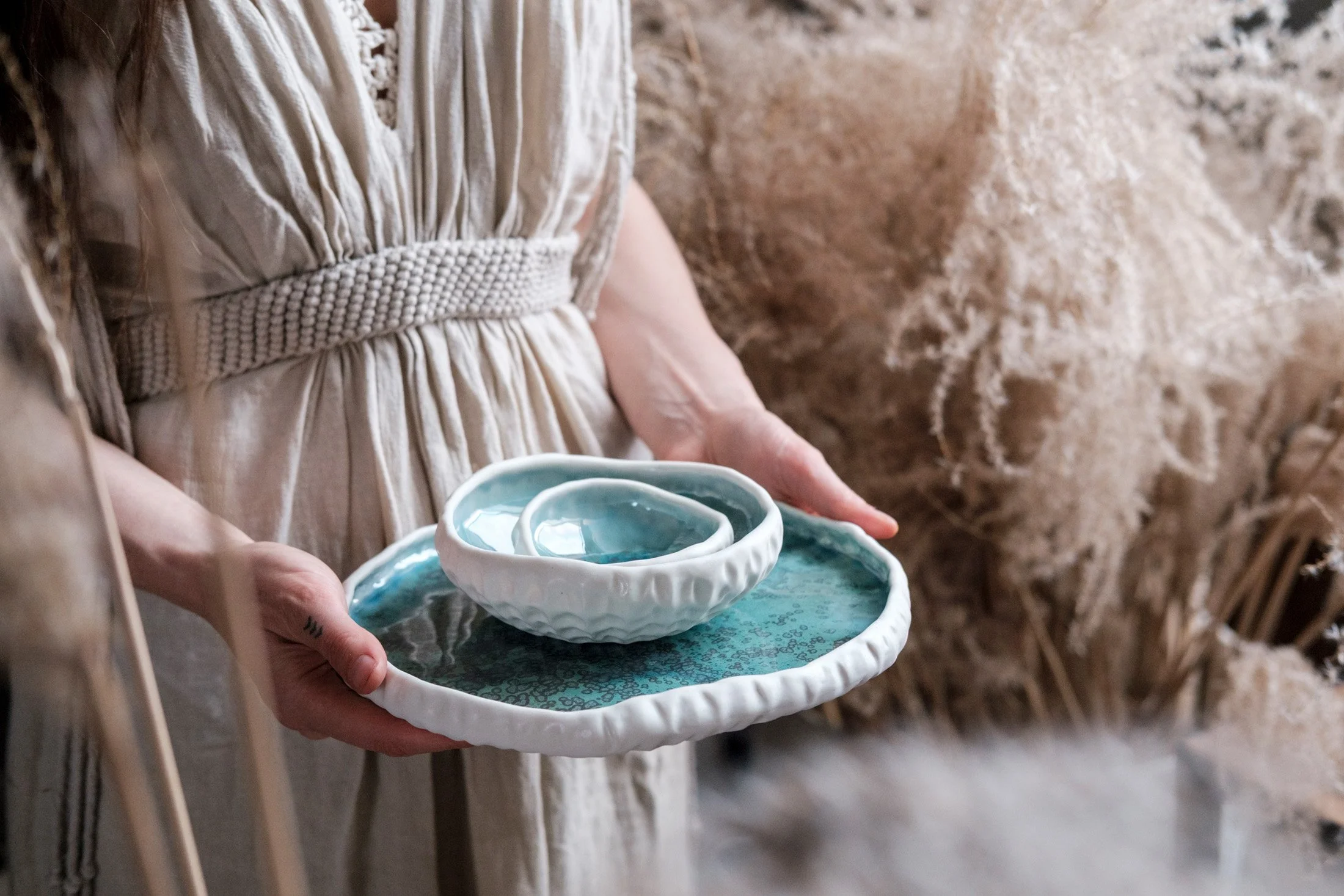
Dune and Coral share the same profile, with Coral distinguished by its added surface texture. Instead of rising straight up from the plate, the rim curves gently inward, creating a more pronounced, sculptural silhouette.
As a passionate introvert, this is a personal favourite of mine. There is something quietly distinctive about this shape: it feels special without demanding attention.
Of course, a more expressive profile comes with a few compromises.
The plates take up more cupboard space, and their stacks are less uniform — more of an irregular tower than the satisfying, perfectly aligned stack of our Classic profile. A little water can also collect around the rim during a dishwasher cycle, although the plates fit in most dishwashers.
For me, the advantages more than make up for these small inconveniences.
The higher rim makes this an exceptionally practical plate to eat from. If, like me, you sometimes eat dinner curled up on the sofa, you'll appreciate being able to hold the plate almost like a bowl, without worrying about food sliding off. The rim also makes it easy to gather food onto a spoon.
It can be particularly helpful for anyone who finds a higher edge easier to eat from, including people with limited hand control or certain motor difficulties.
And then there is the beauty of it. The higher, inward-curving rim gives the plate a distinctive silhouette, making the profile stand out on the table even before you notice the glaze or texture.
PROFILE — CLASSIC
-
![]()
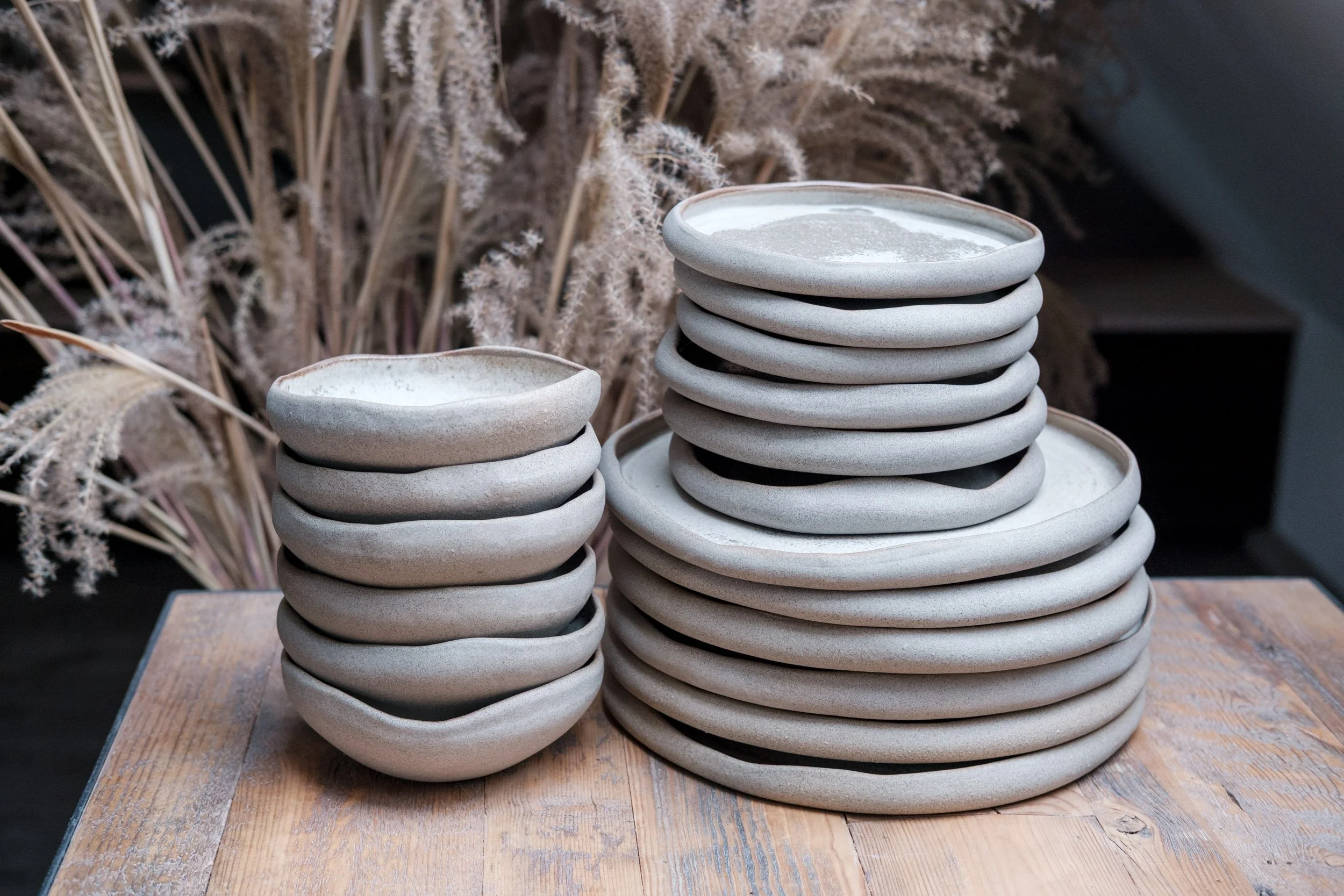
Stack of grey stoneware dinner set in STONE glaze
-
![]()
Porcelain — Mix & Match colors
-
![]()
Grey stoneware — STONE glaze
-
![]()
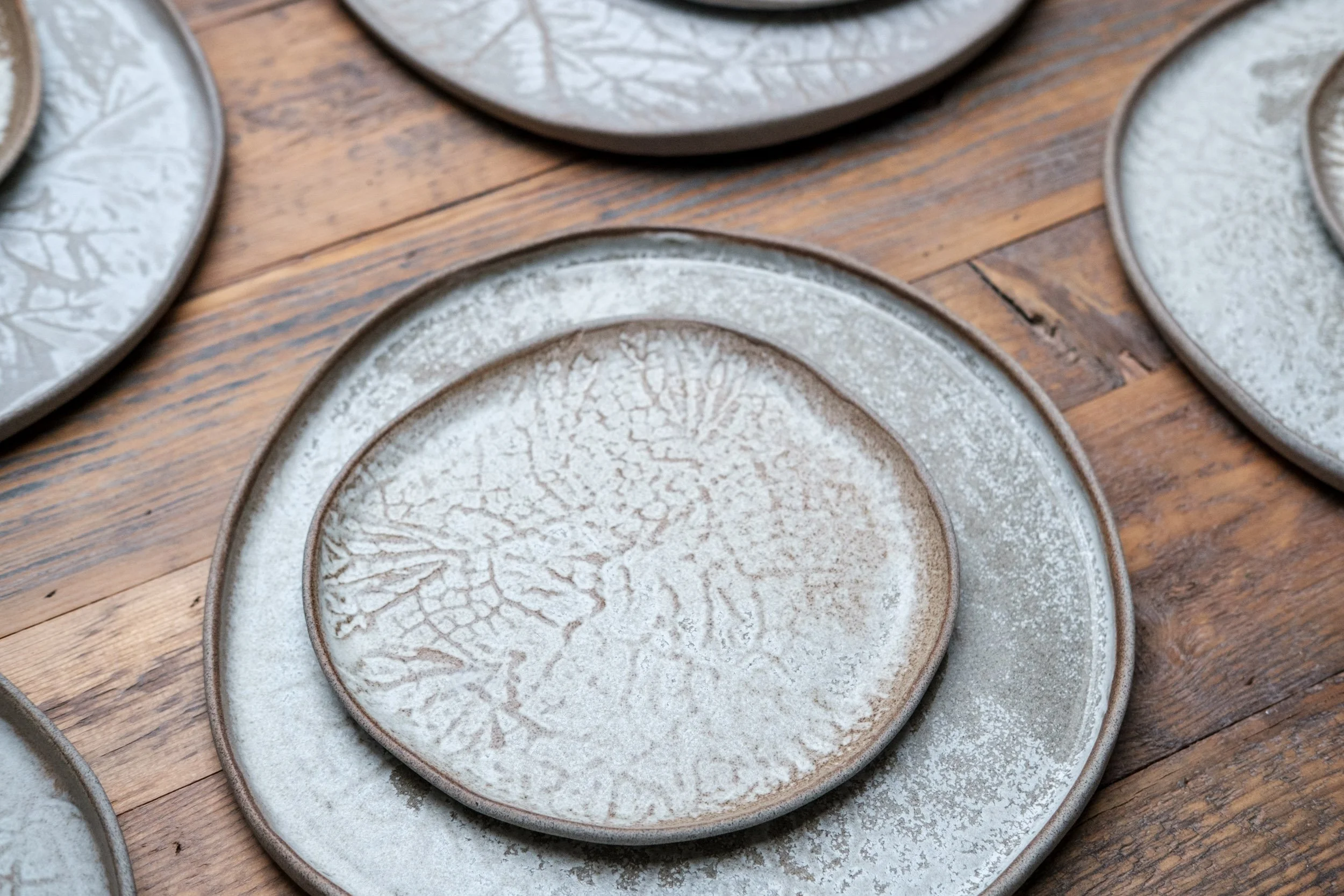
Grey stoneware with leaf texture — STONE glaze
-
![]()
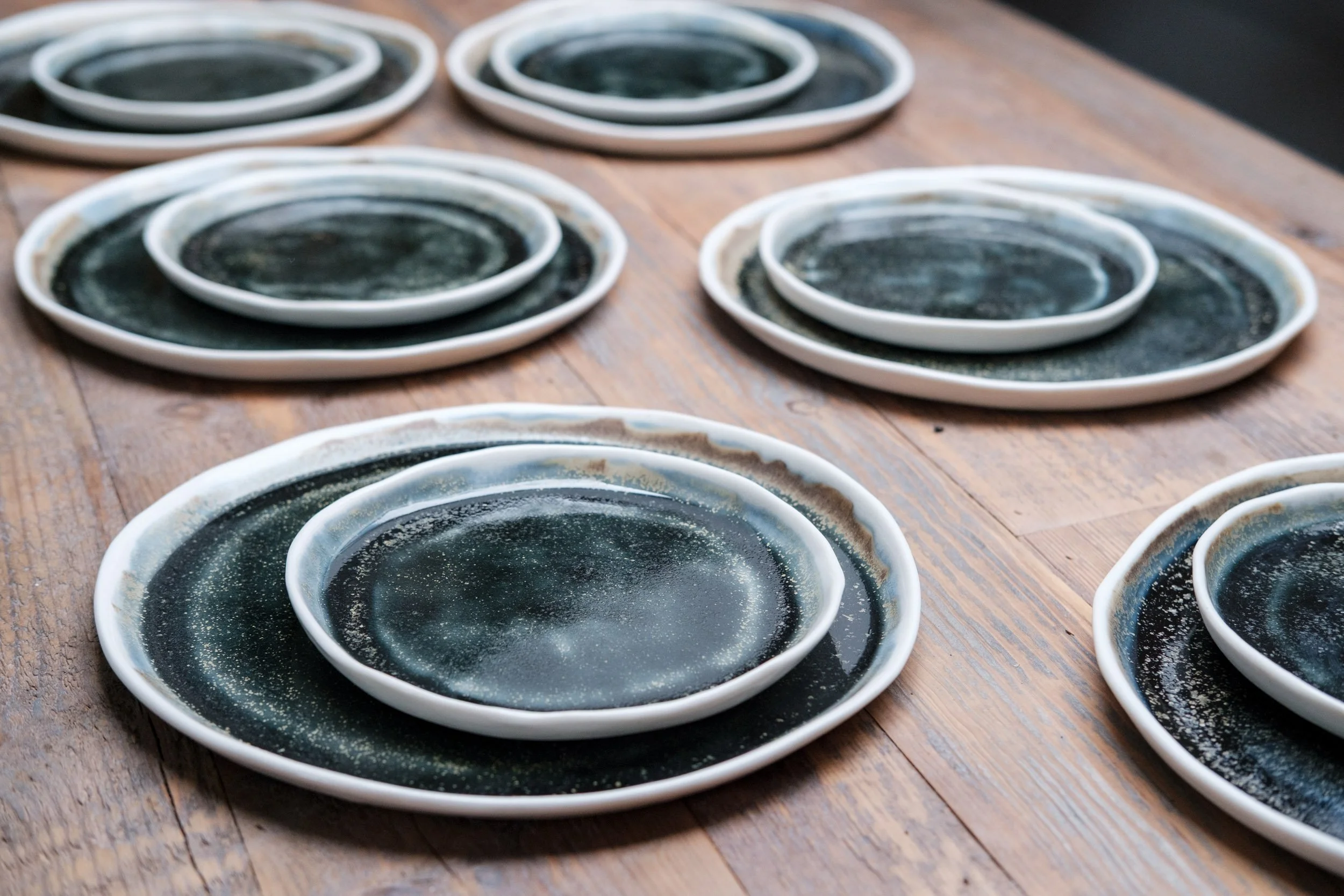
Porcelain — Galaxy glaze
-
![]()
Porcelain — SAHARA glaze
-
![]()
Grey Stoneware — STONE glaze
-
![]()
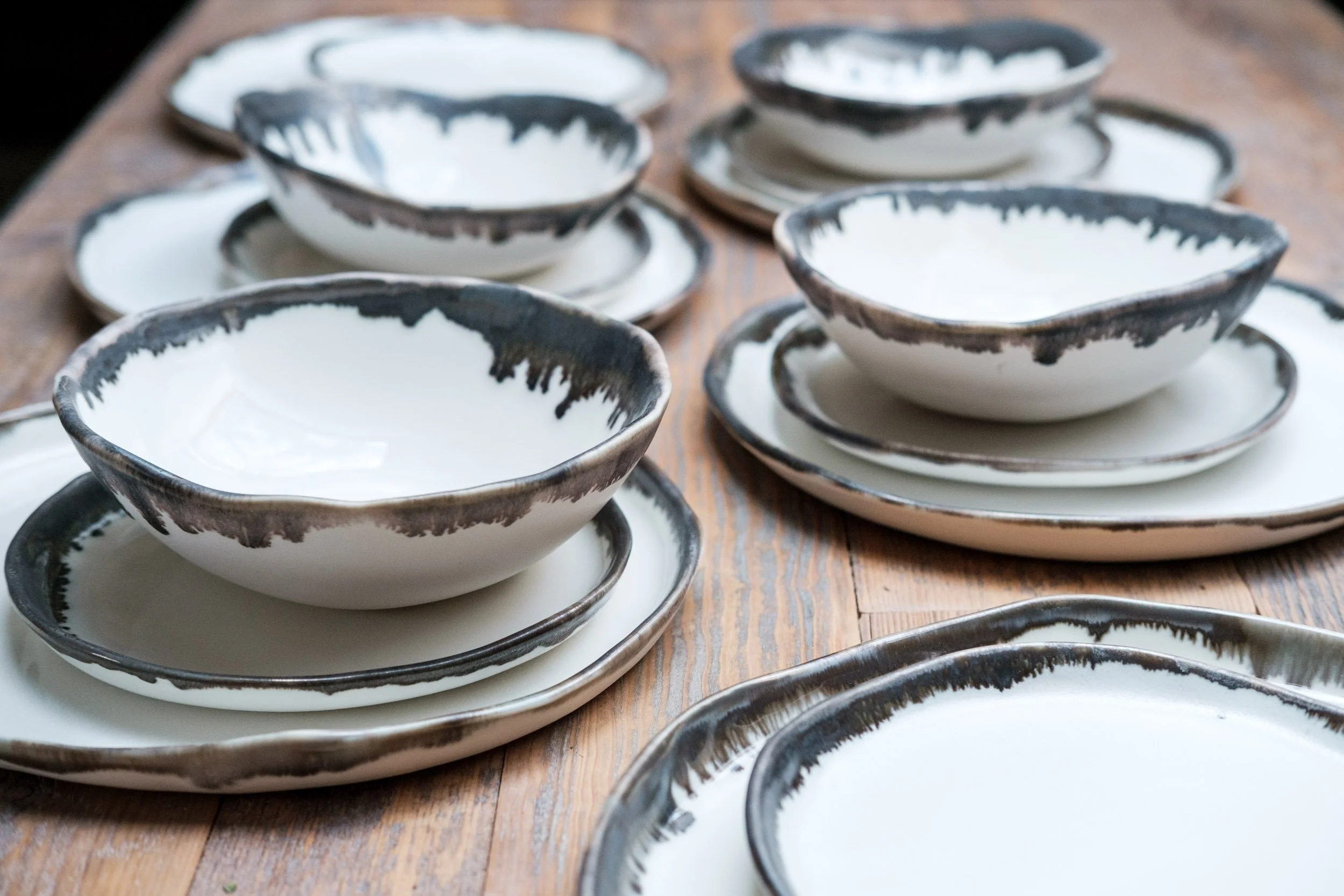
Porcelain — Bronze Rim
-
![]()
Grey Stoneware — STONE glaze + LEAF texture
-
![]()
Porcelain — TQ glaze
PROFILE — ORGANIC OPEN
-
![]()
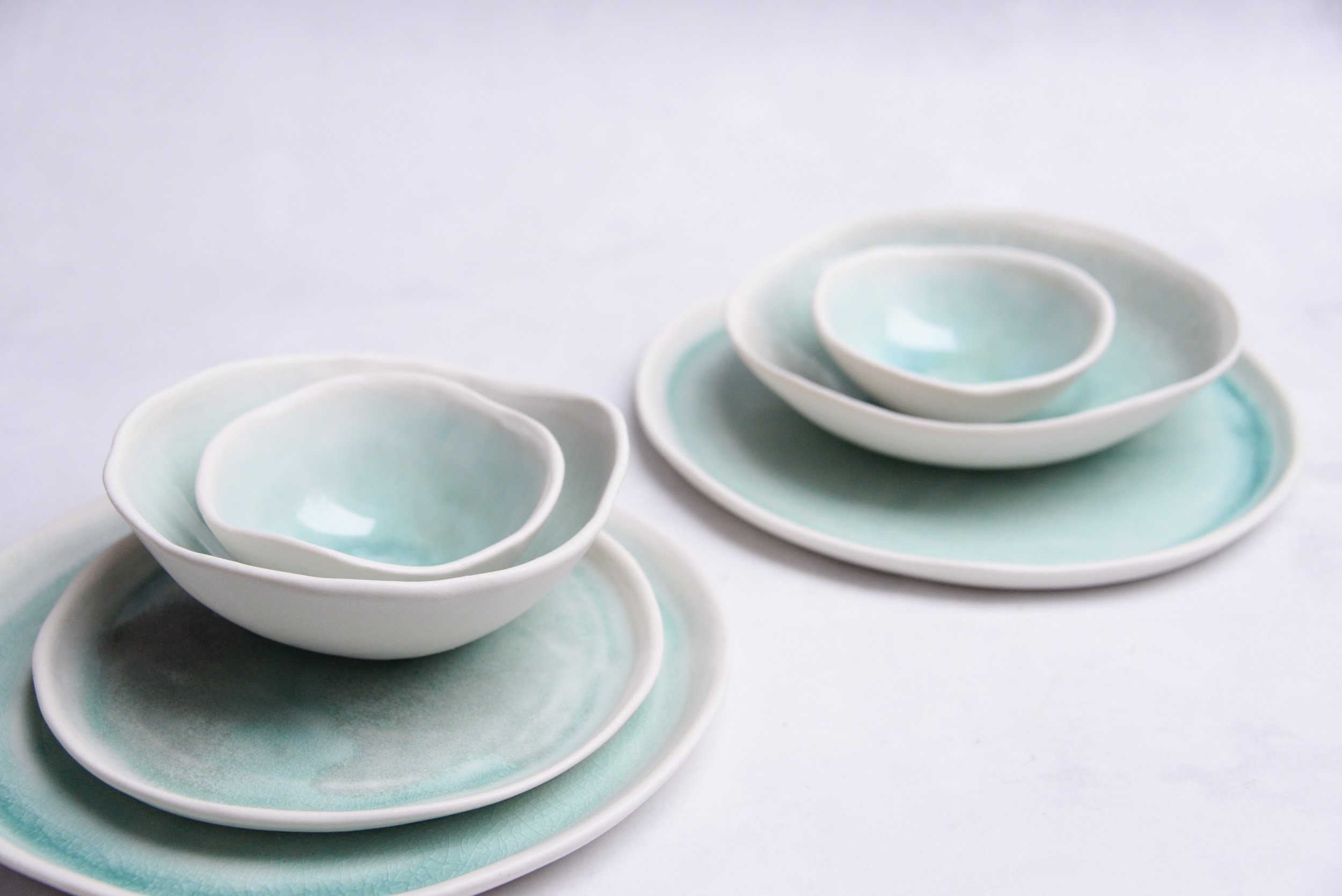
Grey Stoneware — TQ glaze
-
![]()
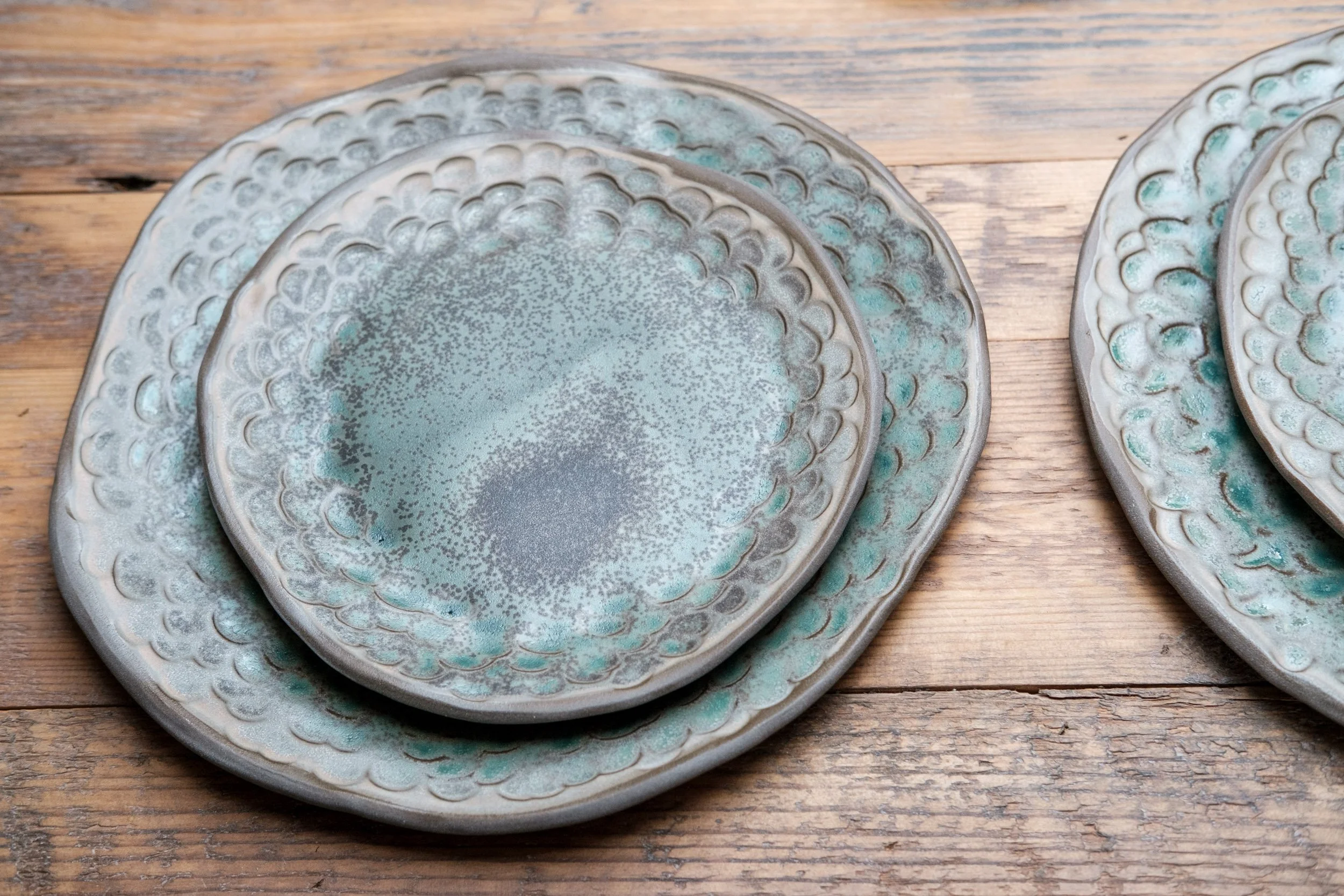
Grey Stoneware — SERENDIPITY glaze
-
![]()
Grey Stoneware — TQ glaze
PROFILE — DUNE / CORAL
-
![]()
Porcelain — Coral edge, Galaxy & White glaze
-
![]()
Grey Stoneware — DUNE plates & bowls, STONE glaze
-
![]()
Grey Stoneware — DUNE plates & bowls, STONE glaze
-
![]()
Grey Stoneware — DUNE plates, STONE glaze
-
![]()
Porcelain — Coral edge, Eywa TQ glaze
-
![]()
Porcelain — Coral edge, Eywa TQ glaze
-
![]()
Porcelain — Coral edge, Eywa TQ glaze
-
![]()
Porcelain — Coral edge, Eywa TQ glaze
-
![]()
Porcelain — Coral edge, Eywa TQ glaze
-
![]()
Grey Stoneware — DUNE edge for plates and bowls, Stone glaze
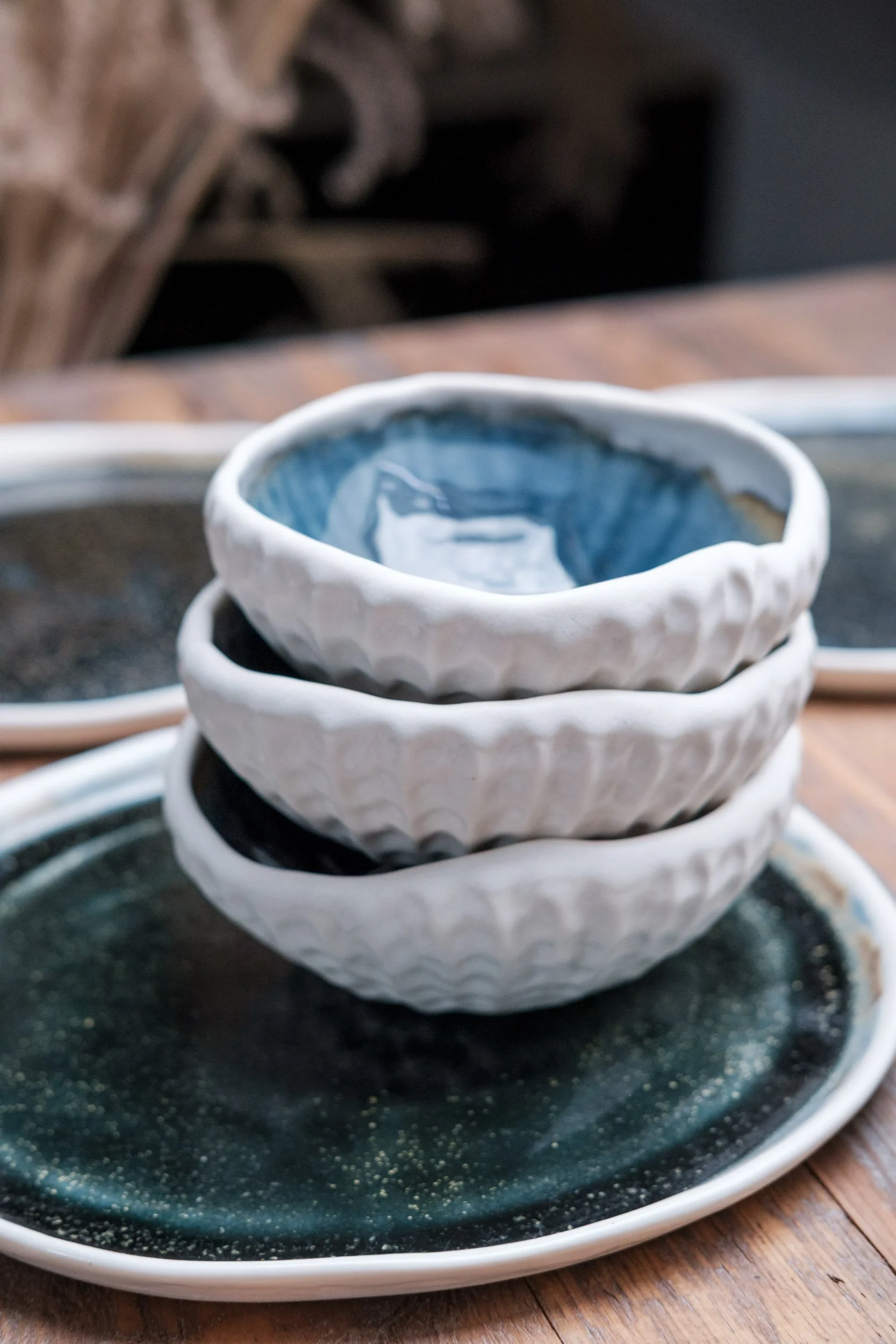
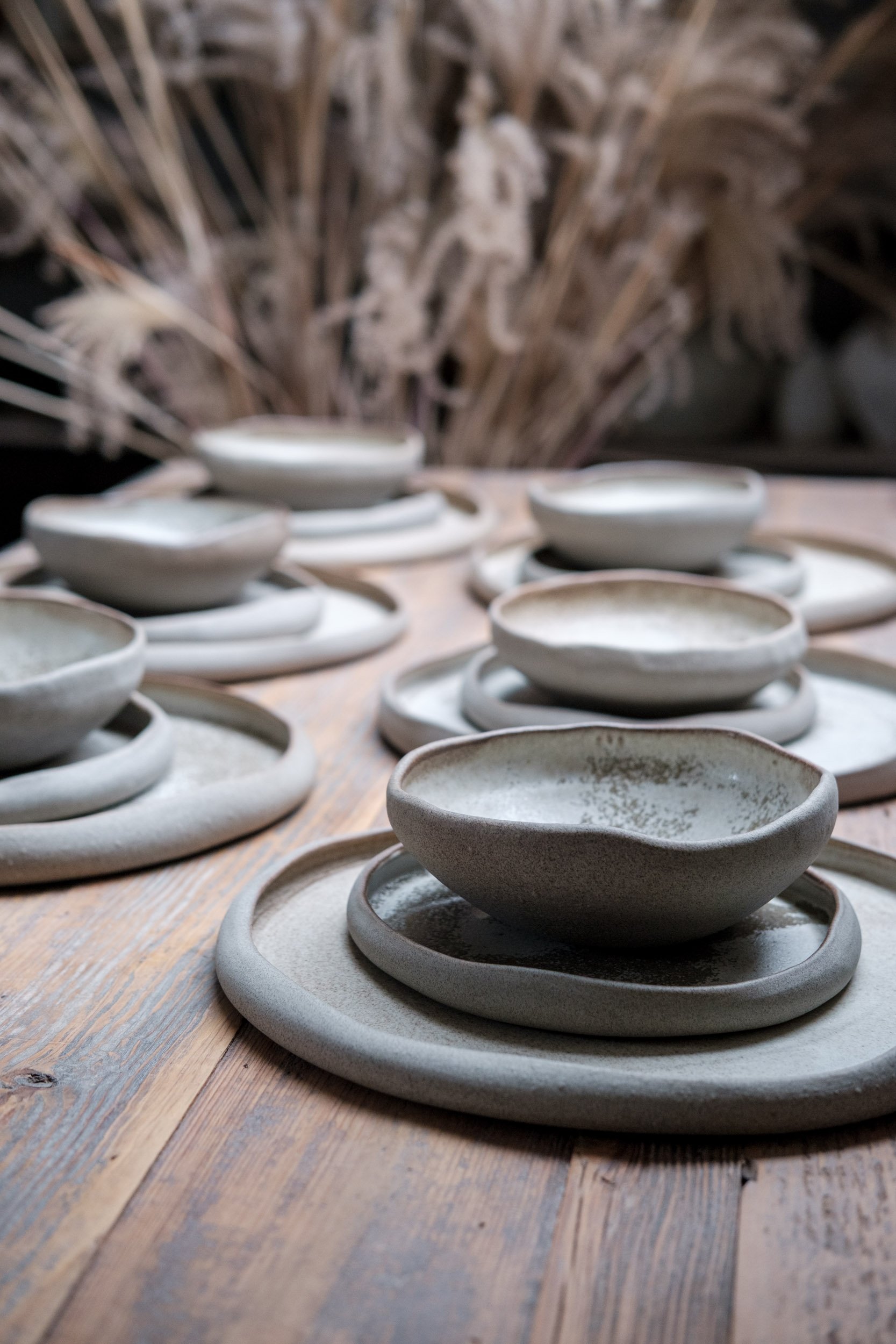
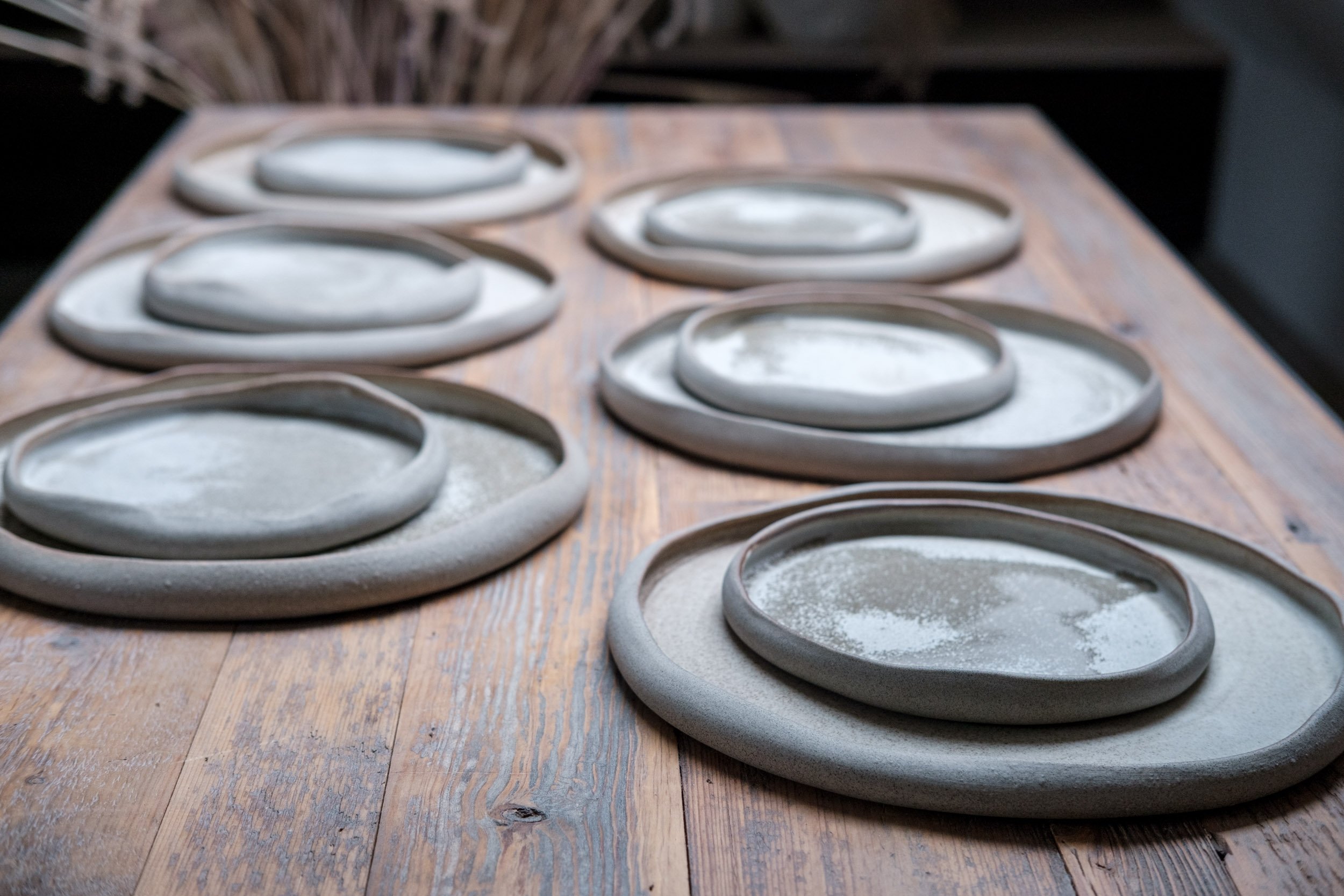
3. ChoosING Your Set Size and ITEM SIZES
Start with six
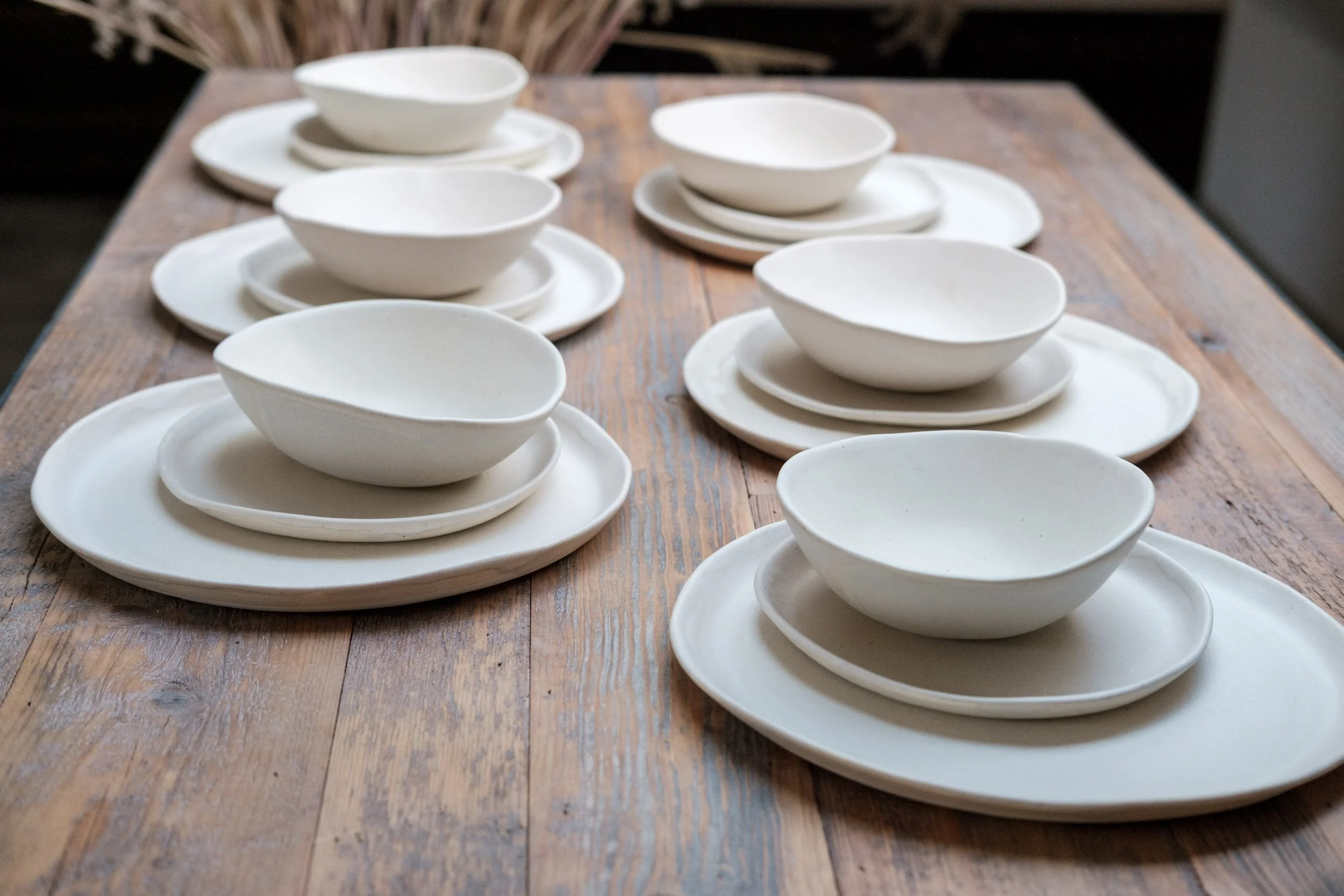
In my humble opinion, a six-person dinnerware set is the perfect starting point. It's enough for everyday family life, a few friends around the table, or a small dinner party — without filling every cupboard with dishes.
And the beauty of a set of six is that it multiplies easily. Add another six, and you're ready for twelve guests. Double it again, and you can serve twenty-four. Add another set, and you're hosting thirty-six. Perfect for those of us with mansions!
More seriously, choosing a set in multiples of six makes it easy to grow your collection over time. You can start with the essentials and add more pieces as your household, entertaining habits or collection evolves.
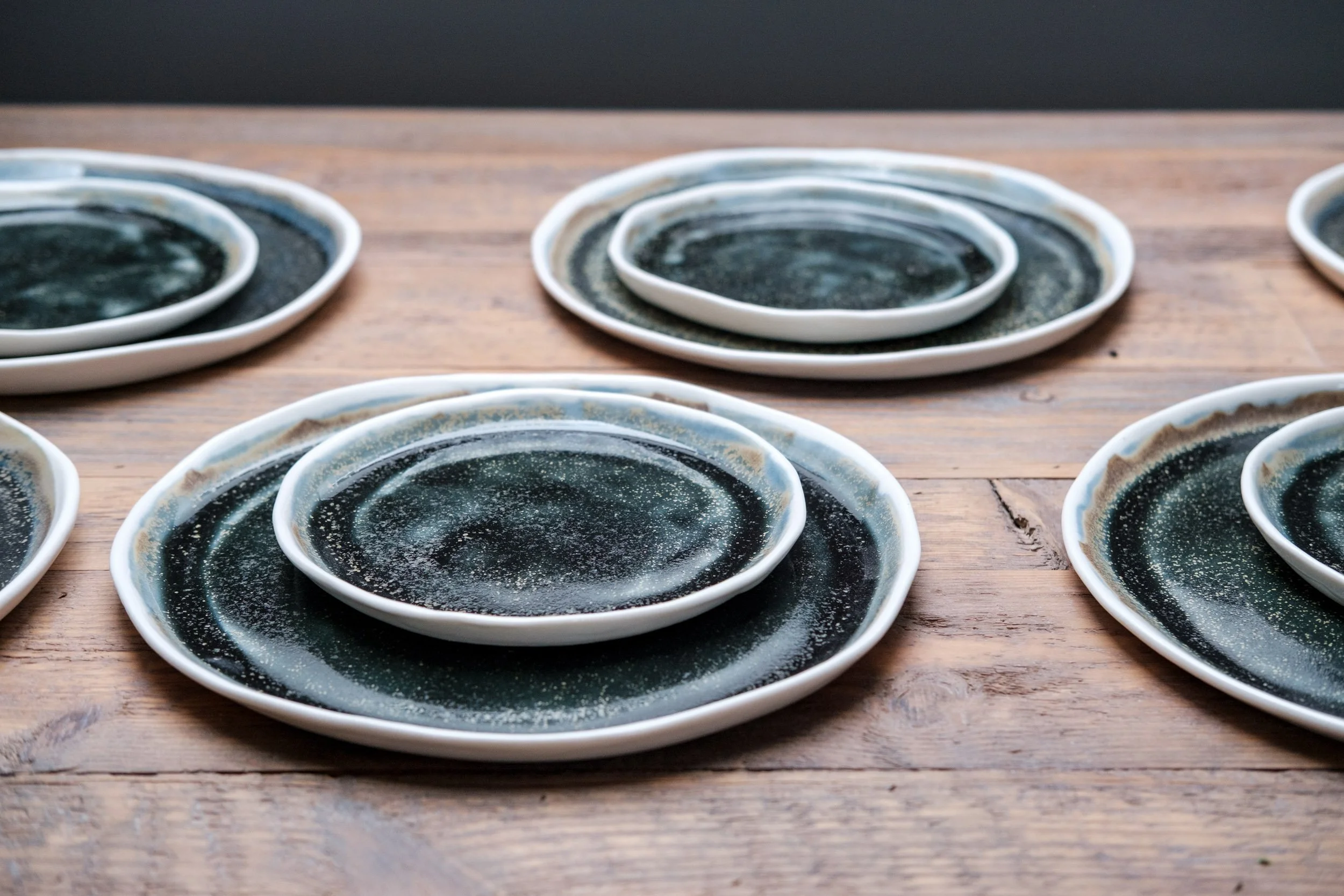
Choosing your plate sizes
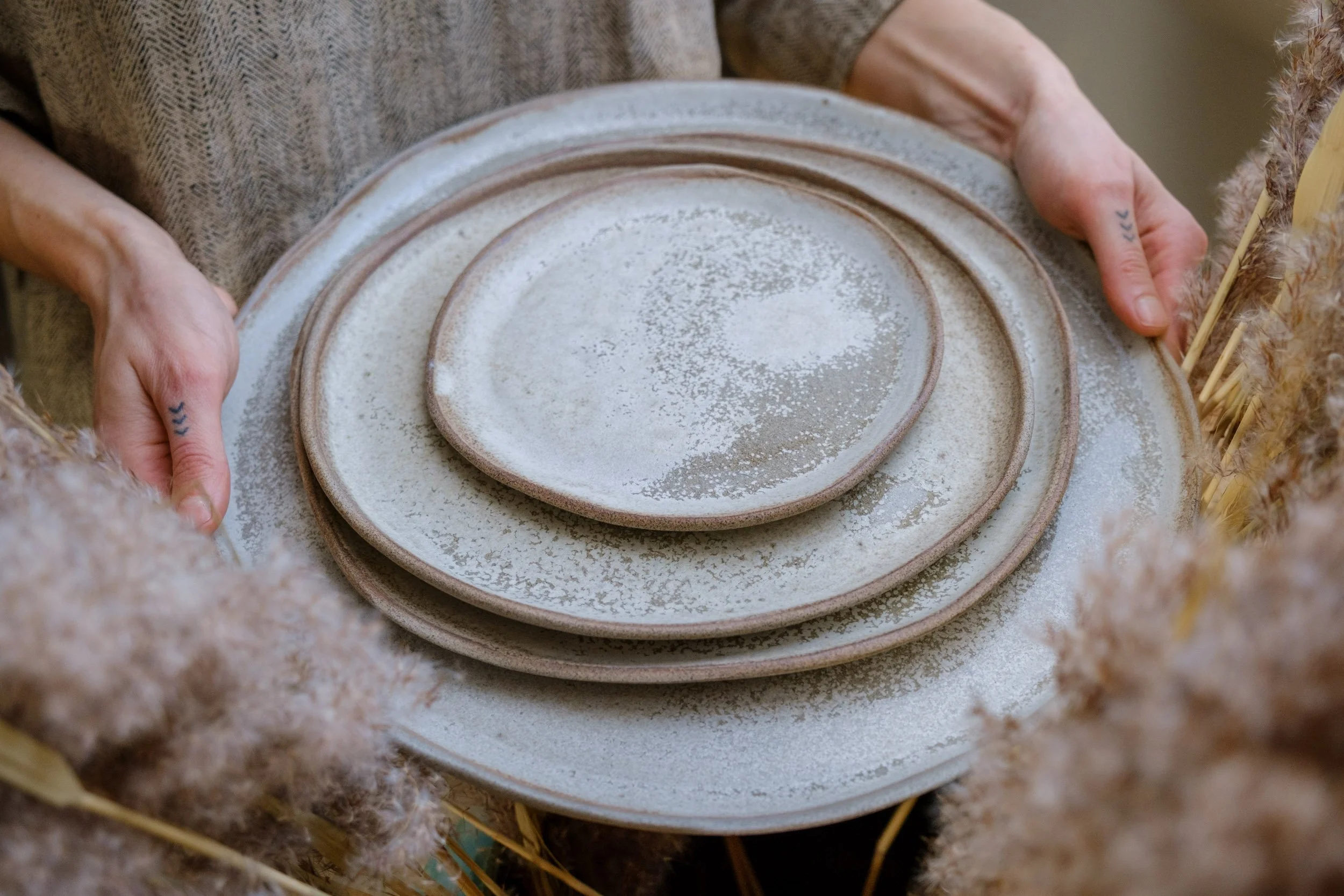
We make plates in a wide range of sizes, from tiny trinket plates to generous platters and statement pieces. But when it comes to a dinnerware set, we tend to return to two essentials: a smaller plate and a dinner plate. Finding the perfect dinner plate size has been a surprisingly long journey. A 25 cm plate is practical, takes up less space and is ideal for everyday meals. But for some people, it simply feels too small. A 27 cm plate feels more generous and more like a proper dinner plate. So, for our porcelain sets, we settled on 26 cm as a happy middle ground. Our stoneware dinner plates are available in different sizes, depending on the collection. There is also a practical side to this decision: in our kiln, two 26 cm plates can fit on a shelf, whereas larger plates take up an entire shelf by themselves. Small decisions like these help us make the most of our studio's resources. Ultimately, the right size is the one that suits your appetite, your table and the way you like to eat.
Our plate size guide
14 cm / 5.5 in — Trinkets, small bites and little treats
18 cm / 7 in — Dessert plates, cake and breakfast
20 cm / 7.9 in — Side plates and smaller meals
25 cm / 9.8 in — Compact, practical everyday dinner plates
26 cm / 10.2 in — Our middle-ground porcelain dinner plate
27 cm / 10.6 in — A more generous everyday dinner plate
30–32 cm / 11.8–12.6 in — Serving platters and centre-of-the-table dishes
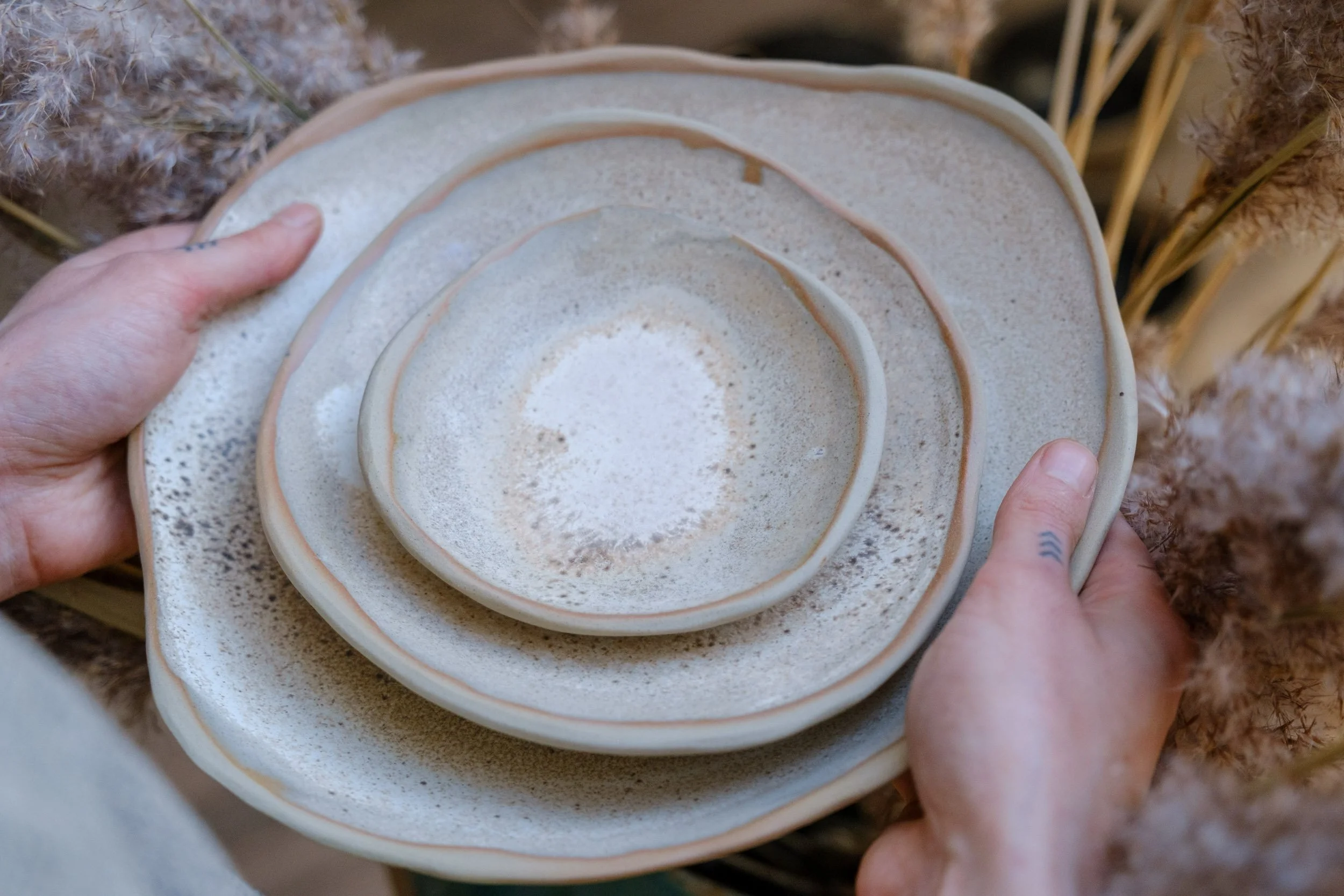
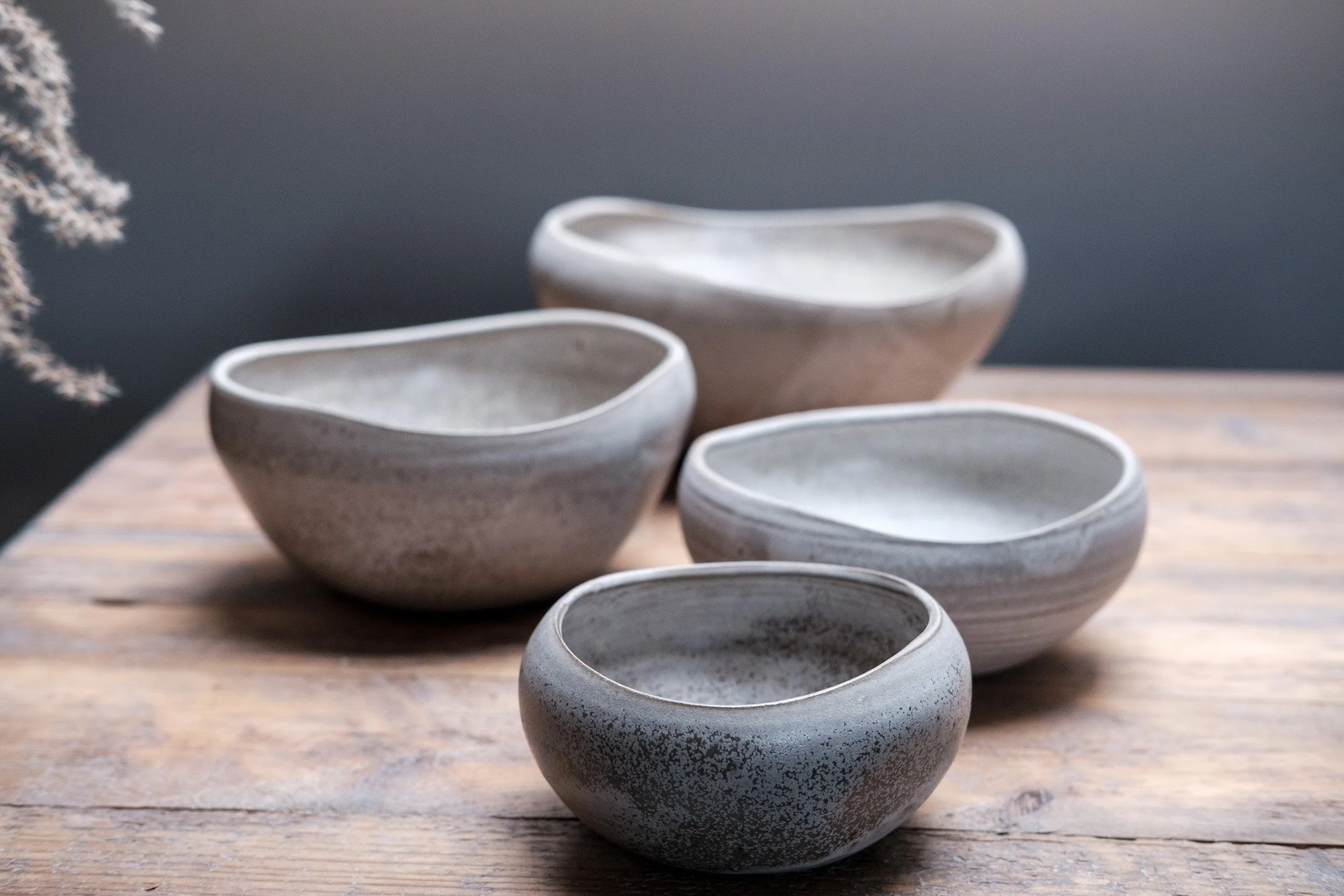
Choosing your bowl sizes
Bowls are where personal habits really come into play. Some people love one generous bowl for everything; others prefer several smaller bowls for different courses.
Our sets most commonly include an 18 cm soup bowl. It's a versatile size for soup, porridge, salads and everyday meals.
The 15 cm bowl, which we call our dessert bowl, is another favourite. It's also perfectly suitable for soup, especially if you prefer smaller portions and the option of going back for seconds.
I like the Japanese approach to eating, where modest portions and taking only what you need can help reduce food waste. Rather than serving yourself an enormous bowl and feeling obliged to finish it, a smaller bowl leaves room for another helping if you're still hungry.
At home, my go-to is the 20 cm bowl. It's my ideal size for everyday meals. My husband, on the other hand, prefers the generous 24 cm bowl.
Once you go beyond 24 cm, we generally move into serving-bowl territory, with our salad bowls typically measuring 26–30 cm.
Our bowl size guide
10–12 cm / 3.9–4.7 in — Dips, sauces, nuts and small sides
15 cm / 5.9 in — Dessert, smaller portions and soup
18 cm / 7.1 in — Everyday soup bowls and versatile individual servings
20 cm / 7.9 in — Pasta, salads and everyday meals
24 cm / 9.4 in — Generous pasta bowls and Buddha bowls
26–30 cm / 10.2–11.8 in — Sharing salads and serving bowls
A good collection often combines smaller bowls for sides and desserts, everyday bowls for individual meals, and a few larger pieces for serving at the centre of the table.
Your table, your everyday rituals.
Whether you choose the clean lines of our Classic profile, the sculptural edges of Dune and Coral, or the natural shapes of the ORGANIC, every piece is made in our studio with the same intention: to bring beauty and practicality into everyday life.
Choose the pieces you love, find the material and profile that suit you, and build a set that will become part of your home for years to come.