On Plagiarism, Originality, and Finding Your Own Visual Language in Ceramics
As potters, we all begin by learning from others. We study forms, surfaces, glazes, and traditions. This is natural — and necessary. Craft is built on lineage.
But there is a clear line between learning from influence and copying a finished visual language. When that line is crossed, it stops being inspiration and becomes plagiarism.
I want to speak openly about this, especially for potters who are early in their journey and still shaping their own voice.
When does inspiration become plagiarism?
Plagiarism in ceramics is not defined by copying a single element in isolation.
It is defined by the repetition of a specific combination of elements that together form a recognizable design identity.
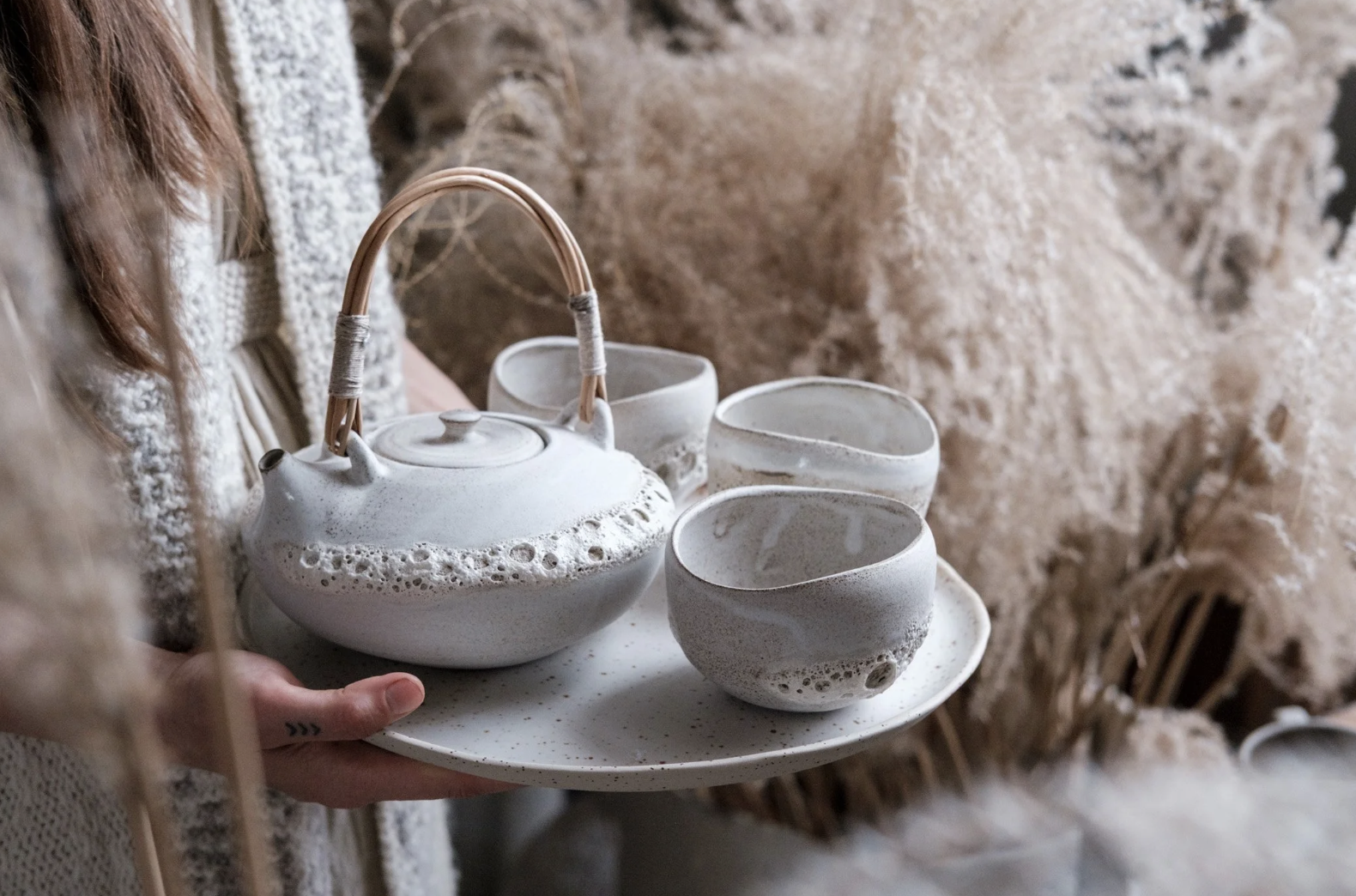
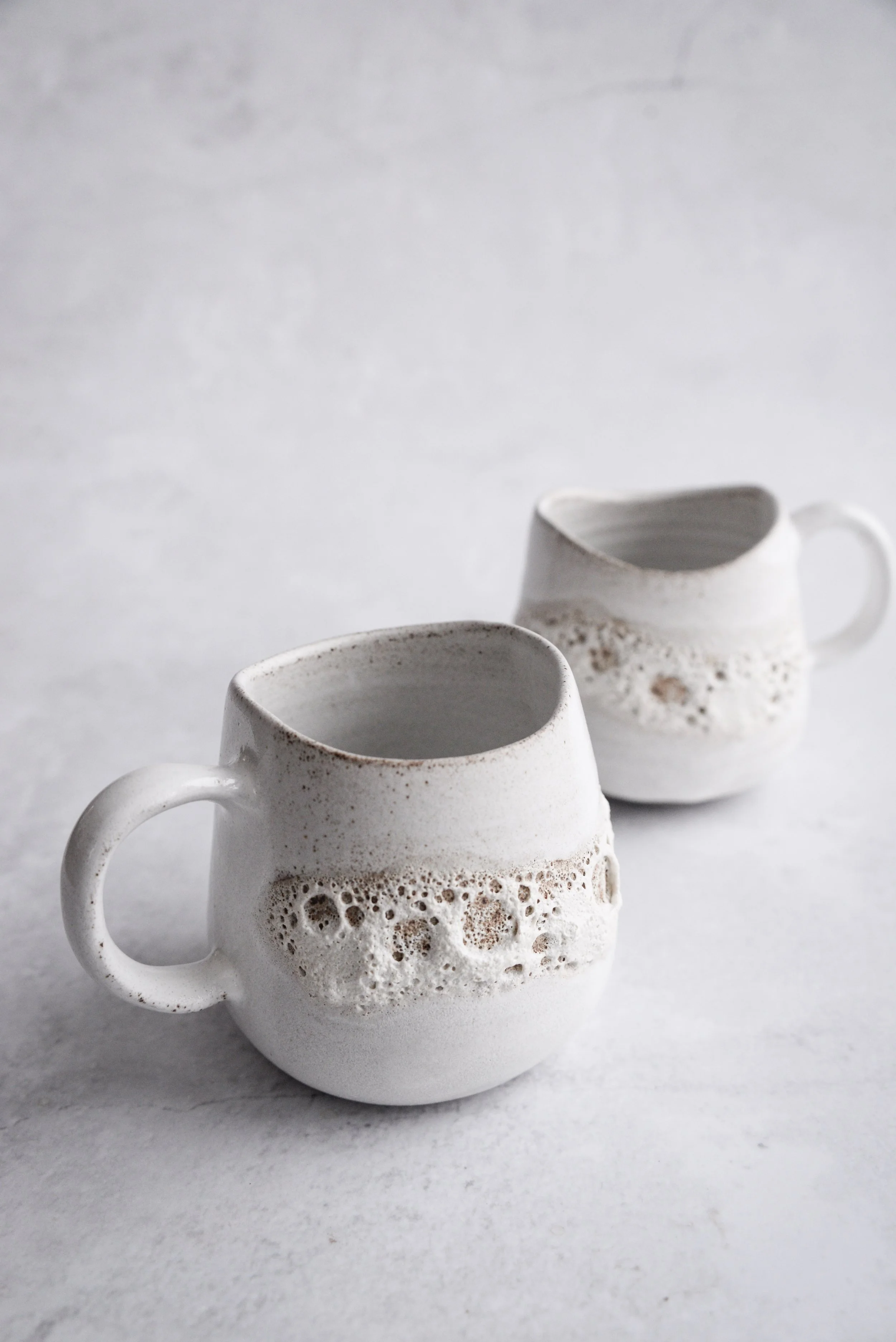
In my own work, one of my most recognizable and widely shared designs includes:
a specific vessel proportion and silhouette
a cut-out rim that alters both function and visual rhythm
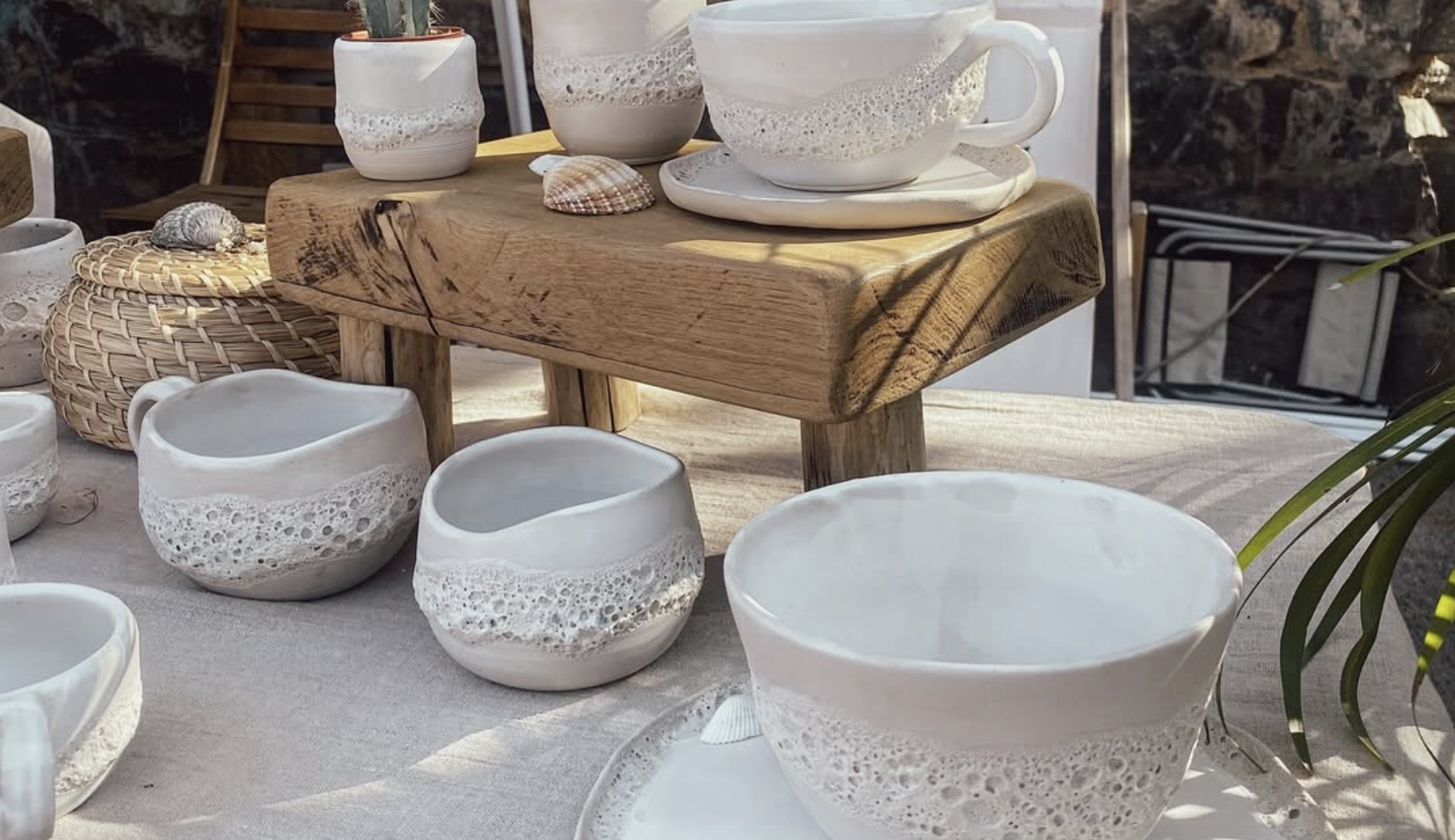
a pure white glaze paired with a central lava inlay
the lava placed in an undulating, intentional band, not randomly or fully covering the form
Each of these elements alone is not the issue.
What makes it plagiarism is when all of them appear together, producing a piece that is immediately readable as someone else’s established work.
At that point, the result is no longer “inspired by” — it is matching.
Visual comparison
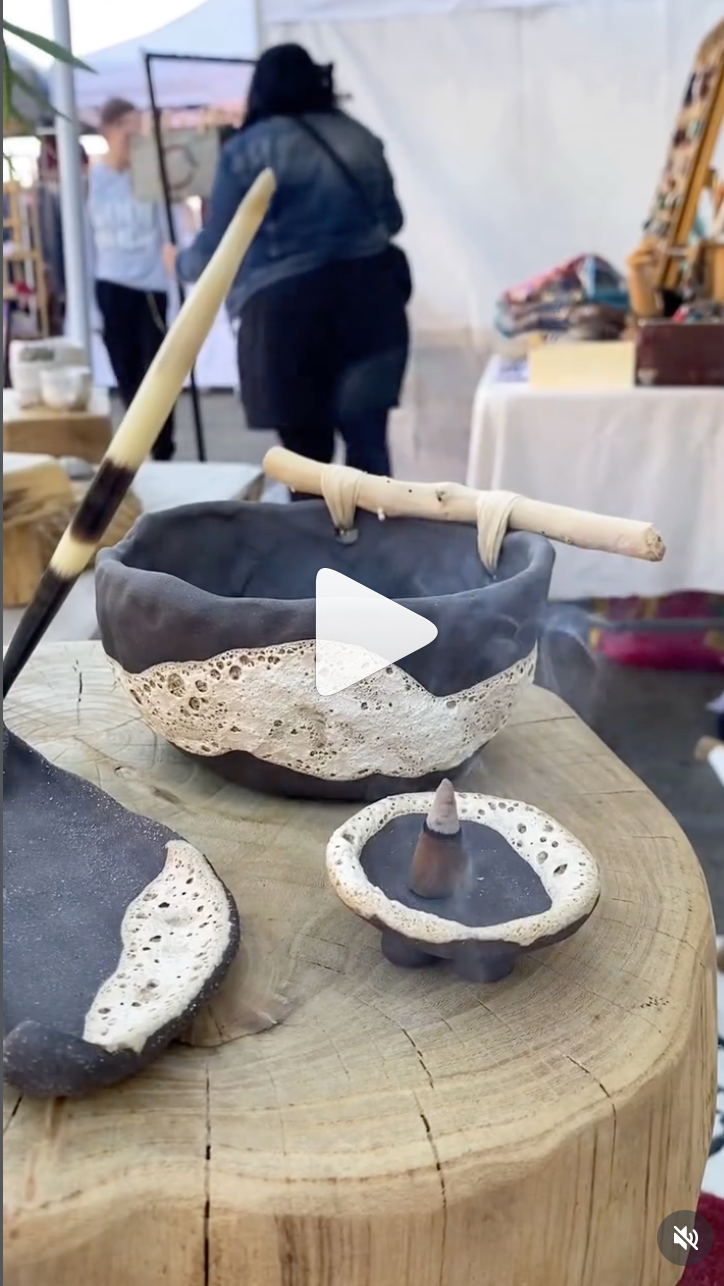
Images shown on the left: pieces made by a fellow potter after purchasing my Snow and Lava glazes, demonstrating direct visual overlap in form, rim detail, and glaze application.
The similarities are not limited to one idea or technique.
They include form, structural detail, glaze contrast, and placement — working together in the same visual language.
A visual language does not happen by accident.
These designs come from:
years of testing and failure
refining proportions again and again
discarding dozens of iterations
learning how material, glaze, and form speak together
When someone reproduces not just the idea, but the same form + same cut-out detail + same white-and-lava contrast + same placement, they bypass that entire process.
That is not learning.
That is extraction.
The part that hurts the most
There is another aspect of plagiarism that is rarely discussed.
For me, the most painful part is not only the copying itself — it is the break in connection.
In this case, the person had previously reached out to me with questions. I answered openly and generously, happy to support another maker. That kind of exchange is one of the quiet joys of this field: shared curiosity, shared learning, mutual respect.
When copying begins after that, something changes.
Trust erodes.
Openness closes.
A relationship that could have grown instead fractures.
We live in a time where we can learn from one another without ever meeting in person, without sharing a studio, without even speaking face to face. That makes integrity more important, not less.
Because when boundaries are crossed, it doesn’t just affect designs — it affects the willingness to share, to mentor, to help at all.
Plagiarism doesn’t only take from the original maker.
It thins the fabric of the community itself.
A note to potters who are just starting out
(Pictured: pieces made by a fellow potter after purchasing my glazes, demonstrating direct visual overlap in form, functional use, detail, and glaze application.)
If you are early in your ceramics journey, please hear this with care:
You do not need to copy someone else’s finished work to grow.
In fact, copying a complete design slows your development. It keeps you speaking in another artist’s language instead of discovering your own.
Ask yourself:
What happens if I change the form entirely?
What happens if I remove the signature detail?
What happens if I shift the glaze placement or abandon it?
What happens if I let my work feel unresolved for a while?
That uncomfortable space — where your work doesn’t quite know what it is yet — is where originality is born.
Materials are not identity
I openly sell glazes and recipes. I believe materials can be shared.
But materials are not identity.
Buying a glaze does not grant permission to reproduce the forms, proportions, rim cut-outs, or compositional language that define another artist’s work.
Ethical making means:
using shared materials within clearly distinct forms
letting influence pass through you, not be copied by you
allowing your work to evolve slowly, honestly, and independently
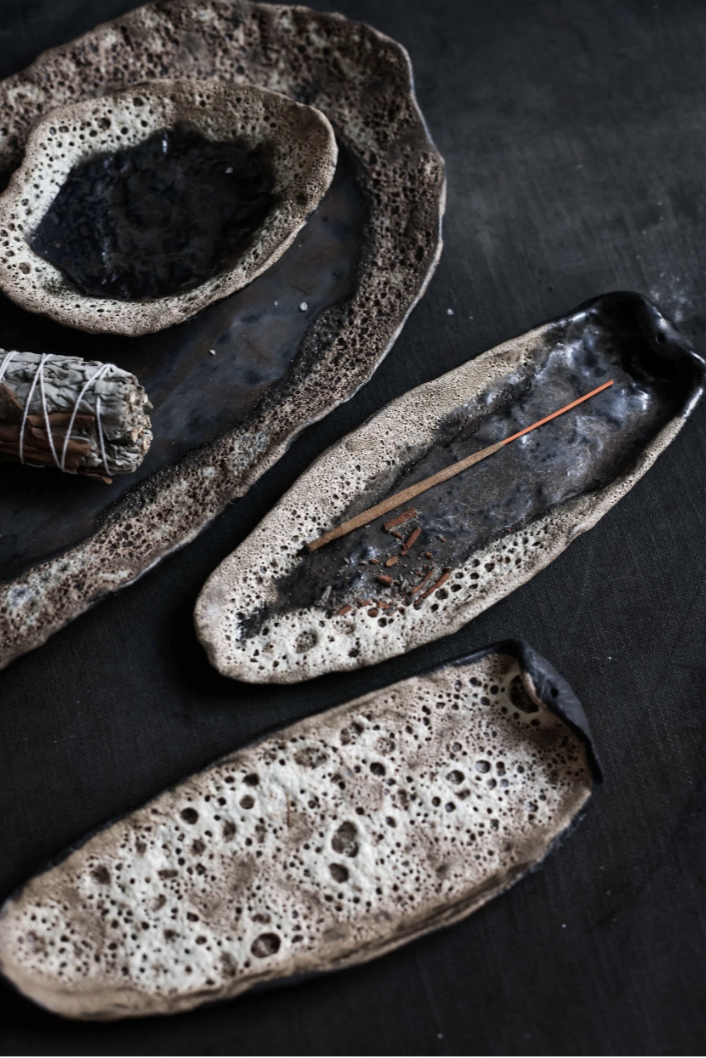
(Pictured my altar space line WabiSabi Rocks)
What is particularly concerning in cases like this is not a single image or product, but repetition over time.
When the same visual language appears across multiple years and multiple object types — from cups to incense holders — using the same form logic, surface contrast, and lava accents, it becomes clear that this is not accidental influence.
This is how plagiarism often hides:
not loudly, but consistently — paired with vague captions and aesthetic narratives that obscure authorship rather than acknowledge it.
Originality is not proven by poetic descriptions.
It is proven by divergence.
A closing thought
Ceramics is slow.
It rewards patience, restraint, and respect — for the material, for the process, and for one another.
Original work often looks quiet at first.
Sometimes even awkward.
But it is yours.
And that is worth protecting.
— Laima