YUTORI — On Designing, Making, and Stepping Outside the Box
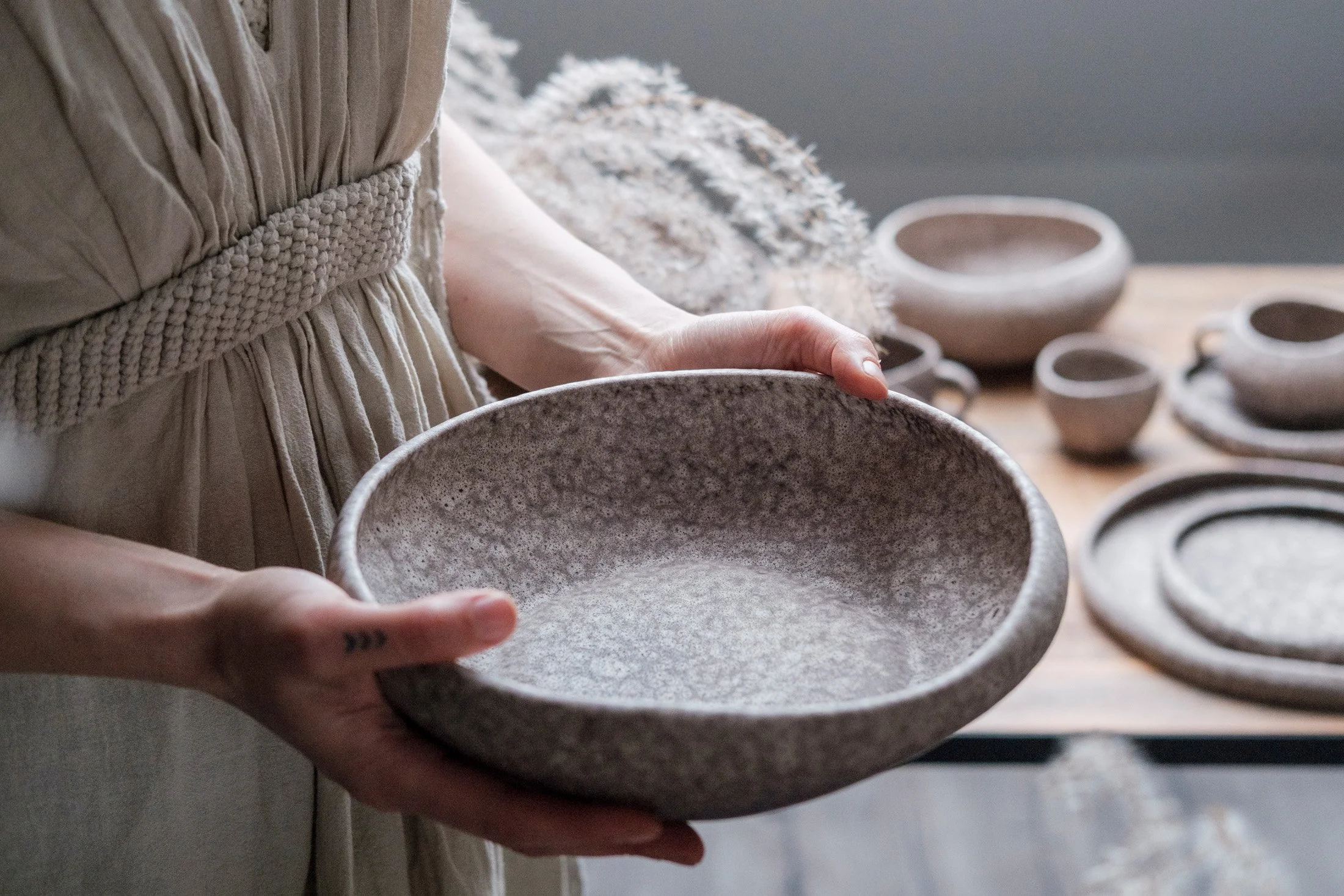
Over the years, my practice has expanded beyond the wheel and the studio bench. I think increasingly in terms of design systems: how form, surface, proportion, durability, and use come together across contexts. I identify today not only as a ceramicist, but very strongly as a designer.
The YUTORI Collection is a clear expression of that shift.
Maker and designer are not opposites
Being a maker taught me how materials behave, where forms fail, and what time does to objects that are actually used. Being a designer allows me to step back and ask different questions:
How will this live on a table every day?
How will it survive a restaurant service?
How do we translate an existing design language into a new scale without losing its integrity?
YUTORI exists because I stepped outside the narrow box of “only making with my own hands” and into a broader role: designing with intention, authorship, and responsibility.
From STONE to YUTORI
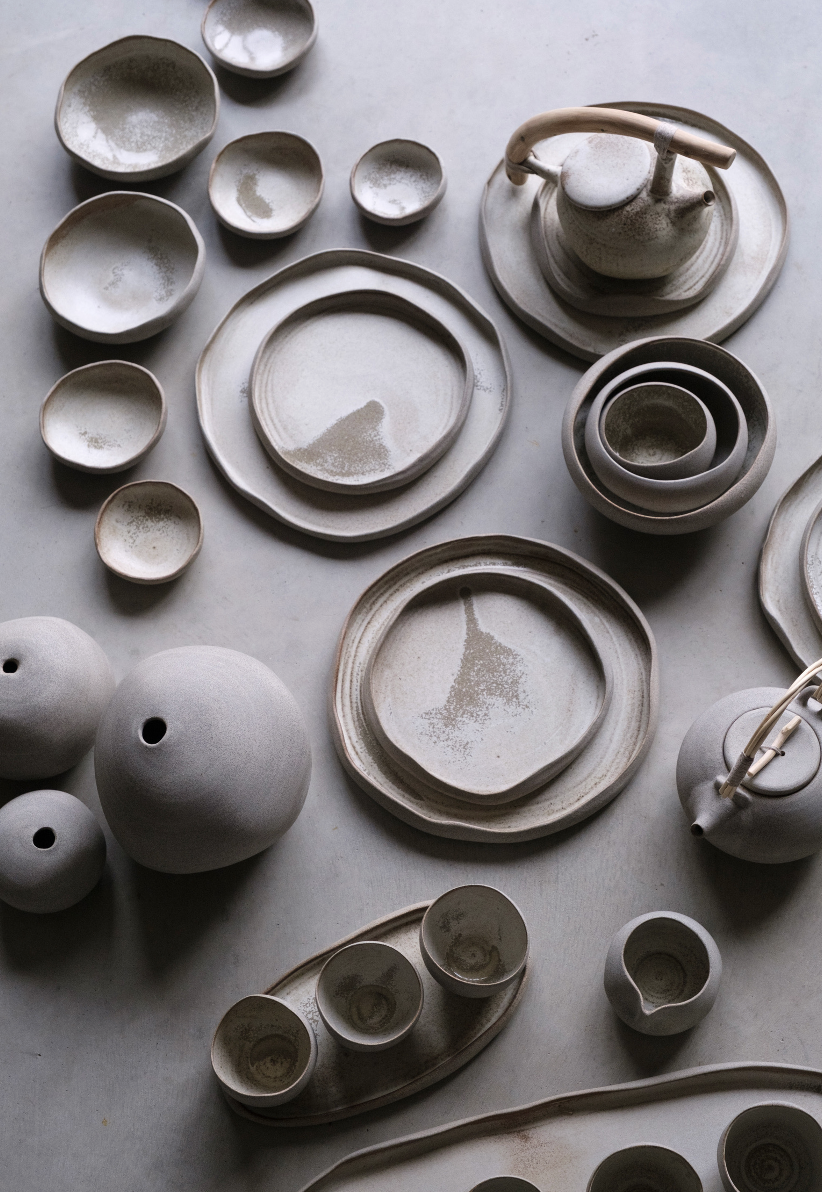
(Pictured Stone Collection)
The starting point for YUTORI was the STONE Collection, made in our Latvia studio. When STONE was nominated for a national design award in Latvia, it marked a moment of clarity for me.
This work is not only craft.
It is design.
The visual language — proportions, edges, restraint, surface balance — is distinctive and recognisable. It deserved to be seen, and it was already being requested in a different context.
Cafés and restaurants repeatedly asked for pieces that carried the STONE aesthetic, but with attributes required for hospitality use: durability, reinforced edges, consistency, and reliability under intensive daily handling.
YUTORI was born from that request.
Rather than scaling STONE itself, I chose to refine and redesign it — translating the language into forms suitable for professional environments.
YUTORI is not a copy of STONE.
It is STONE redesigned for hospitality.
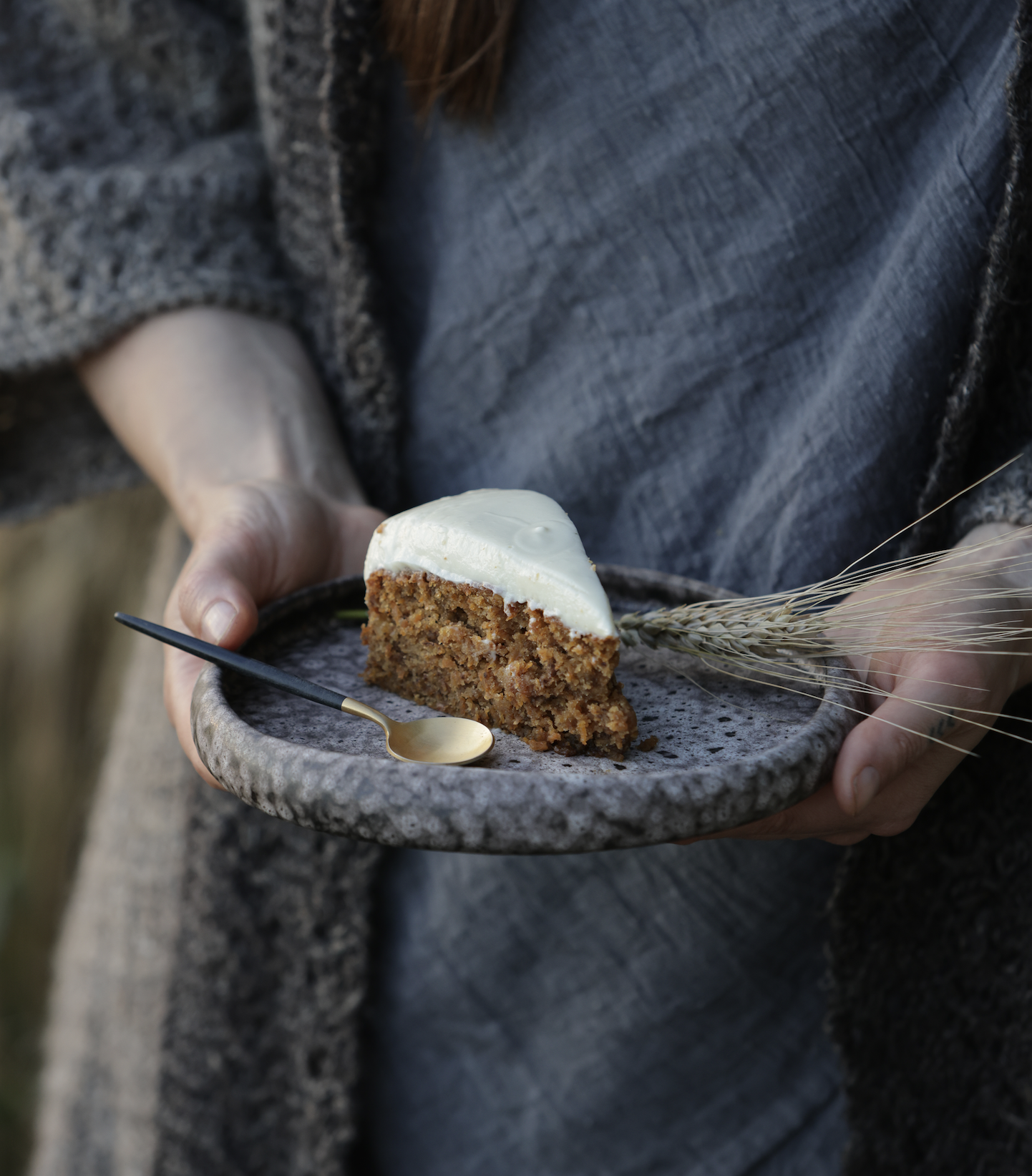
HOW YUTORI COLLECTION is made
The YUTORI Collection is produced in Portugal, in a ceramic studio of around 30 people.
The pieces are slip-cast in moulds, a method chosen intentionally. Ceramic production exists on a wide spectrum — from heavy industry producing thousands of identical items per day, to smaller studios where casting is combined with extensive hand-finishing.
YUTORI belongs to the latter.
While the forms begin in moulds, they are handled by human hands throughout the process:
rims are cut manually
surfaces are sponged and refined
glazes are applied through spray glazing
pieces are inspected, loaded, and unloaded by people
Casting here is not automation.
It is a design and production tool, just like the wheel or slab roller — used to achieve consistency, durability, and reliability at scale.
As a designer, choosing this method was not a compromise.
It was the correct decision for the function YUTORI was meant to serve.
On time, scale, and reality
What I initially believed would take two or three months became a two-year process.
Design refinement, testing, adjustments, approvals, and production took time — far more time than anticipated.
Only after those two years did we receive the first full batch: 2,400 pieces, across eight shapes, in three colours.
The collection now includes:
dinner plates
dessert plates
the SHELL cup
saucer plates
the HOME mug
and three PEBBLE bowl sizes: dessert, ramen, and pasta

Design beyond my own studio
YUTORI is not the first time I have stepped into a design role beyond my own studio production.
Since 2016, the Eclipse Collection — a signature tableware range I designed for Vaidava Ceramics — has been continuously produced under a long-term design and licensing agreement.
That collaboration reinforced something important for me:
design authorship can exist across different production models, without losing integrity, when it is named clearly and carried responsibly.
About Laima Ceramics as a studio
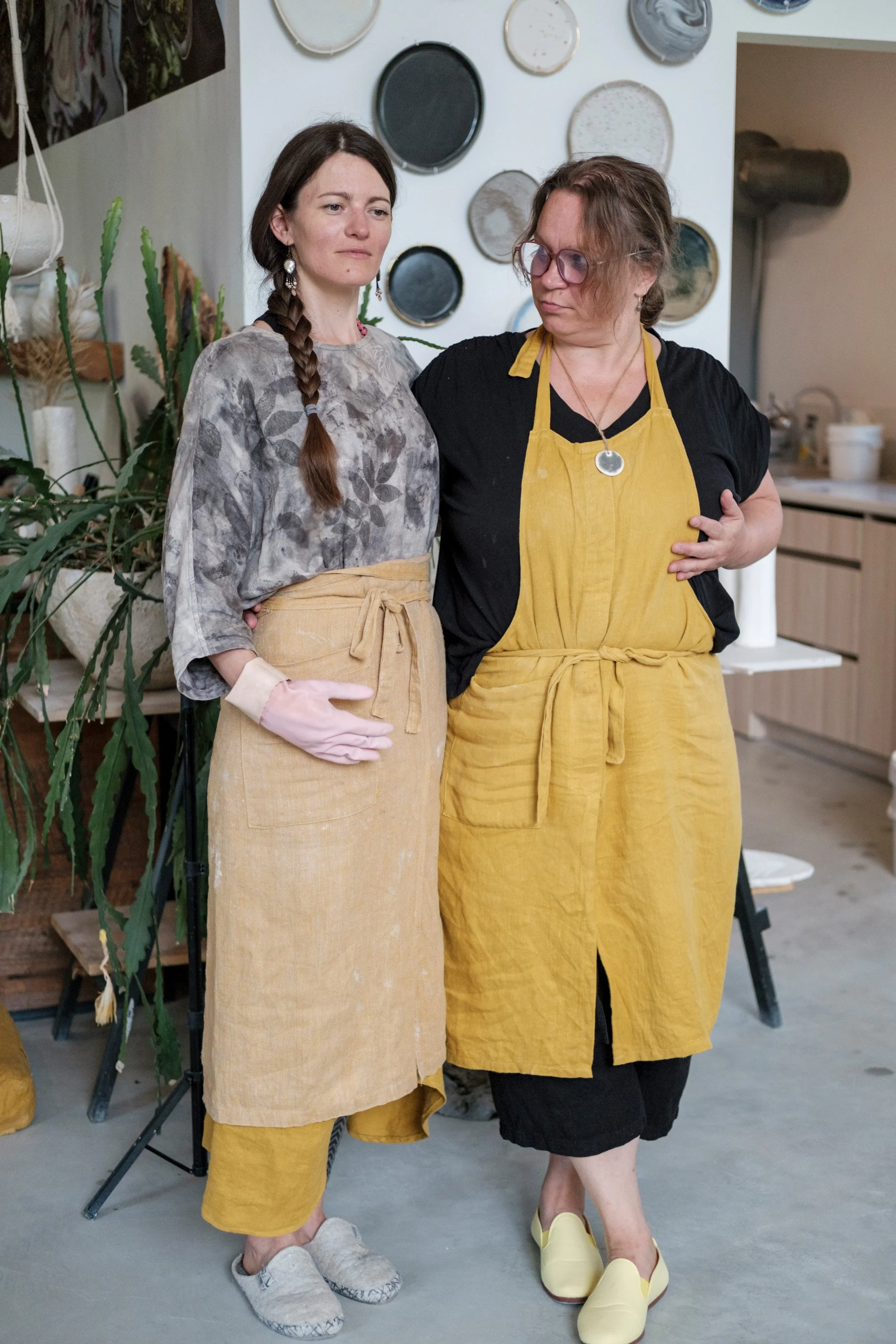
Laima Ceramics has never been a one-woman operation.
From the very beginning in 2013, my practice has involved collaboration — apprentices, interns, assistants, and today a close two-woman studio team.
My assistant Oksana and I divide work across making, preparation, finishing, logistics, teaching, and studio care. Different hands do different tasks — but the design direction, visual language, and authorship remain clearly defined.
What YUTORI represents
YUTORI represents a widening of my practice.
It is the result of stepping out of the narrow definition of “maker” and fully embracing the role of designer — someone who thinks about form, use, durability, scale, and context.
It is not a shortcut.
It is not a dilution.
It is a translation.
And like all meaningful translations, it required time, collaboration, and care.
— Laima