A week of slowing down, listening, and learning with horses
This one-week immersive horsemanship retreat is an invitation to step out of urgency and into relationship — with horses, with nature, and with yourself.
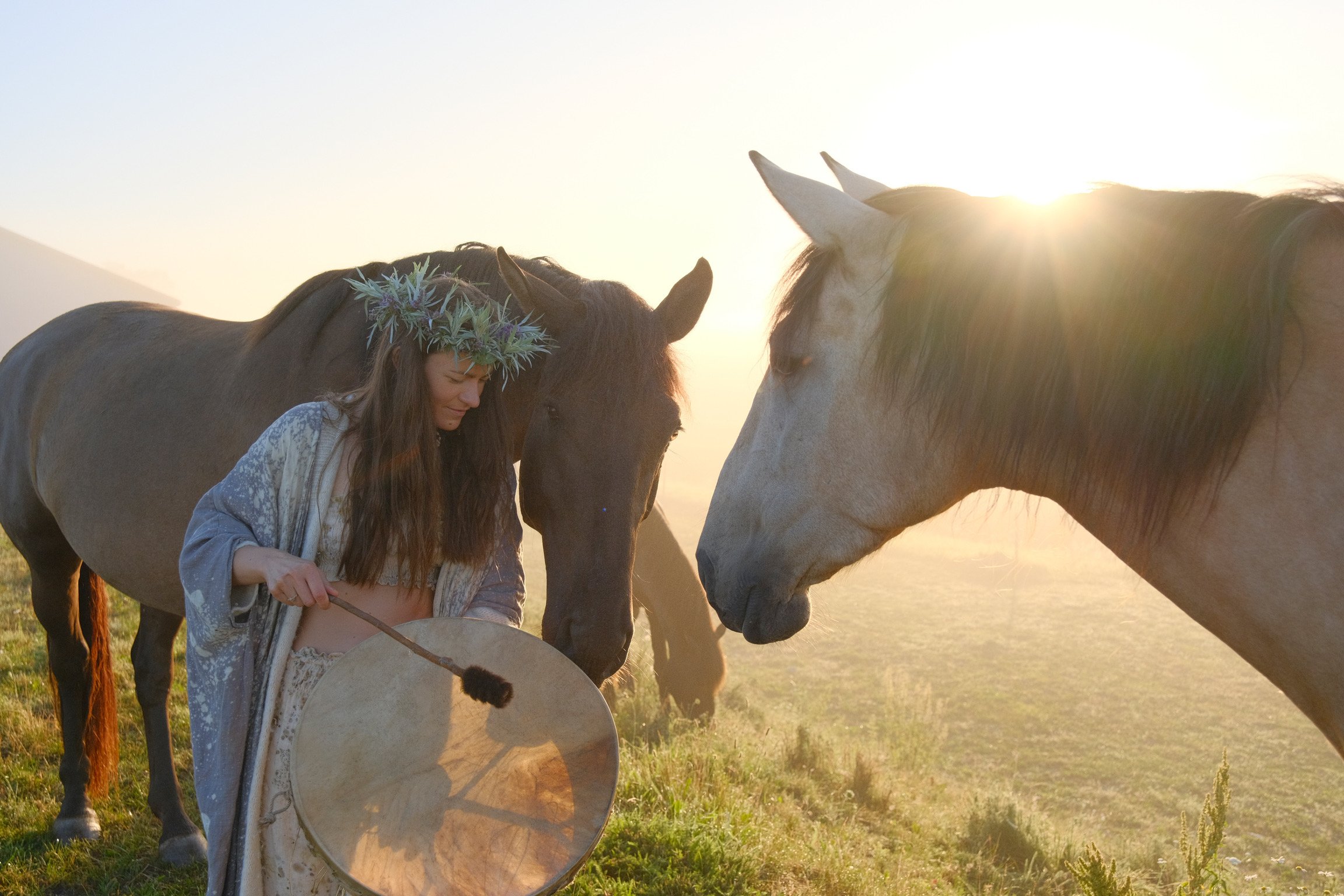
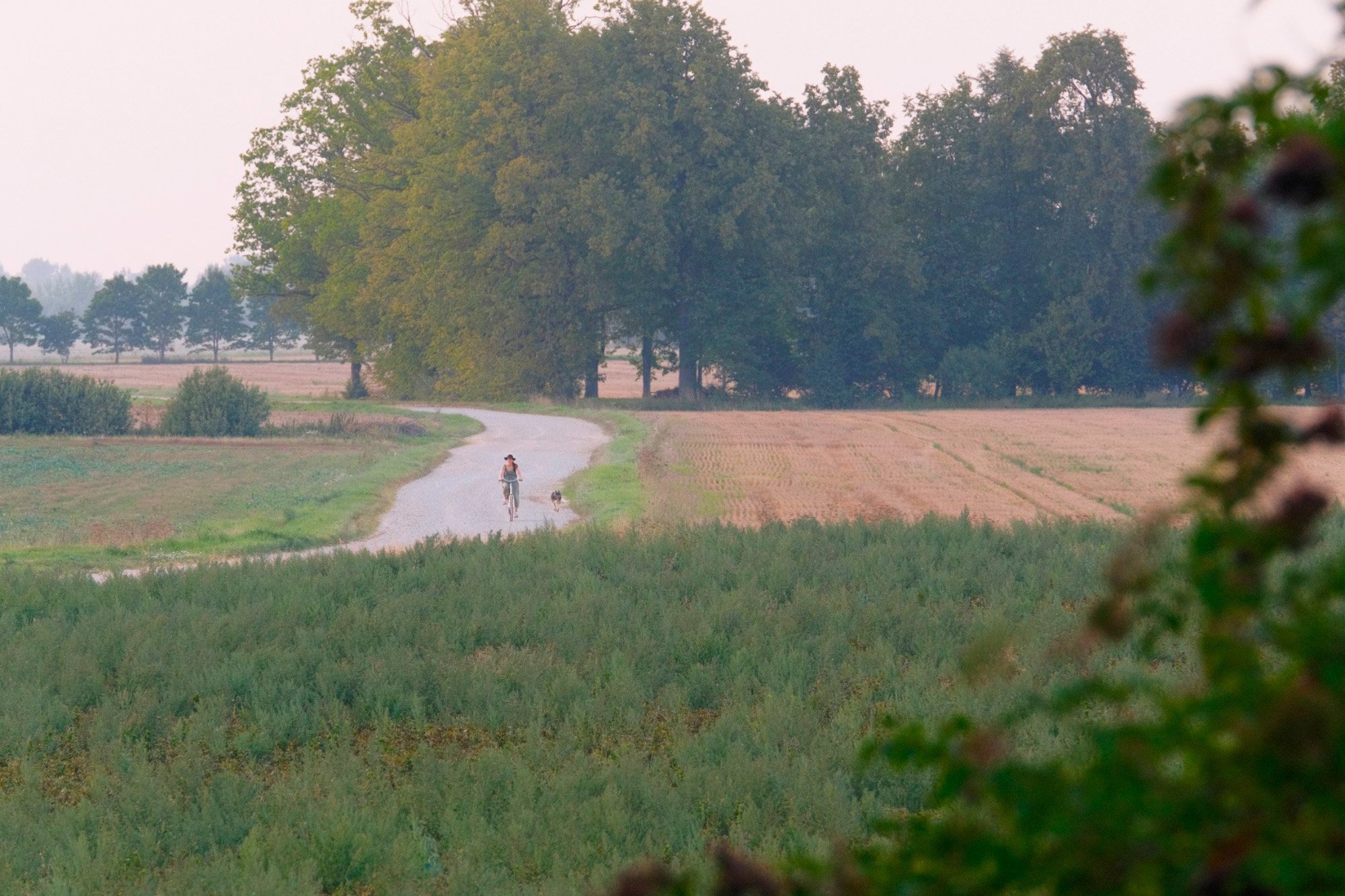
Set in the Latvian countryside, the experience is rooted in calm, observation, and honest connection. There is no pressure to perform and no fixed idea of what “progress” should look like. Instead, the week unfolds around the rhythms of the horses: grooming, groundwork, movement, rest, observation, and shared silence.
Each day you will have a two-hour individual guided horsemanship session with me and one or more of the horses. These sessions form the core of the retreat, while the rest of the day remains intentionally open.
You can spend additional time with the herd, observe them in their natural environment, participate in gentle daily care, read from our horse library, rest, explore the countryside, or simply be here.
The intention is not to fill your days, but to create enough space for you to actually notice.
You will learn to listen — with your body, your breath, and your attention.
The retreat can be joined solo, as a deeply personal journey, or shared by two people who wish to experience this time together. Couples, close friends, or a parent and teenager (recommended 12+) are welcome to join side by side.
No particular horsemanship philosophy is required. Experience is helpful but not essential. What matters most is curiosity, respect, and a willingness to slow down.
A Living, Breathing Learning Environment
This retreat takes place in a holistic heart-space created for recharging, grounding, and creative renewal.
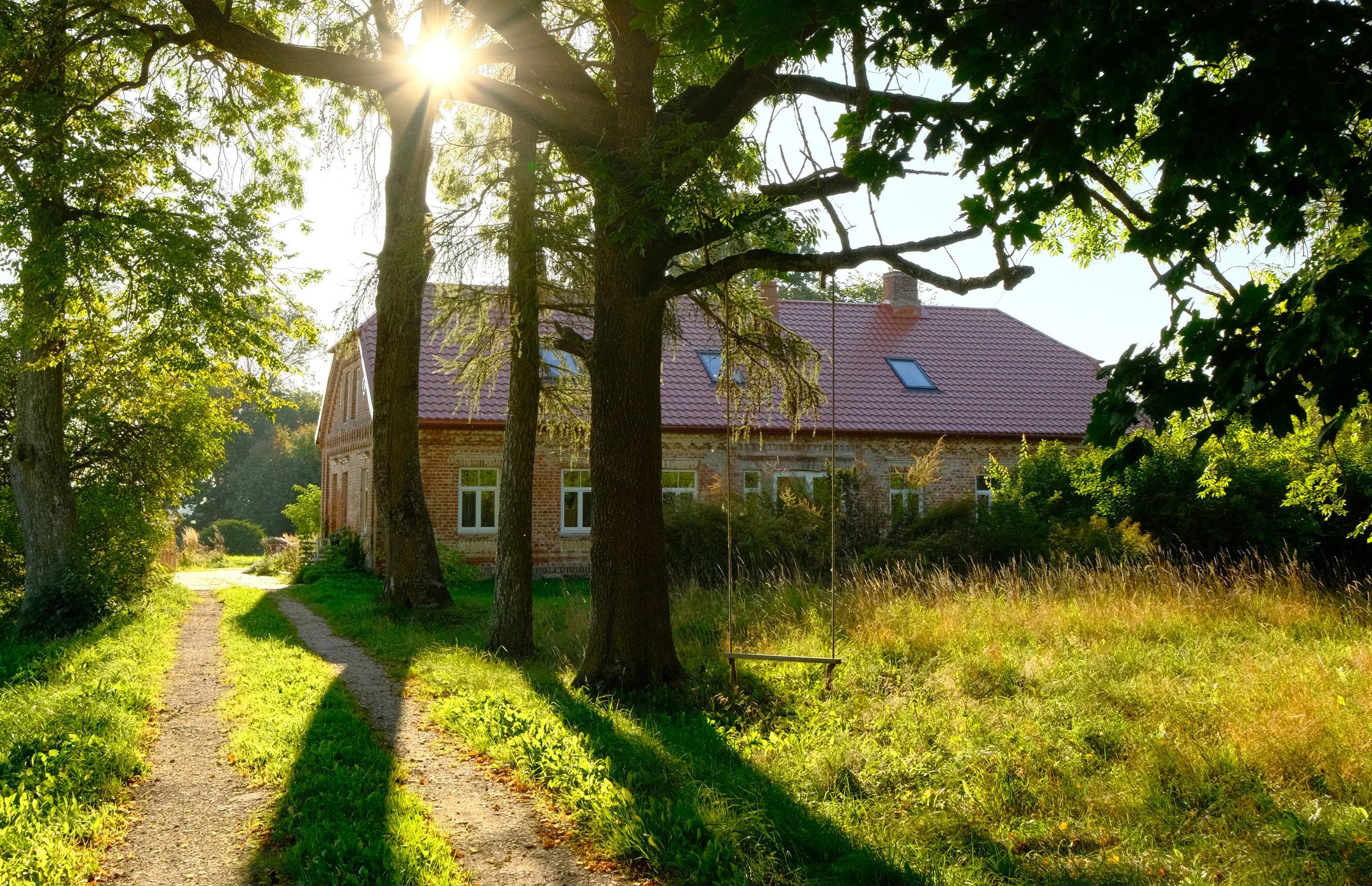
It is a deep dive into a sanctuary I have created here — in the middle of nowhere, which has become very much somewhere.
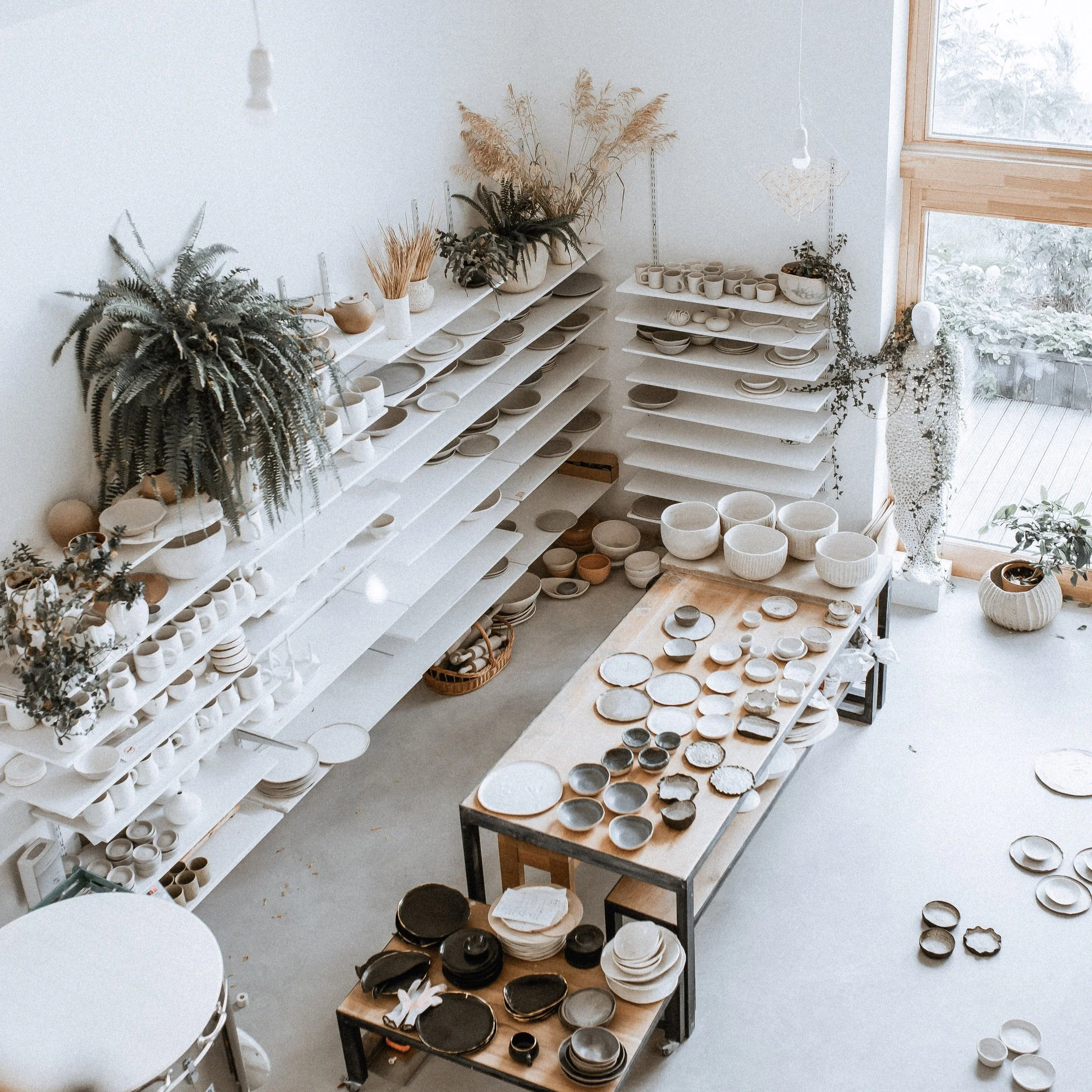
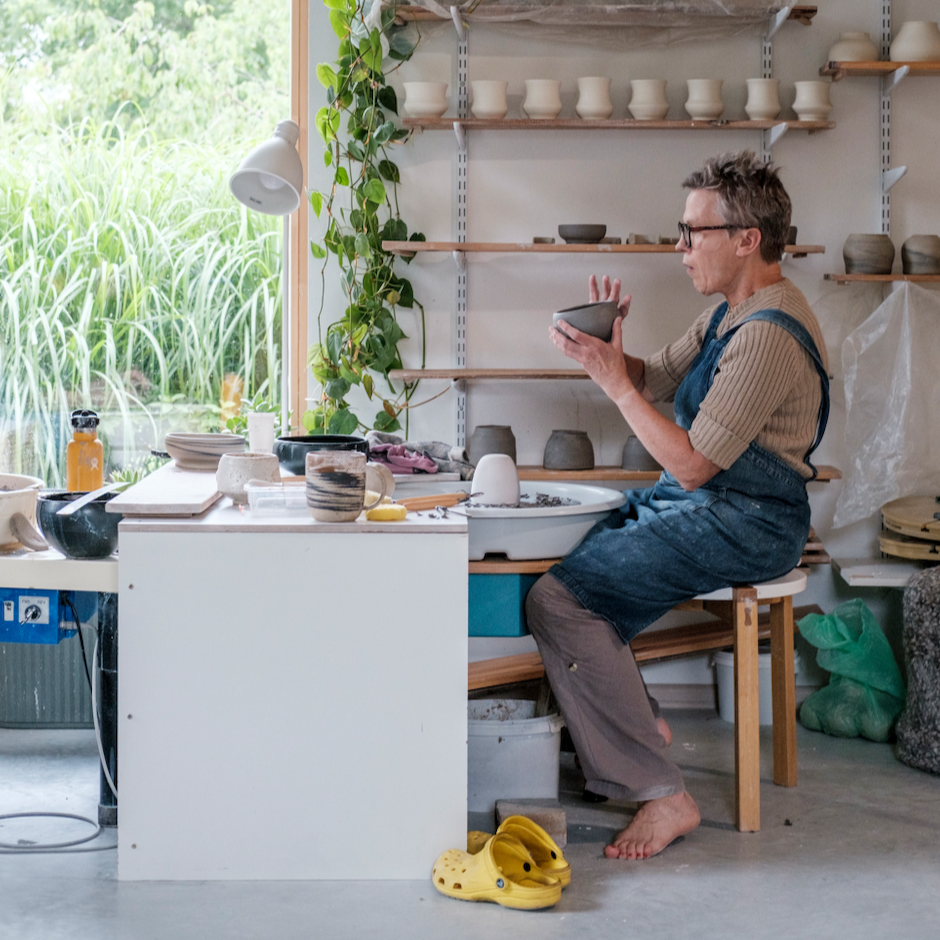
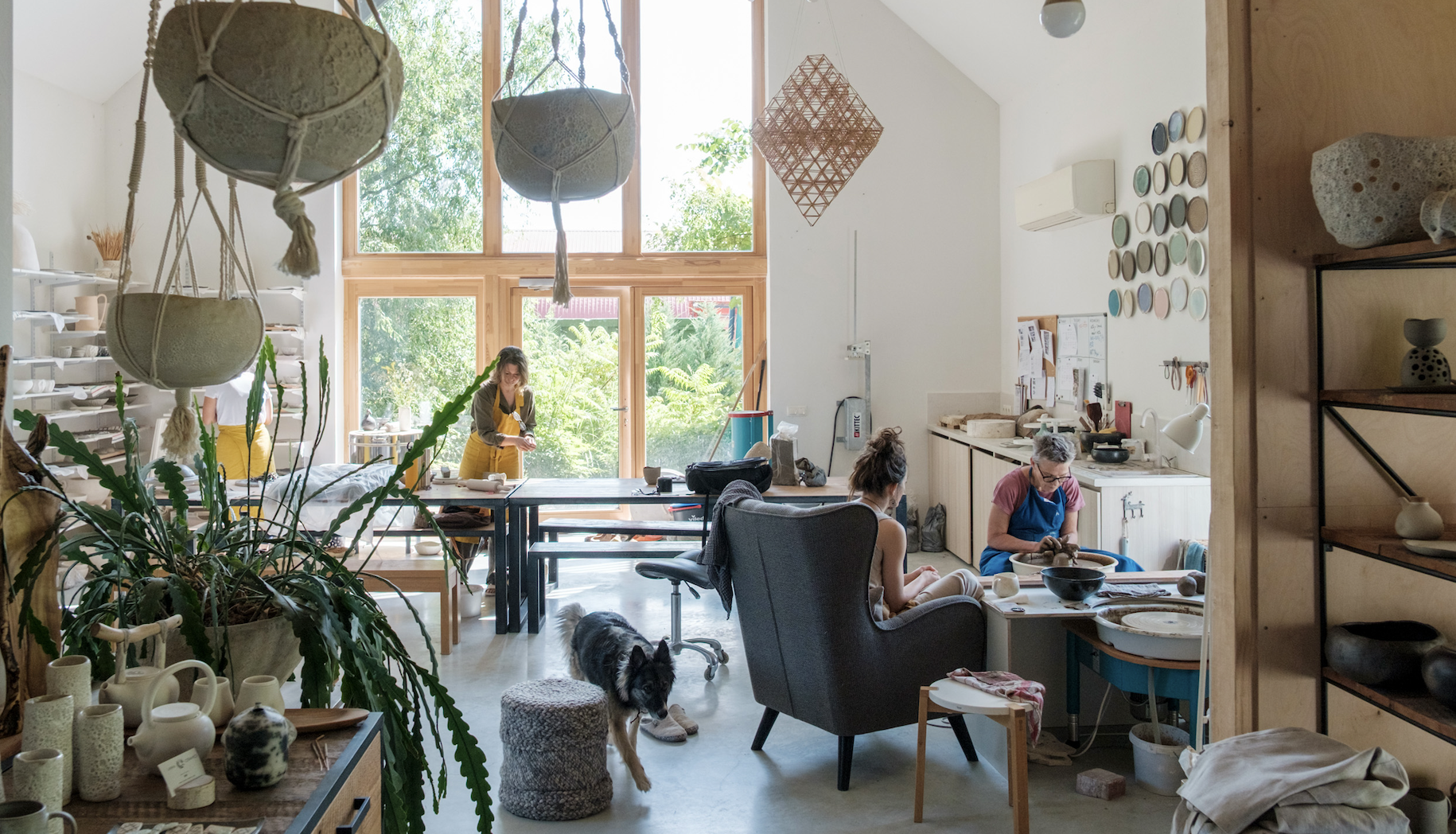
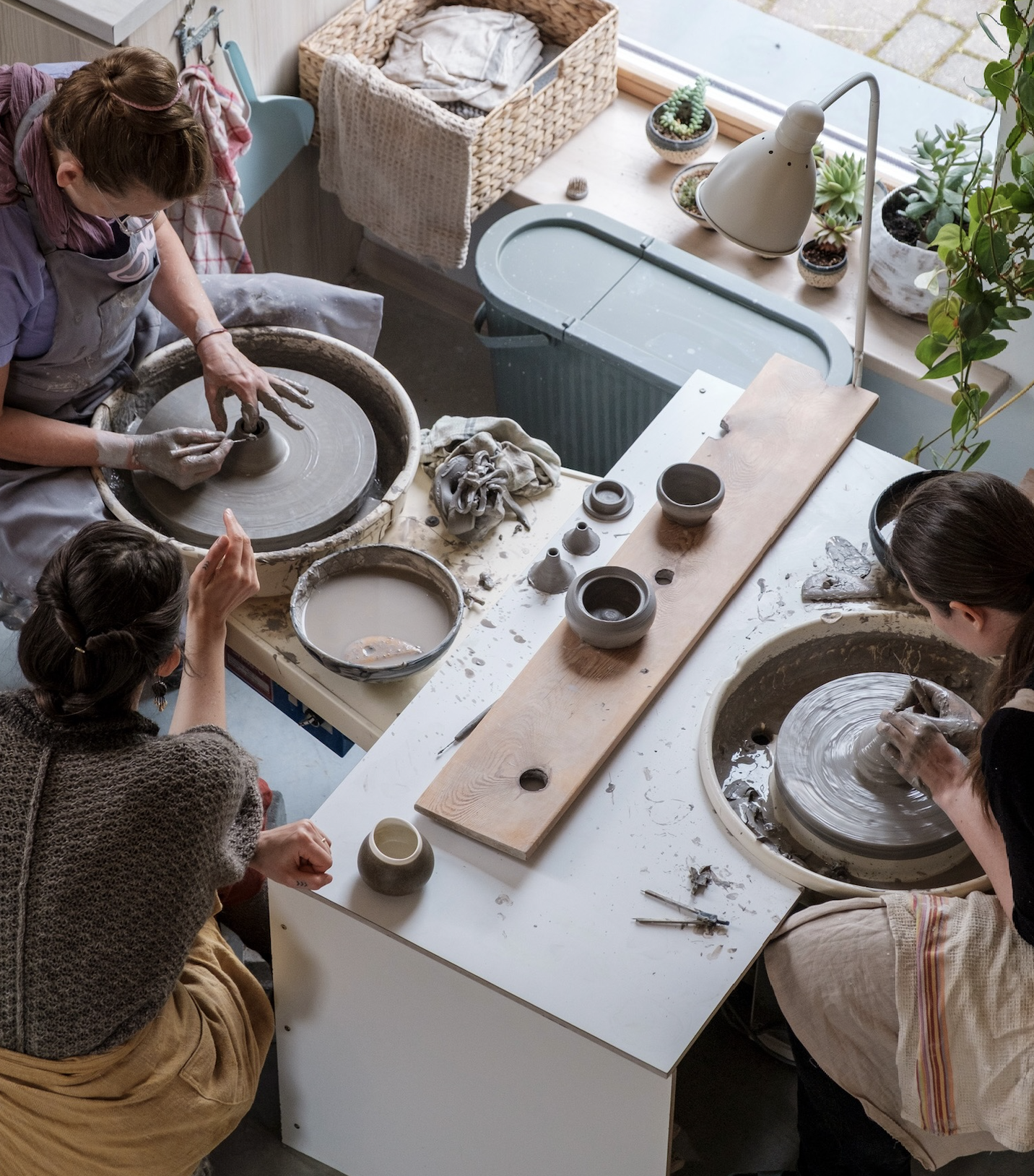
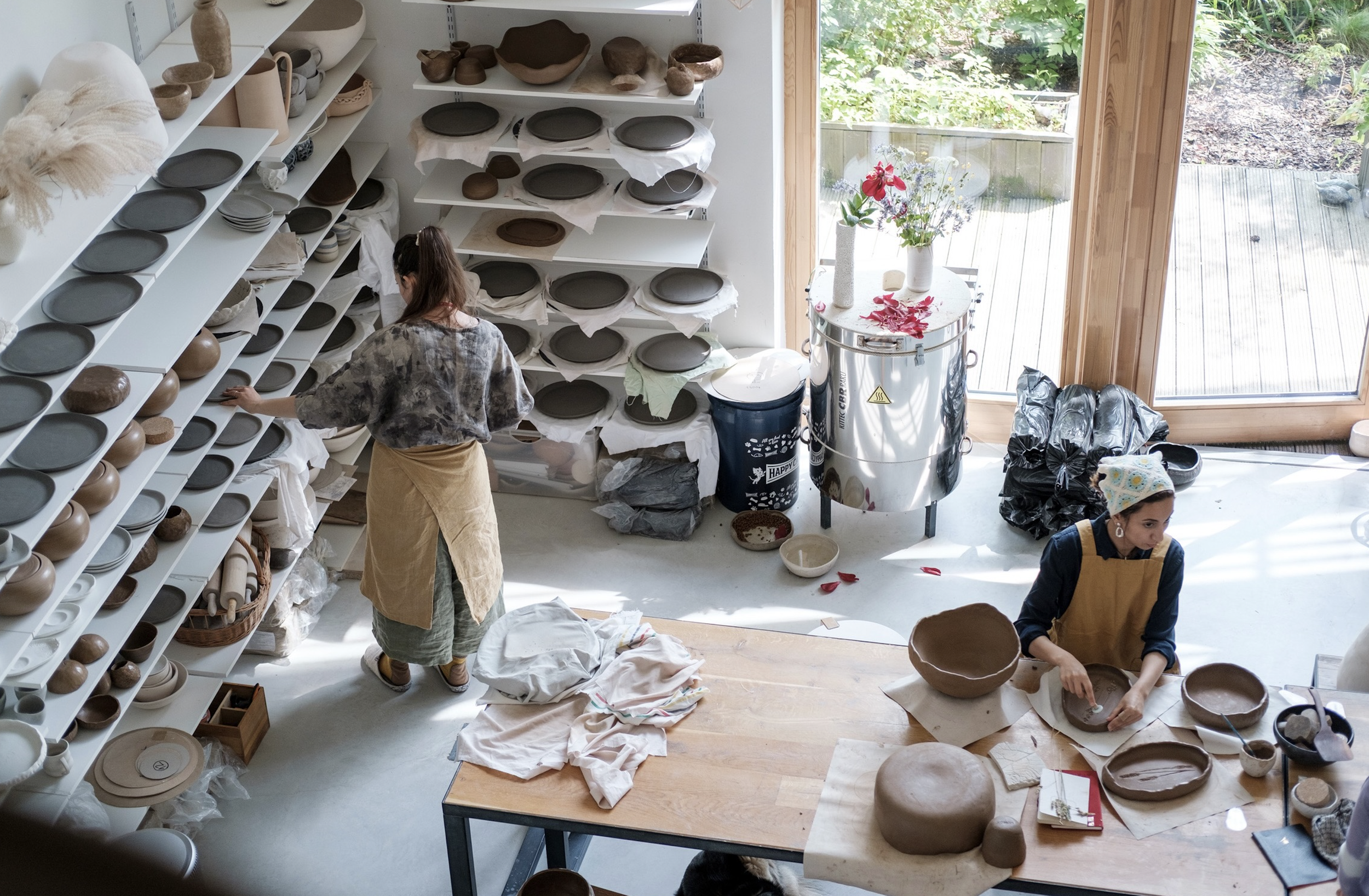
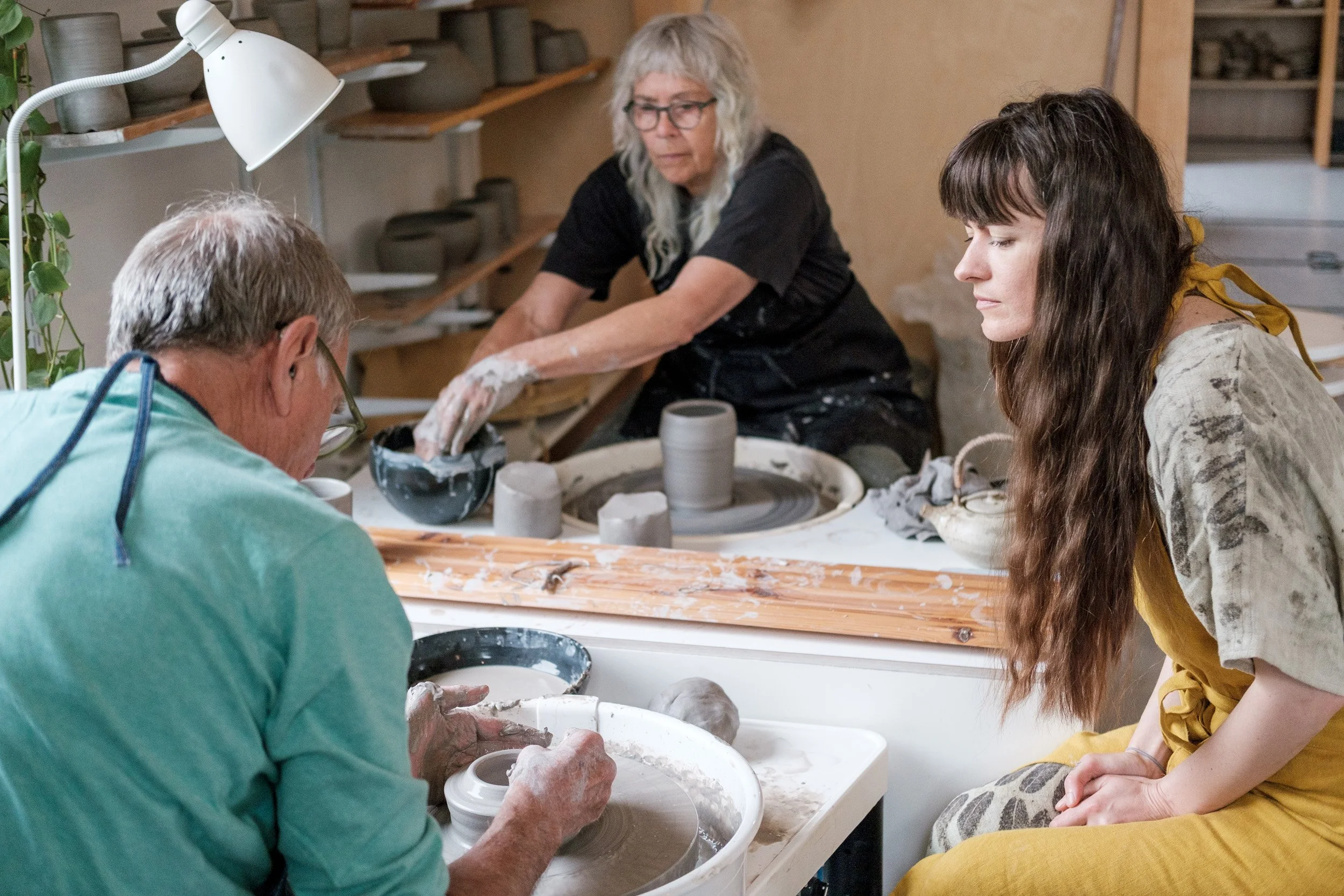
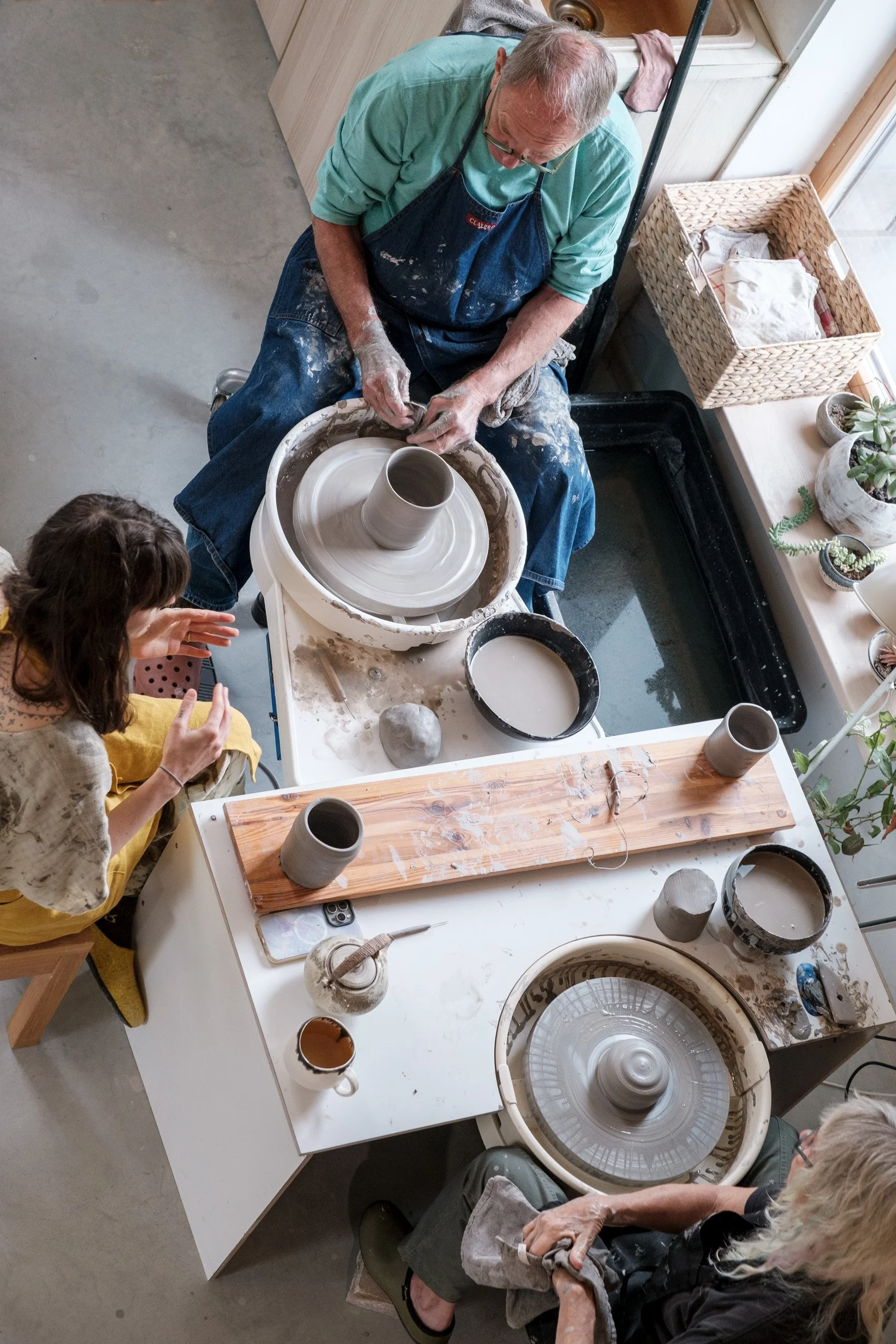
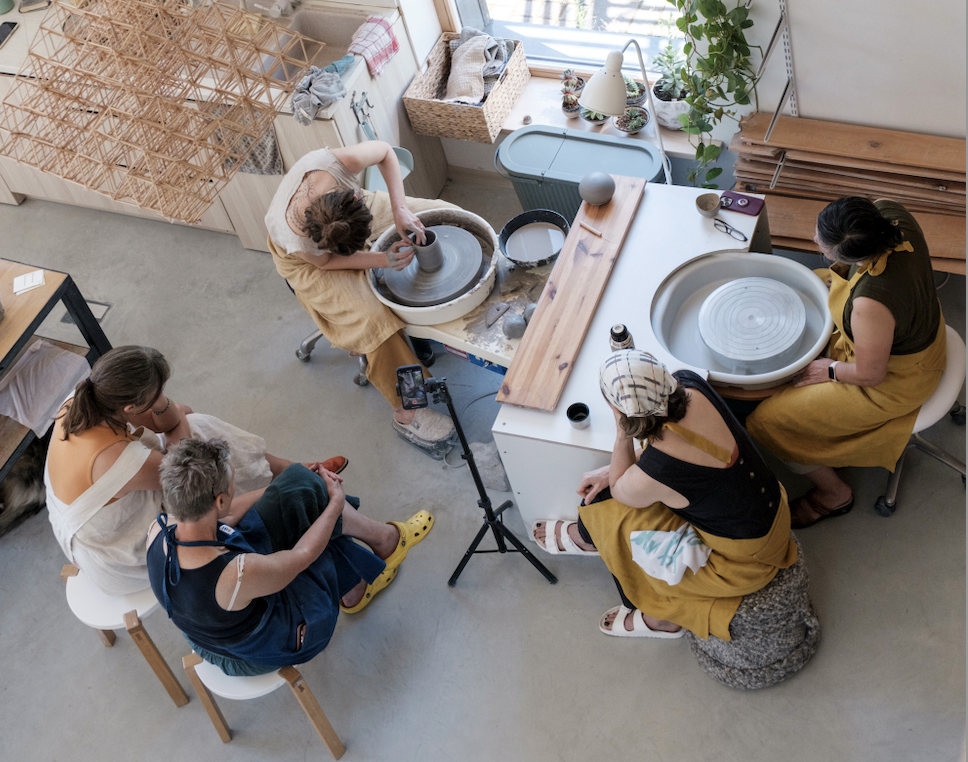
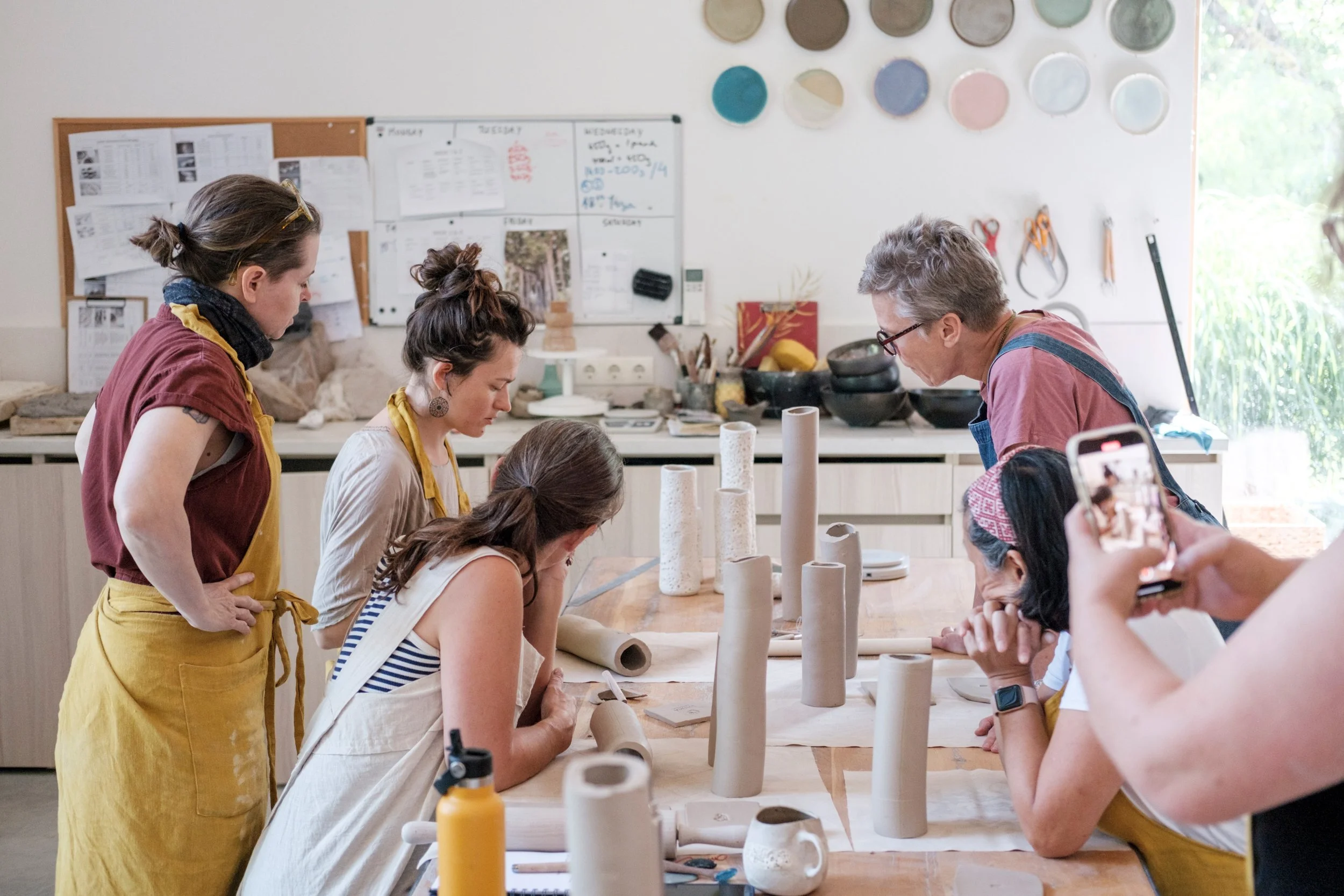
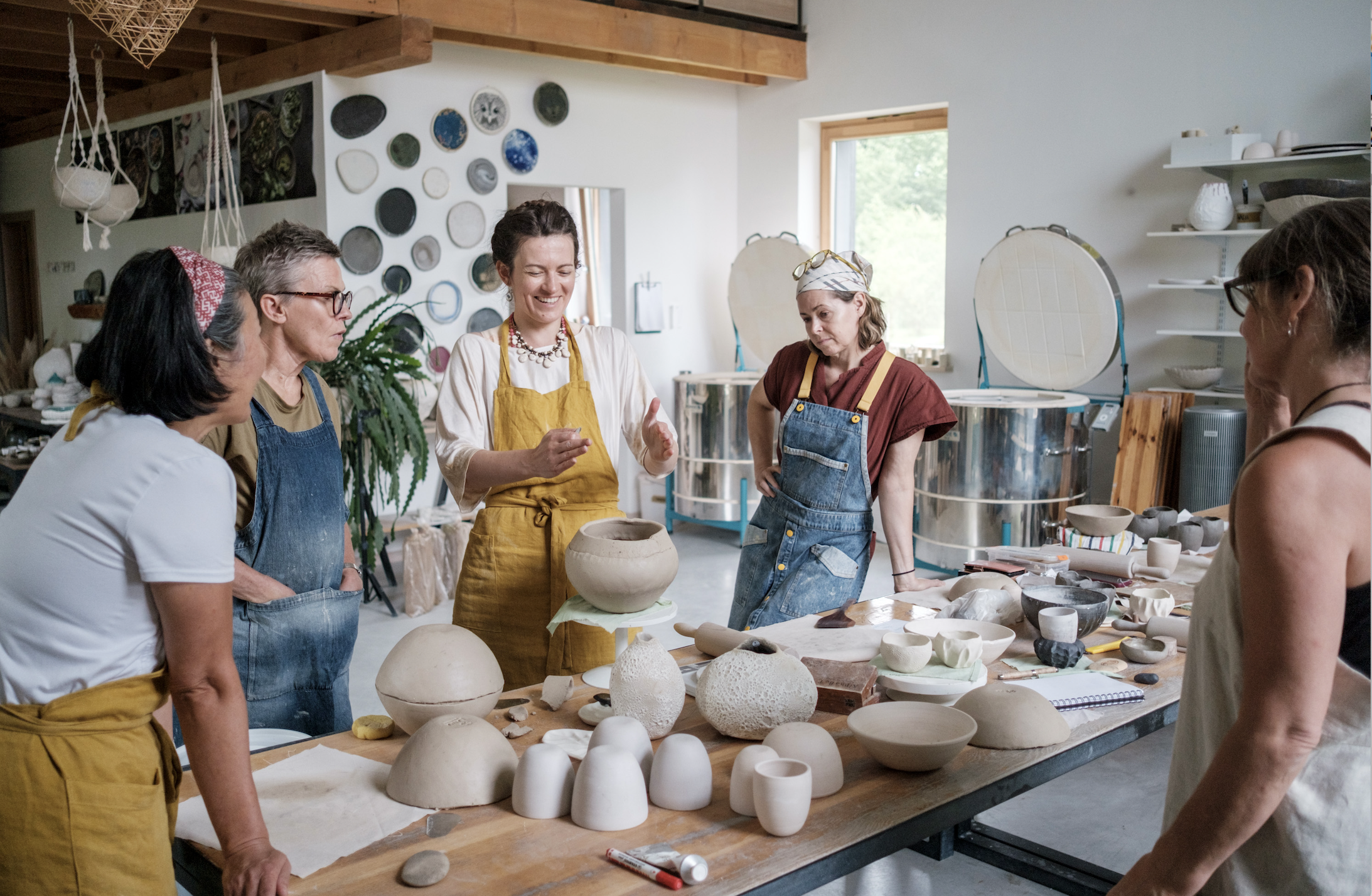
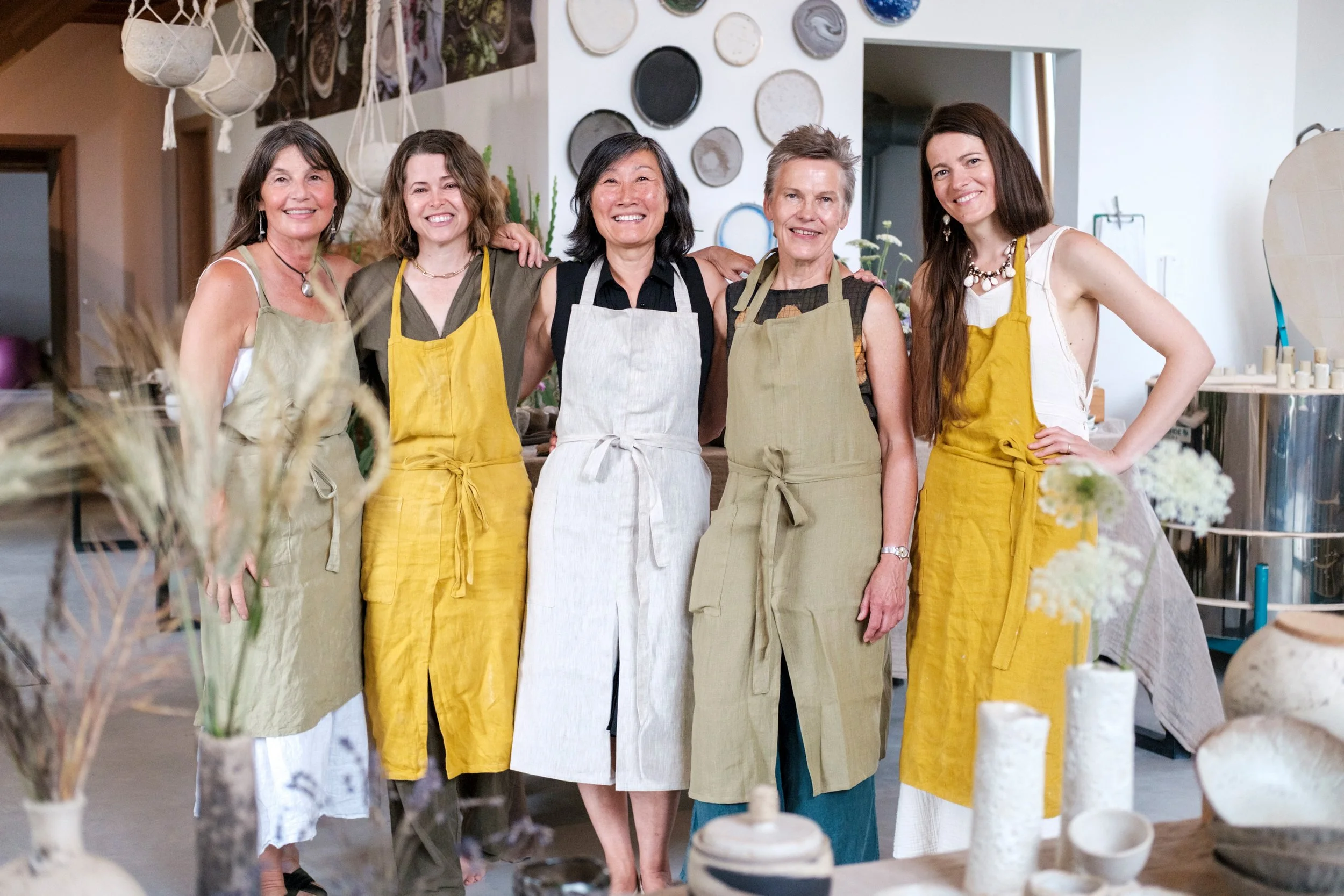
Alongside the horses is our pottery studio, surrounded by fields and the rhythm of rural life. You are welcome to experience this place as it is, rather than as a conventional riding centre or equestrian facility.
The horses are not here simply to provide an activity.
They are teachers, companions, and individuals with their own personalities, boundaries, preferences, relationships and histories.
The work here is about learning to meet them there.
“When all the needs of the horses are met, we can begin to talk about interacting with horses in an authentic way.
When we realise the need for the horse to become a willing participant in a relationship, we can begin the path towards true partnership.
Ask yourself not what the horse may do for you, but what we can offer to the horse.”
— Laima
Preventative Horsekeeping Practices
Our horses are cared for through a gentle, preventative approach that prioritises balance, observation, movement and natural wellbeing.
Balanced nutrition
The horses receive high-quality hay and oat straw through slow-feeding systems to support healthy digestion and natural foraging behaviour. Their diets are individually considered and supplemented with minerals and other nutritional support where appropriate.
Calm, clean environment
The horses live in small, stable social groups with freedom to move, rest and interact naturally. Daily routines prioritise cleanliness, good airflow, appropriate feeding, movement and emotional balance.
Observation as prevention
Daily presence teaches us to notice small changes — appetite, posture, mood, movement, social behaviour and general demeanour — and to respond before small imbalances become bigger problems.
This approach creates a peaceful and trusting herd, while also giving students an opportunity to understand how thoughtful everyday management can support equine wellbeing.
During the retreat, you will have the opportunity to participate in some of these daily routines and learn to look at horses not only as animals we train, but as animals we care for.
The Daily Guided Sessions
Each morning from 10:00–12:00, you will have a two-hour individual guided horsemanship session.
The content develops according to where you are, what interests you, what the horse is communicating, and what feels appropriate that day.
We may work with one horse throughout a session or observe several horses depending on what we are learning.
Possible areas include:
Communication through body language, breath and intention
Learning to observe and read horses
Nervous-system regulation and grounding
Intrinsic motivation and movement science
Groundwork and movement together
Liberty work
Relaxation and nervous-system balance
Equine social behaviour and herd dynamics
Grooming and body care
SureFoot and balance exercises
Understanding and using different groundwork tools
There is plenty of time during each session to stop, observe, ask questions and talk through what you are seeing.
The goal is not simply to learn what to do, but to understand why.
All sessions are horse-led and horse-centred, adapting to both your level and the needs of each horse.
A Week With the Horses
The week has a gentle progression, but nothing is rigid. The horses always have a say in what happens.
Day 1 — Arriving & Meeting the Herd
Arrival at 13:00
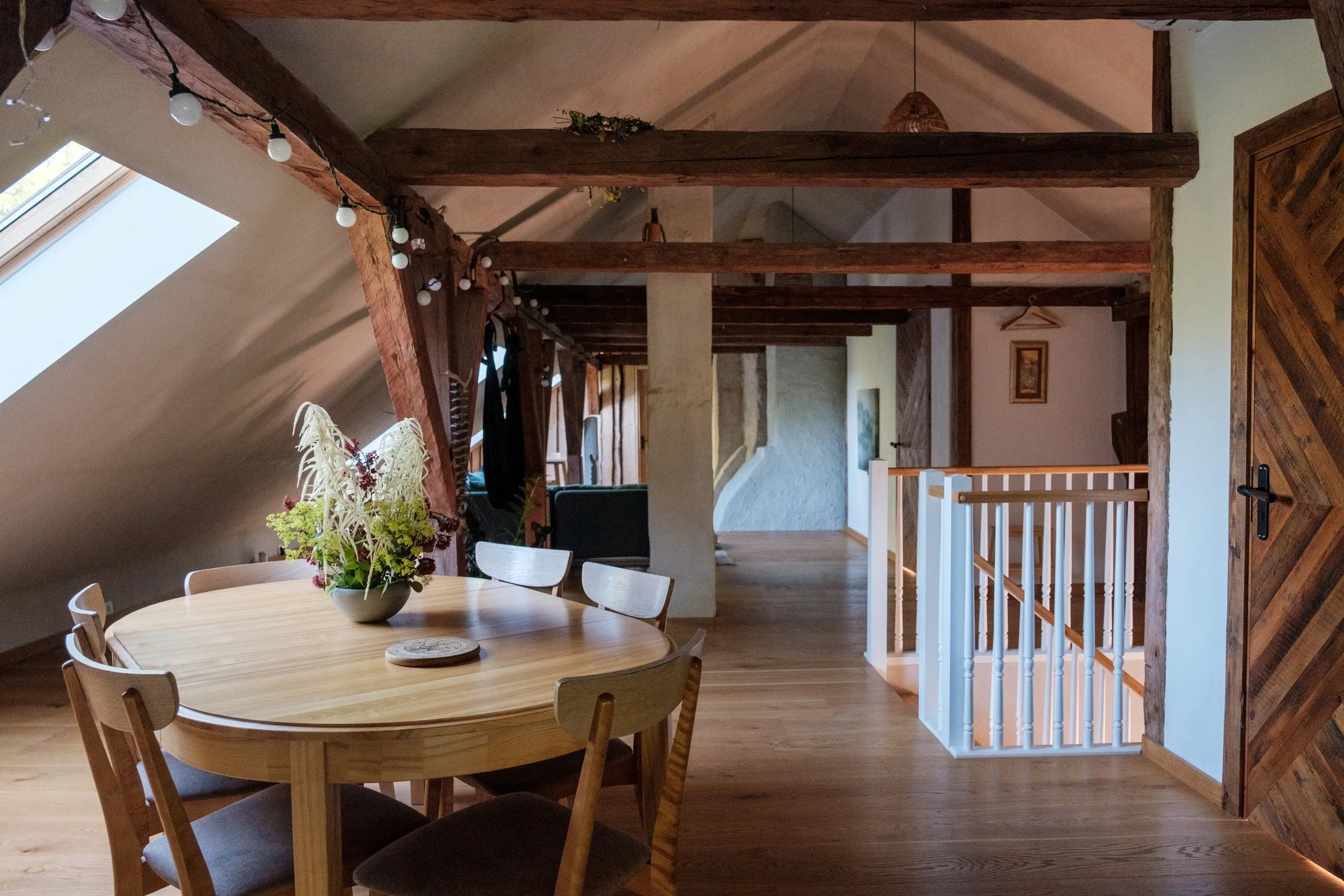
Settle into your room and take a tour of the farm and pottery studio.
Over tea, we will talk about the journey ahead — horses, training, communication and what it means to approach a horse as a partner rather than something to control.
We then meet the horses in person, learning about their individual personalities, social rituals and some of the basics of equine communication.
The first interaction is intentionally gentle and observational. We learn how to approach, where to stand, what the horses are communicating and how we can begin communicating back.
You will also have access to our horse book library. I can recommend books according to your interests — whether you are curious about behaviour, biomechanics, nervous-system regulation, herd dynamics or different approaches to horsemanship.
The rest of the day is yours to settle in, explore and rest.
Day 2 — Learning to Observe
We begin developing the most important skill of all: observation.
Before asking anything of a horse, we learn to notice.
We explore body awareness, breathing and grounding, as well as ways of regulating our own nervous system around horses.
If you are confident, we may begin with grooming or simple groundwork. If you are nervous or simply need more time, we can stay at a distance and learn to read the horses from there.
We look at:
How horses communicate with one another
Posture, expression, breathing and movement
Recognising a horse's baseline — their “zero”
Subtle changes in emotional state
Our own body language and nervous-system state
The goal for today is to become a skilled observer.
Once you learn to see these small details, you cannot easily unsee them.
If appropriate, we begin simple groundwork exercises — learning about the horse's bubble of space, how to share that space harmoniously, and how two bodies can begin to move together.
Day 3 — Communication in Movement
After spending time watching, listening and developing grounding skills, we begin to explore communication through movement.
We work individually with a horse, with plenty of demonstration and explanation along the way.
You can watch and learn, or try the exercises yourself when you feel ready.
We explore what I sometimes think of as horse choreography — how small changes in our body position, breath, intention and movement can influence the conversation between horse and human.
Some concepts can first be practised between humans, making it easier to understand what we are asking of the horse.
Depending on your interests and what is appropriate for the horse, we may also explore:
SureFoot pads
Balance and body-awareness exercises
Rope halters and cavessons
Body position and alignment
Leading and movement exercises
Different groundwork tools
How equipment can influence communication
There is always room to stop, talk, observe and ask questions.
Day 4 — Bringing the Pieces Together
By now, you will have spent several days observing the horses, becoming familiar with their individual personalities and developing your own awareness around them.
Today we begin bringing some of these elements together.
Depending on the horse, weather, your confidence and what has emerged during the week, we may explore more complex groundwork, movement through space, liberty work, relaxation exercises, or take our work beyond the immediate home zone.
Sometimes the most valuable work is simply staying with what feels safe and clear.
The aim is not to progress for the sake of progressing, but to recognise when communication is becoming softer, clearer and more mutual.
Day 5 — Your Own Conversation
The final guided session is shaped around you and the horse.
By this point, you will have developed a better understanding of the herd and of your own body, attention and nervous system around horses.
We can revisit something you would like to understand more deeply, continue developing a particular skill, or simply spend time with a horse in a way that feels meaningful to you.
The week is about leaving with a different way of seeing — and hopefully with the feeling that your relationship with horses can continue developing long after you leave.
Time With the Herd
The two-hour guided session each morning is only one part of the experience.
The rest of the day is intentionally free.
You are welcome to spend additional time with the horses throughout the day, depending on the season, weather and needs of the herd.
This might mean:
Walking with the herd to their larger paddock
Sitting quietly and observing their social dynamics
Spending time with them in the pasture
Gentle grooming and body care
Practising calm, mindful hoof picking
Exploring simple balance and body-awareness exercises
Reading nearby while the horses graze
There is no expectation that you need to “work” with the horses outside the guided session.
You may spend an hour with them, several hours, or none at all.
Over the course of the week, this daily contact can create a sense of familiarity and ease — both for you and for the horses.
Through this, you begin to experience:
Rhythm and consistency — horses thrive on predictable, calm routines.
Confidence through repetition — your body language becomes softer and your communication clearer.
Belonging — over time, you become less of an observer and more familiar with the everyday life of the herd.
Meet our herd here.
Read the story of each horse in our blog here.
Included
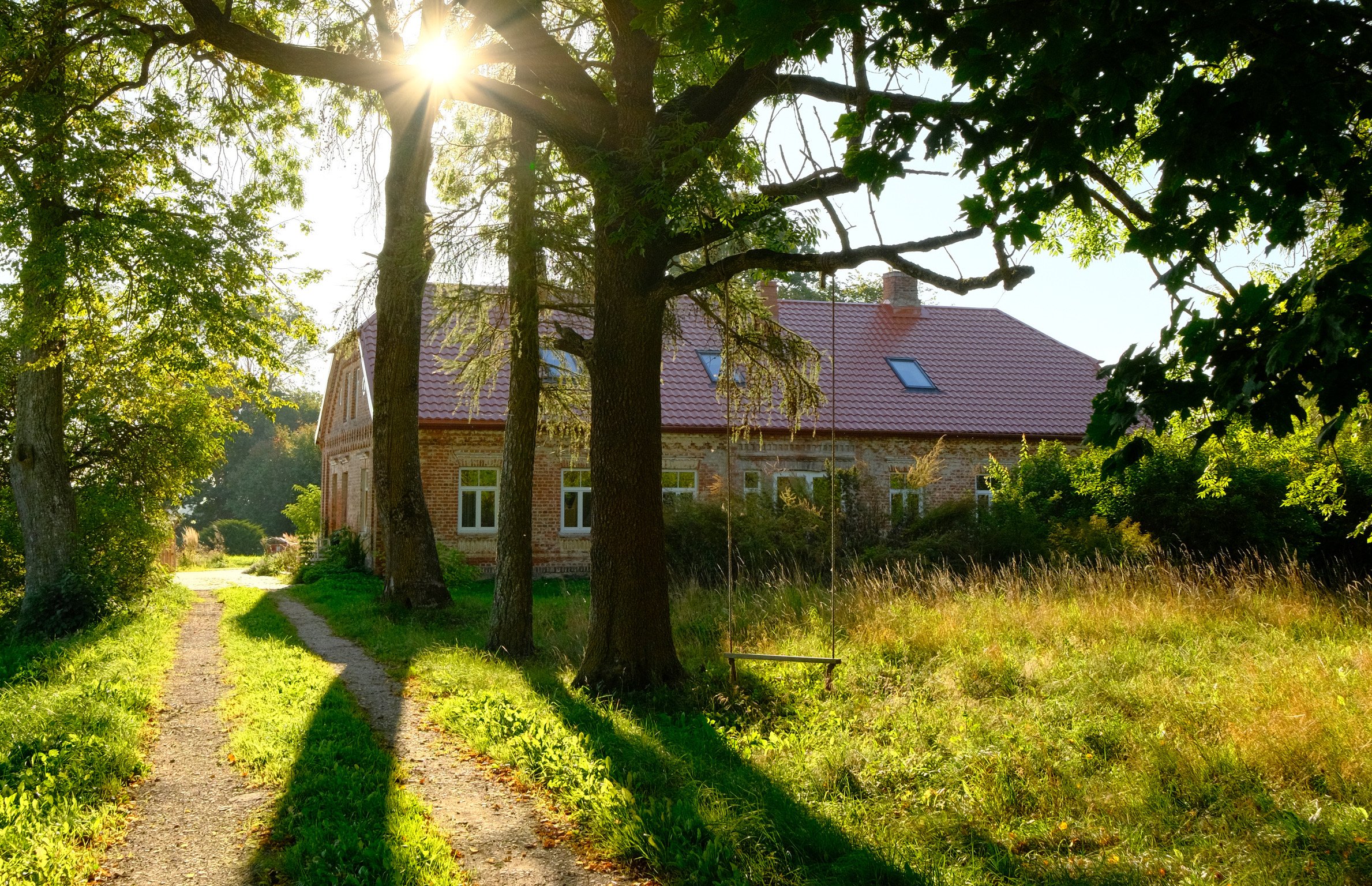
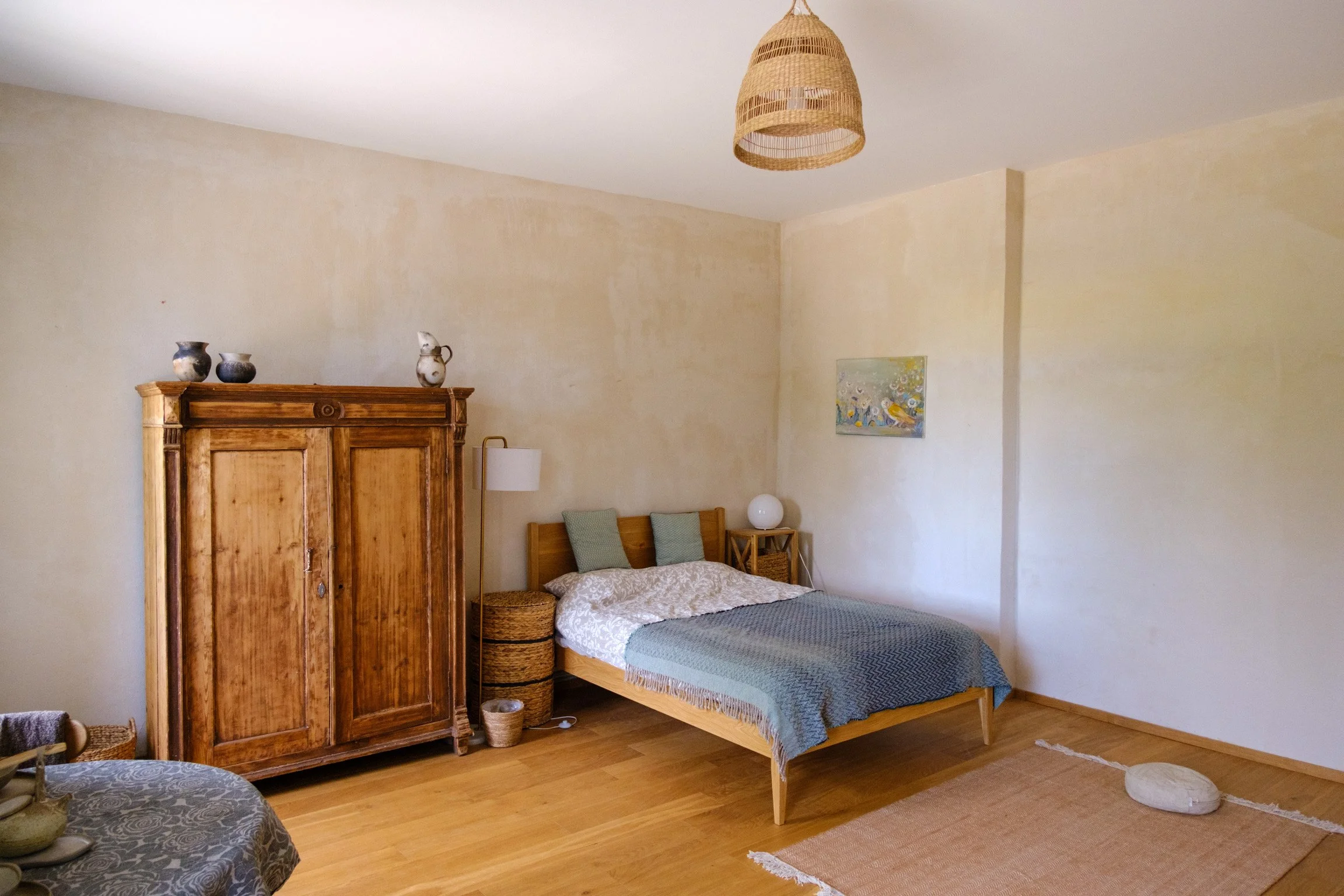
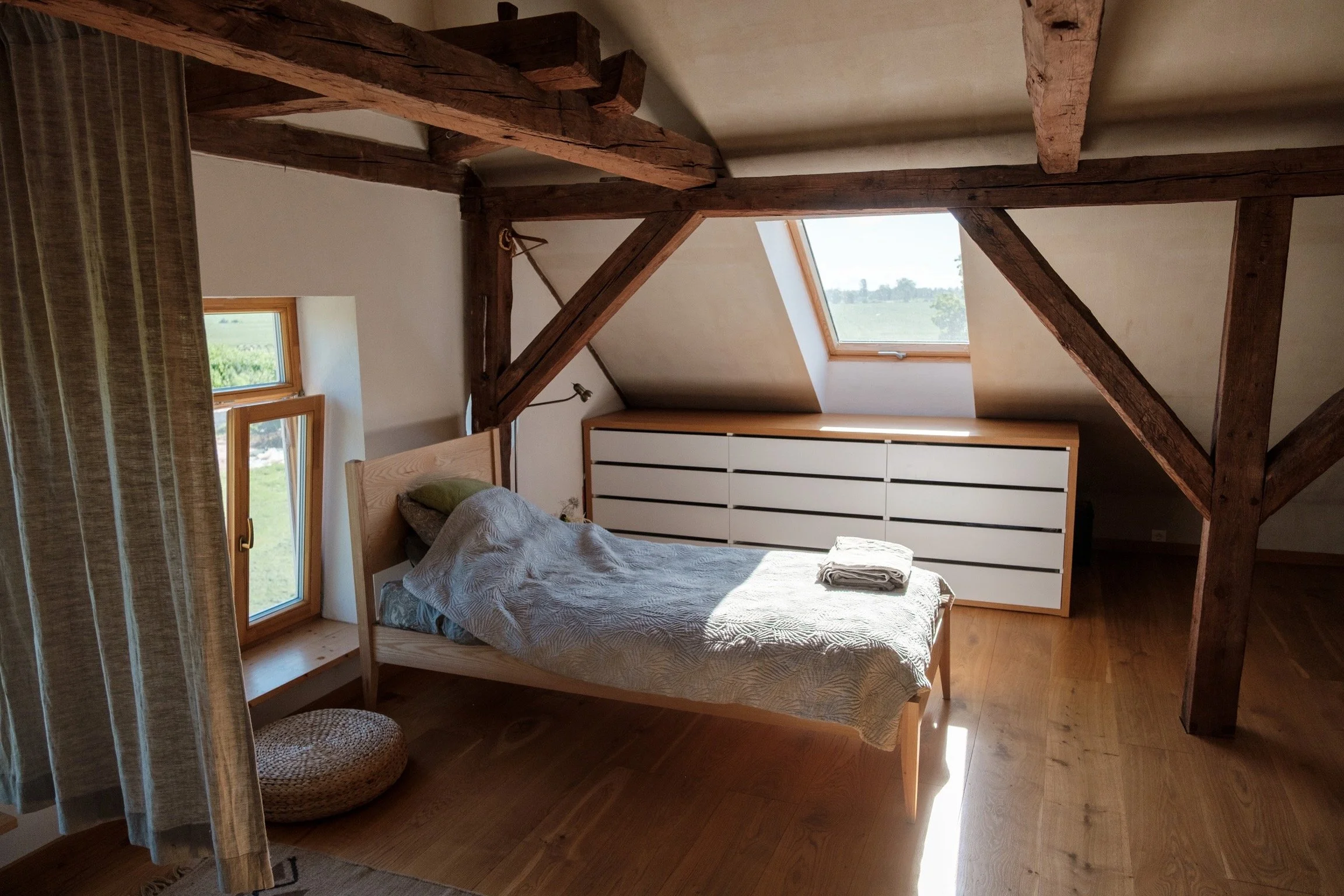
Private room in our family home, 6days, 5 nights
Bedding, towels and Wi-Fi included
5 × 2-hour individual guided horsemanship sessions
Daily access to the herd and learning environment
Participation in appropriate daily horse-care routines
Access to our horse book library
There is a shared kitchen for self-catering, as well as several excellent cafés and restaurants within 5–20 minutes by car.
A rental car is recommended, as we are approximately 7 km from the nearest shop. However, it is possible to manage without one using public transport, occasional taxis, or shared grocery trips with us to Bauska.
Read travel and arrival tips here →
Optional pottery lessons can also be arranged during your stay.
Who This Is For
This retreat may be particularly meaningful for:
Adults seeking a deeper connection and understanding of horses
Beginners who want to learn without pressure
Experienced horse people wishing to explore a different approach
Students of horsemanship or equine studies
People interested in horse psychology and behaviour
Artists and creatives seeking grounding time in nature
Anyone who feels they need to slow down and reconnect
You do not need to follow a particular horsemanship philosophy.
You do not need to be an experienced rider.
You do need an open mind, respect for horses and a willingness to listen.
What You May Take Away
During the week, you may develop:
Greater confidence around horses
A deeper understanding of equine communication
Practical groundwork and horse-handling skills
Awareness of horse body language and herd behaviour
Greater understanding of nervous-system regulation around horses
Experience in everyday horse care and preventative management
More awareness of your own body, breath and patterns
A different perspective on training and partnership
Most importantly, the intention is that you leave with more questions, more awareness and a different way of looking at the horse in front of you.
Practical Details
When
The retreat is offered between September and May.
Dates are arranged individually — please get in touch to enquire about availability.
Where
The retreat takes place at my Paddock Paradise farm in the Latvian countryside, next to my pottery studio.
We are approximately 1 hour from Riga International Airport (RIX), around 20 minutes from Bauska and 7 km from the nearest shop.
This is a rural, peaceful setting surrounded by fields and nature rather than a conventional equestrian centre.
By whom
The retreat is led by me, Laima Piliņa.
I have been training horses — and being trained by horses — since 2016.
The work here has developed through years of living with and learning from my own herd, alongside HorseSpeak, Emotional Horsemanship, movement-based approaches, Intrinzen and a strong emphasis on observation, relationship and the horse's emotional and physical wellbeing.
I do not approach horsemanship as a fixed system.
The horses continually teach me to look again.
Investment
Solo Immersive Experience
€1,200 per person
A private experience for one person, including accommodation and five individual two-hour guided sessions.
Shared Immersive Experience — 2 Participants
€900 per person — €1,800 total
For couples, two close friends, or a parent and teenager (recommended age 12+).
You share the accommodation and experience the week alongside one another, while the guided horsemanship work remains individually focused.
Accommodation is either:
The shared option allows two people to experience the same horses and environment together, while each person can have their own relationship with the horses and progress at their own pace.
Application Process
If you feel drawn to this experience, please write to laimaceramics@gmail.com and include:
a short note about your previous experience with horses
your intentions, goals, or questions for this retreat
If it feels like a good mutual fit, you’ll receive confirmation and be invited to reserve your place.
Full reservation terms are available via the Terms & Conditions page.
You’re welcome to follow along on @laimaceramics to get a feel for the rhythm of the place and the herd.
A week of slowing down, listening, and learning with horses
This one-week immersive horsemanship retreat is an invitation to step out of urgency and into relationship — with horses, with nature, and with yourself.
Set in the Latvian countryside, the experience is rooted in calm, observation, and honest connection. There is no pressure to perform and no fixed idea of what “progress” should look like. Instead, the week unfolds around the rhythms of the horses: grooming, groundwork, movement, rest, observation, and shared silence.
Each day you will have a two-hour individual guided horsemanship session with me and one or more of the horses. These sessions form the core of the retreat, while the rest of the day remains intentionally open.
You can spend additional time with the herd, observe them in their natural environment, participate in gentle daily care, read from our horse library, rest, explore the countryside, or simply be here.
The intention is not to fill your days, but to create enough space for you to actually notice.
You will learn to listen — with your body, your breath, and your attention.
The retreat can be joined solo, as a deeply personal journey, or shared by two people who wish to experience this time together. Couples, close friends, or a parent and teenager (recommended 12+) are welcome to join side by side.
No particular horsemanship philosophy is required. Experience is helpful but not essential. What matters most is curiosity, respect, and a willingness to slow down.
A Living, Breathing Learning Environment
This retreat takes place in a holistic heart-space created for recharging, grounding, and creative renewal.
It is a deep dive into a sanctuary I have created here — in the middle of nowhere, which has become very much somewhere.
Alongside the horses is our pottery studio, surrounded by fields and the rhythm of rural life. You are welcome to experience this place as it is, rather than as a conventional riding centre or equestrian facility.
The horses are not here simply to provide an activity.
They are teachers, companions, and individuals with their own personalities, boundaries, preferences, relationships and histories.
The work here is about learning to meet them there.
“When all the needs of the horses are met, we can begin to talk about interacting with horses in an authentic way.
When we realise the need for the horse to become a willing participant in a relationship, we can begin the path towards true partnership.
Ask yourself not what the horse may do for you, but what we can offer to the horse.”
— Laima
Preventative Horsekeeping Practices
Our horses are cared for through a gentle, preventative approach that prioritises balance, observation, movement and natural wellbeing.
Balanced nutrition
The horses receive high-quality hay and oat straw through slow-feeding systems to support healthy digestion and natural foraging behaviour. Their diets are individually considered and supplemented with minerals and other nutritional support where appropriate.
Calm, clean environment
The horses live in small, stable social groups with freedom to move, rest and interact naturally. Daily routines prioritise cleanliness, good airflow, appropriate feeding, movement and emotional balance.
Observation as prevention
Daily presence teaches us to notice small changes — appetite, posture, mood, movement, social behaviour and general demeanour — and to respond before small imbalances become bigger problems.
This approach creates a peaceful and trusting herd, while also giving students an opportunity to understand how thoughtful everyday management can support equine wellbeing.
During the retreat, you will have the opportunity to participate in some of these daily routines and learn to look at horses not only as animals we train, but as animals we care for.
The Daily Guided Sessions
Each morning from 10:00–12:00, you will have a two-hour individual guided horsemanship session.
The content develops according to where you are, what interests you, what the horse is communicating, and what feels appropriate that day.
We may work with one horse throughout a session or observe several horses depending on what we are learning.
Possible areas include:
Communication through body language, breath and intention
Learning to observe and read horses
Nervous-system regulation and grounding
Intrinsic motivation and movement science
Groundwork and movement together
Liberty work
Relaxation and nervous-system balance
Equine social behaviour and herd dynamics
Grooming and body care
SureFoot and balance exercises
Understanding and using different groundwork tools
There is plenty of time during each session to stop, observe, ask questions and talk through what you are seeing.
The goal is not simply to learn what to do, but to understand why.
All sessions are horse-led and horse-centred, adapting to both your level and the needs of each horse.
A Week With the Horses
The week has a gentle progression, but nothing is rigid. The horses always have a say in what happens.
Day 1 — Arriving & Meeting the Herd
Arrival at 13:00
Settle into your room and take a tour of the farm and pottery studio.
Over tea, we will talk about the journey ahead — horses, training, communication and what it means to approach a horse as a partner rather than something to control.
We then meet the horses in person, learning about their individual personalities, social rituals and some of the basics of equine communication.
The first interaction is intentionally gentle and observational. We learn how to approach, where to stand, what the horses are communicating and how we can begin communicating back.
You will also have access to our horse book library. I can recommend books according to your interests — whether you are curious about behaviour, biomechanics, nervous-system regulation, herd dynamics or different approaches to horsemanship.
The rest of the day is yours to settle in, explore and rest.
Day 2 — Learning to Observe
We begin developing the most important skill of all: observation.
Before asking anything of a horse, we learn to notice.
We explore body awareness, breathing and grounding, as well as ways of regulating our own nervous system around horses.
If you are confident, we may begin with grooming or simple groundwork. If you are nervous or simply need more time, we can stay at a distance and learn to read the horses from there.
We look at:
How horses communicate with one another
Posture, expression, breathing and movement
Recognising a horse's baseline — their “zero”
Subtle changes in emotional state
Our own body language and nervous-system state
The goal for today is to become a skilled observer.
Once you learn to see these small details, you cannot easily unsee them.
If appropriate, we begin simple groundwork exercises — learning about the horse's bubble of space, how to share that space harmoniously, and how two bodies can begin to move together.
Day 3 — Communication in Movement
After spending time watching, listening and developing grounding skills, we begin to explore communication through movement.
We work individually with a horse, with plenty of demonstration and explanation along the way.
You can watch and learn, or try the exercises yourself when you feel ready.
We explore what I sometimes think of as horse choreography — how small changes in our body position, breath, intention and movement can influence the conversation between horse and human.
Some concepts can first be practised between humans, making it easier to understand what we are asking of the horse.
Depending on your interests and what is appropriate for the horse, we may also explore:
SureFoot pads
Balance and body-awareness exercises
Rope halters and cavessons
Body position and alignment
Leading and movement exercises
Different groundwork tools
How equipment can influence communication
There is always room to stop, talk, observe and ask questions.
Day 4 — Bringing the Pieces Together
By now, you will have spent several days observing the horses, becoming familiar with their individual personalities and developing your own awareness around them.
Today we begin bringing some of these elements together.
Depending on the horse, weather, your confidence and what has emerged during the week, we may explore more complex groundwork, movement through space, liberty work, relaxation exercises, or take our work beyond the immediate home zone.
Sometimes the most valuable work is simply staying with what feels safe and clear.
The aim is not to progress for the sake of progressing, but to recognise when communication is becoming softer, clearer and more mutual.
Day 5 — Your Own Conversation
The final guided session is shaped around you and the horse.
By this point, you will have developed a better understanding of the herd and of your own body, attention and nervous system around horses.
We can revisit something you would like to understand more deeply, continue developing a particular skill, or simply spend time with a horse in a way that feels meaningful to you.
The week is about leaving with a different way of seeing — and hopefully with the feeling that your relationship with horses can continue developing long after you leave.
Time With the Herd
The two-hour guided session each morning is only one part of the experience.
The rest of the day is intentionally free.
You are welcome to spend additional time with the horses throughout the day, depending on the season, weather and needs of the herd.
This might mean:
Walking with the herd to their larger paddock
Sitting quietly and observing their social dynamics
Spending time with them in the pasture
Gentle grooming and body care
Practising calm, mindful hoof picking
Exploring simple balance and body-awareness exercises
Reading nearby while the horses graze
There is no expectation that you need to “work” with the horses outside the guided session.
You may spend an hour with them, several hours, or none at all.
Over the course of the week, this daily contact can create a sense of familiarity and ease — both for you and for the horses.
Through this, you begin to experience:
Rhythm and consistency — horses thrive on predictable, calm routines.
Confidence through repetition — your body language becomes softer and your communication clearer.
Belonging — over time, you become less of an observer and more familiar with the everyday life of the herd.
Meet our herd here.
Read the story of each horse in our blog here.
Included
Private room in our family home, 6days, 5 nights
Bedding, towels and Wi-Fi included
5 × 2-hour individual guided horsemanship sessions
Daily access to the herd and learning environment
Participation in appropriate daily horse-care routines
Access to our horse book library
There is a shared kitchen for self-catering, as well as several excellent cafés and restaurants within 5–20 minutes by car.
A rental car is recommended, as we are approximately 7 km from the nearest shop. However, it is possible to manage without one using public transport, occasional taxis, or shared grocery trips with us to Bauska.
Read travel and arrival tips here →
Optional pottery lessons can also be arranged during your stay.
Who This Is For
This retreat may be particularly meaningful for:
Adults seeking a deeper connection and understanding of horses
Beginners who want to learn without pressure
Experienced horse people wishing to explore a different approach
Students of horsemanship or equine studies
People interested in horse psychology and behaviour
Artists and creatives seeking grounding time in nature
Anyone who feels they need to slow down and reconnect
You do not need to follow a particular horsemanship philosophy.
You do not need to be an experienced rider.
You do need an open mind, respect for horses and a willingness to listen.
What You May Take Away
During the week, you may develop:
Greater confidence around horses
A deeper understanding of equine communication
Practical groundwork and horse-handling skills
Awareness of horse body language and herd behaviour
Greater understanding of nervous-system regulation around horses
Experience in everyday horse care and preventative management
More awareness of your own body, breath and patterns
A different perspective on training and partnership
Most importantly, the intention is that you leave with more questions, more awareness and a different way of looking at the horse in front of you.
Practical Details
When
The retreat is offered between September and May.
Dates are arranged individually — please get in touch to enquire about availability.
Where
The retreat takes place at my Paddock Paradise farm in the Latvian countryside, next to my pottery studio.
We are approximately 1 hour from Riga International Airport (RIX), around 20 minutes from Bauska and 7 km from the nearest shop.
This is a rural, peaceful setting surrounded by fields and nature rather than a conventional equestrian centre.
By whom
The retreat is led by me, Laima Piliņa.
I have been training horses — and being trained by horses — since 2016.
The work here has developed through years of living with and learning from my own herd, alongside HorseSpeak, Emotional Horsemanship, movement-based approaches, Intrinzen and a strong emphasis on observation, relationship and the horse's emotional and physical wellbeing.
I do not approach horsemanship as a fixed system.
The horses continually teach me to look again.
Investment
Solo Immersive Experience
€1,200 per person
A private experience for one person, including accommodation and five individual two-hour guided sessions.
Shared Immersive Experience — 2 Participants
€900 per person — €1,800 total
For couples, two close friends, or a parent and teenager (recommended age 12+).
You share the accommodation and experience the week alongside one another, while the guided horsemanship work remains individually focused.
Accommodation is either:
The shared option allows two people to experience the same horses and environment together, while each person can have their own relationship with the horses and progress at their own pace.
Application Process
If you feel drawn to this experience, please write to laimaceramics@gmail.com and include:
a short note about your previous experience with horses
your intentions, goals, or questions for this retreat
If it feels like a good mutual fit, you’ll receive confirmation and be invited to reserve your place.
Full reservation terms are available via the Terms & Conditions page.
You’re welcome to follow along on @laimaceramics to get a feel for the rhythm of the place and the herd.

 Image 1 of 7
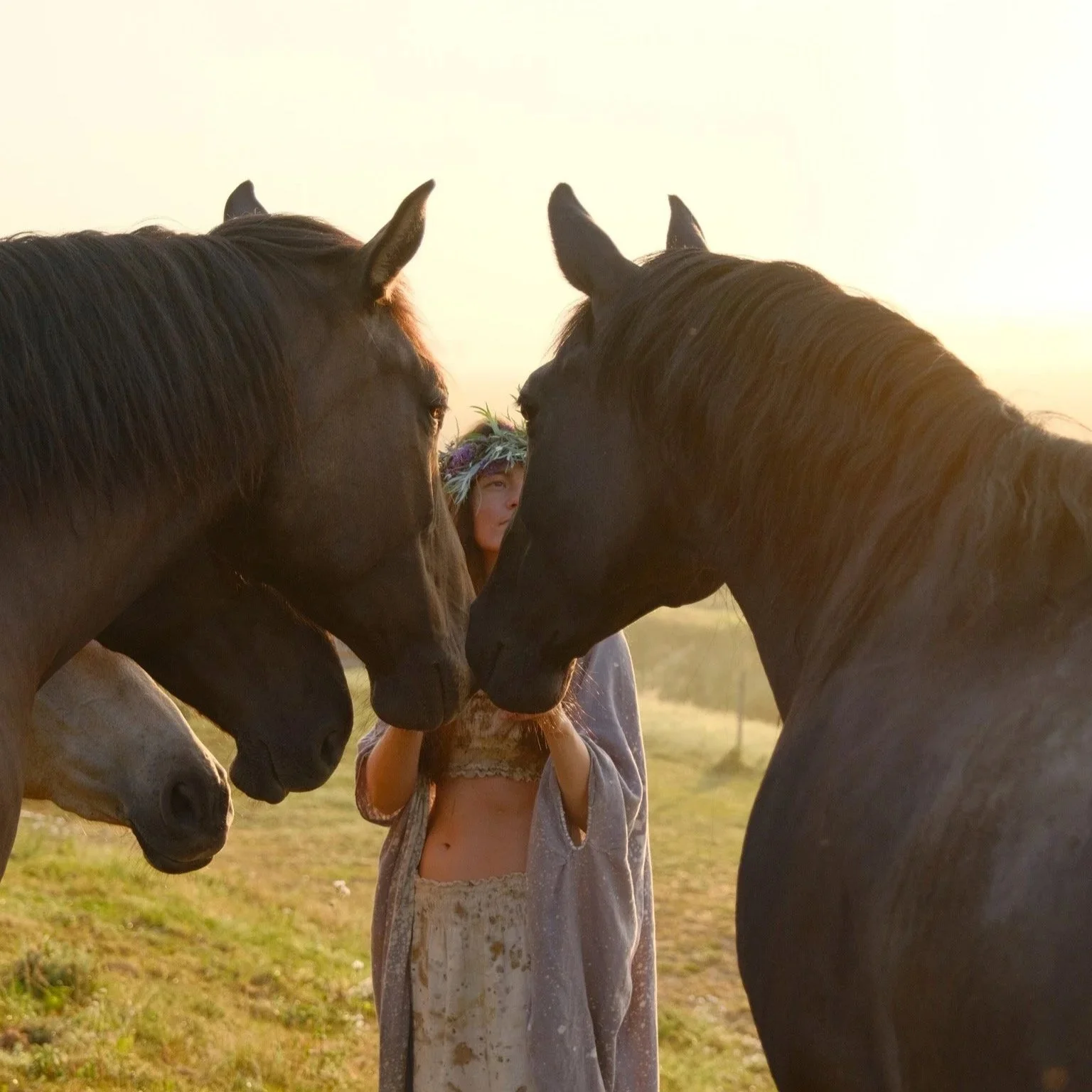 Image 2 of 7
 Image 3 of 7
 Image 4 of 7
 Image 5 of 7
 Image 6 of 7
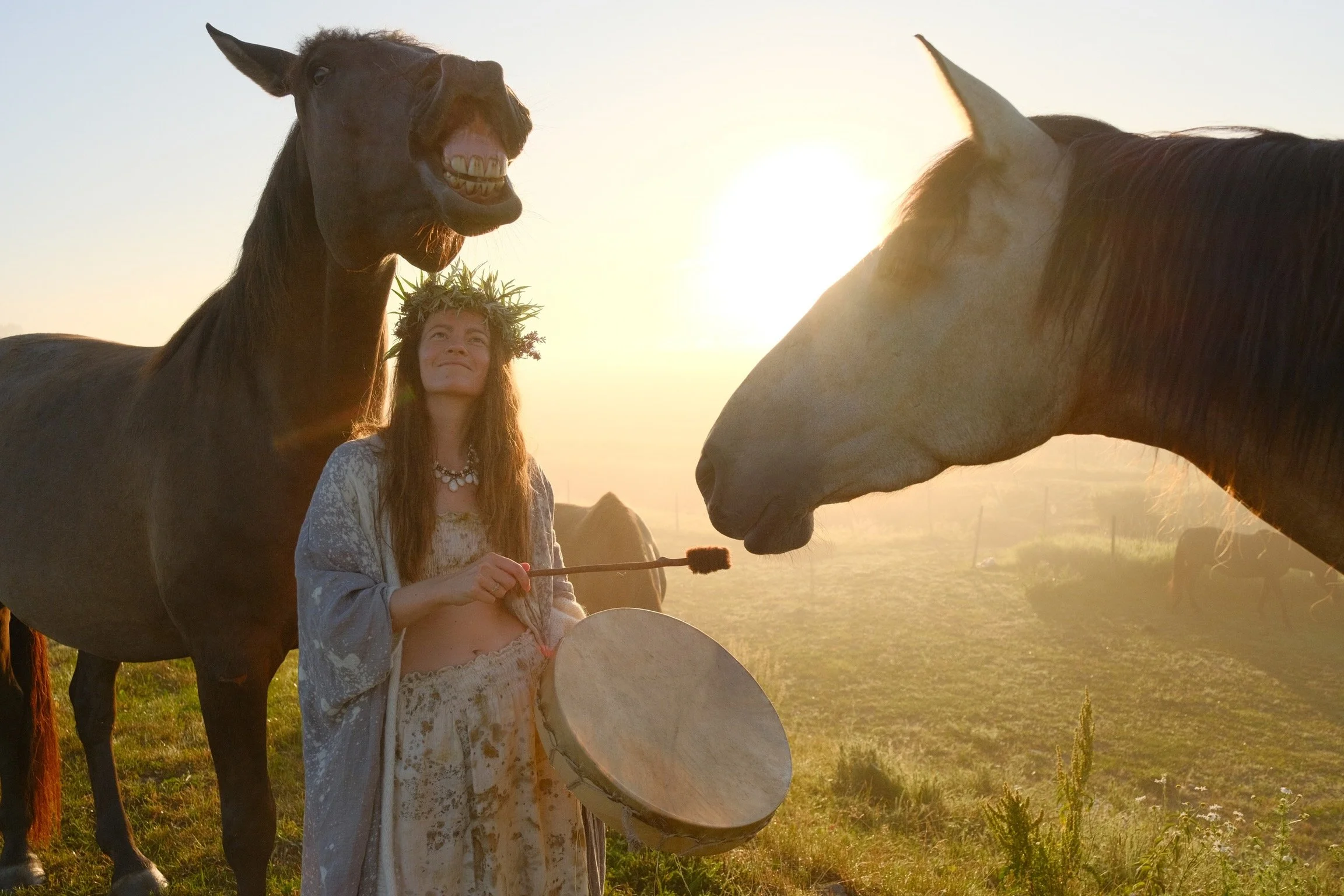 Image 7 of 7