Single Firing Ceramics (Raw Glazing) — Is It Worth It?
In ceramics, energy, materials, and time add up quickly.
Clay bodies are more expensive. Glazes are more expensive. Electricity prices continue to rise. And then there is the hidden cost many people outside pottery never see: kiln time.
In our 200-liter kiln, a full firing cycle takes over 14 hours to heat and roughly 1.5 days to cool safely.
A traditional production cycle often looks like this:
Bisque firing (ours to 980°C / 1796°F) → ~2.5 days total
Glazing and drying
Final glaze firing → another ~2.5 days
Realistically, a single kiln cycle can occupy almost an entire week.
That is why many potters eventually become curious about single firing — also called raw firing.
Instead of bisque firing first, the glaze is applied directly onto dry greenware, and the piece is fired only once.
In theory, this saves:
one entire firing
electricity
time
handling
studio space
production bottlenecks
In practice… it is a bit more complicated.
After years of experimenting with raw firing in our own studio, here is our honest experience.
What Worked Well For Us
Some forms have been incredibly reliable in single firing.
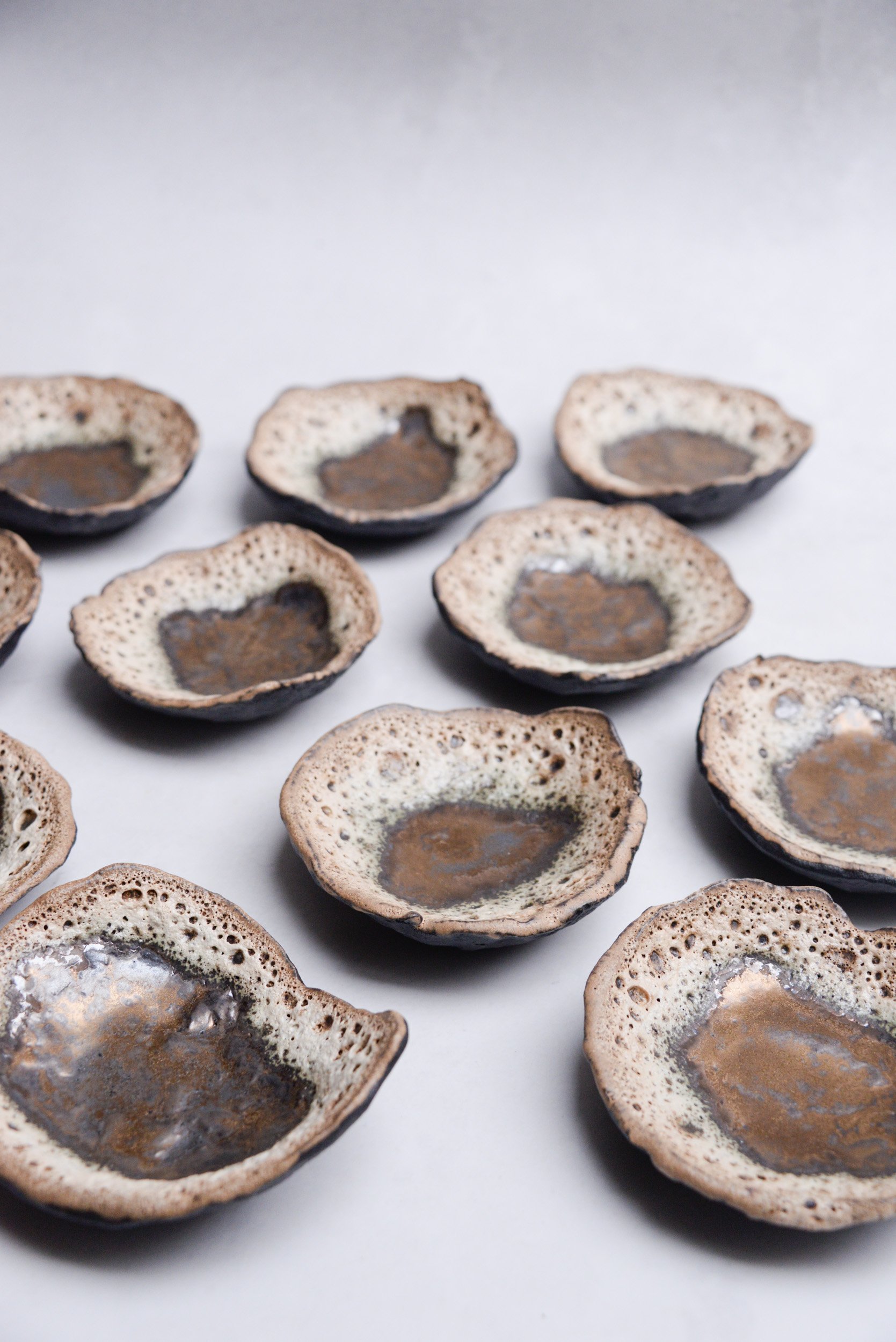
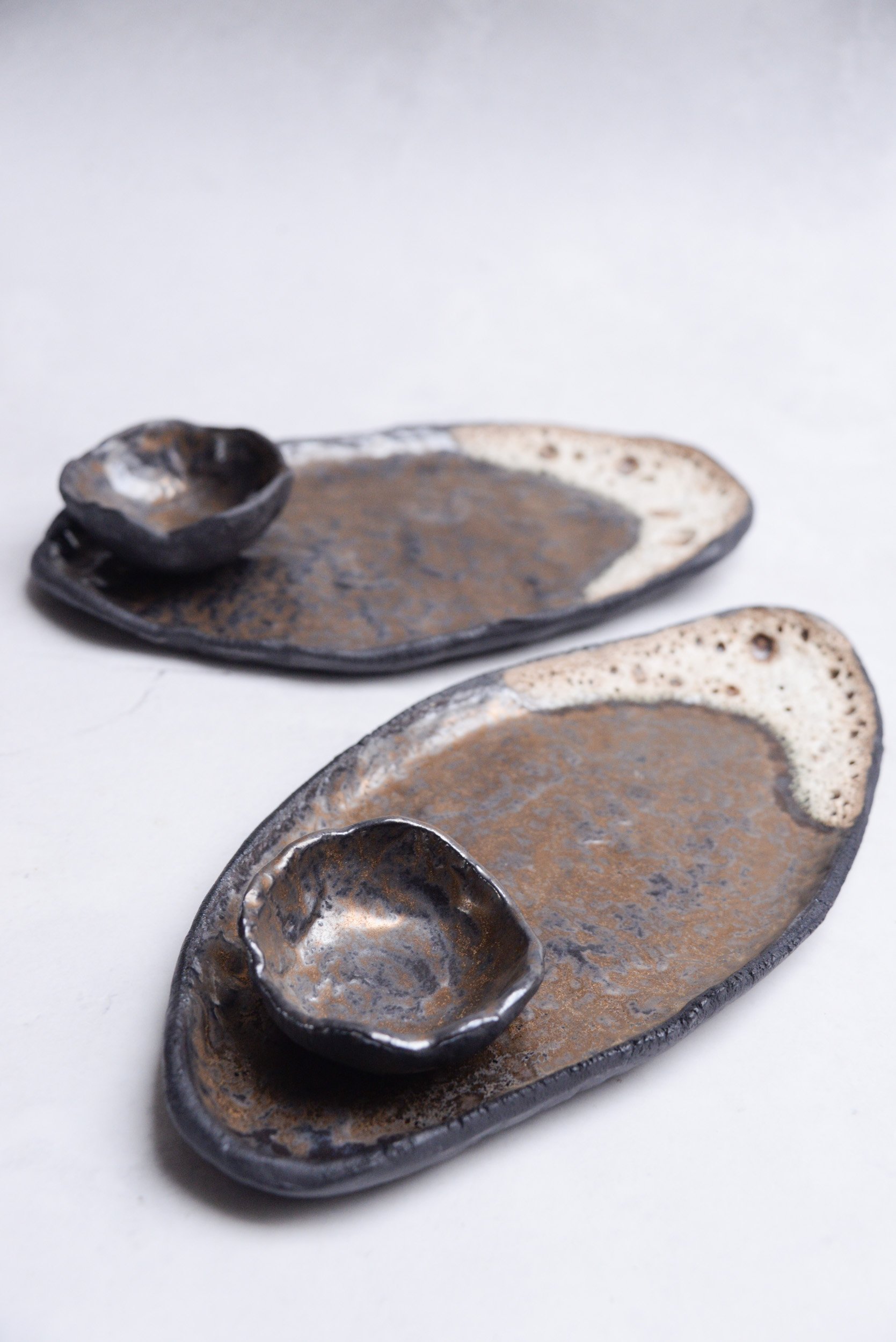
One of our most successful examples has been shallow dishes glazed only on the inside.
For pieces like our bronze and lava-glazed dishes:
glaze is brushed only on the interior
the exterior remains raw
the shape is shallow and stable
there are no handles or fragile attachments
These pieces worked successfully for us almost every time.
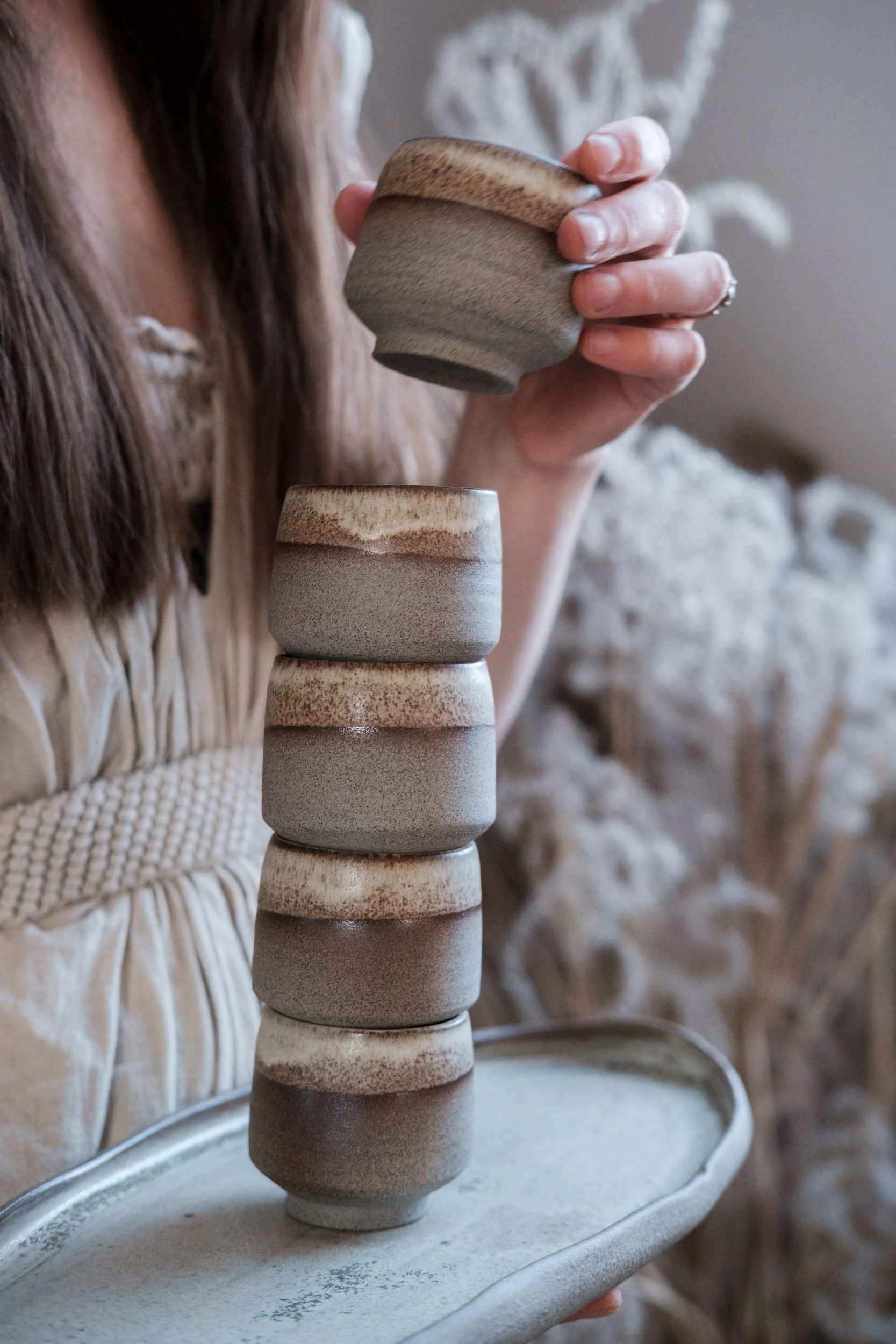
The same was true for some smaller functional ware:
marbled mugs
espresso cups
satin white interiors
stone glaze combinations
black glaze combinations
The Biggest Difference: Surface Finish
Even when single firing technically “worked,” we eventually noticed a difference in finish quality.
Today, we sand many of our pieces in the bisque stage before glaze firing:
foot rings
raw exteriors
transitions between glazed and unglazed surfaces
This gives a softer, more refined tactile finish.
With single firing, you lose that opportunity.
Yes, sanding after glaze firing is possible — but in our experience it is:
slower
harder
more abrasive on tools
less pleasant overall
So although raw firing saved time in the kiln, we sometimes lost that time later in finishing.
If your work is already highly polished before glazing, single firing can still be an excellent method.
But if your process relies heavily on refining bisque surfaces afterward, double firing may still produce the better final result.
Attachments Become the Weak Point
One thing we noticed repeatedly:
Handles, joins, and attachments are placed under much greater stress during single firing.
During a normal workflow, the bisque stage already reveals weak joins or hidden moisture problems.
With raw firing, everything happens at once:
water leaves the clay
organic materials burn out
the body shrinks
glaze melts
All in the same cycle.
If you are repeatedly seeing:
cracking around handles
failed joins
stress fractures
…it may simply not be worth the risk.
For important functional ware, we often return to double firing for peace of mind.
Large Pieces: Much Riskier
Large work is another story entirely.
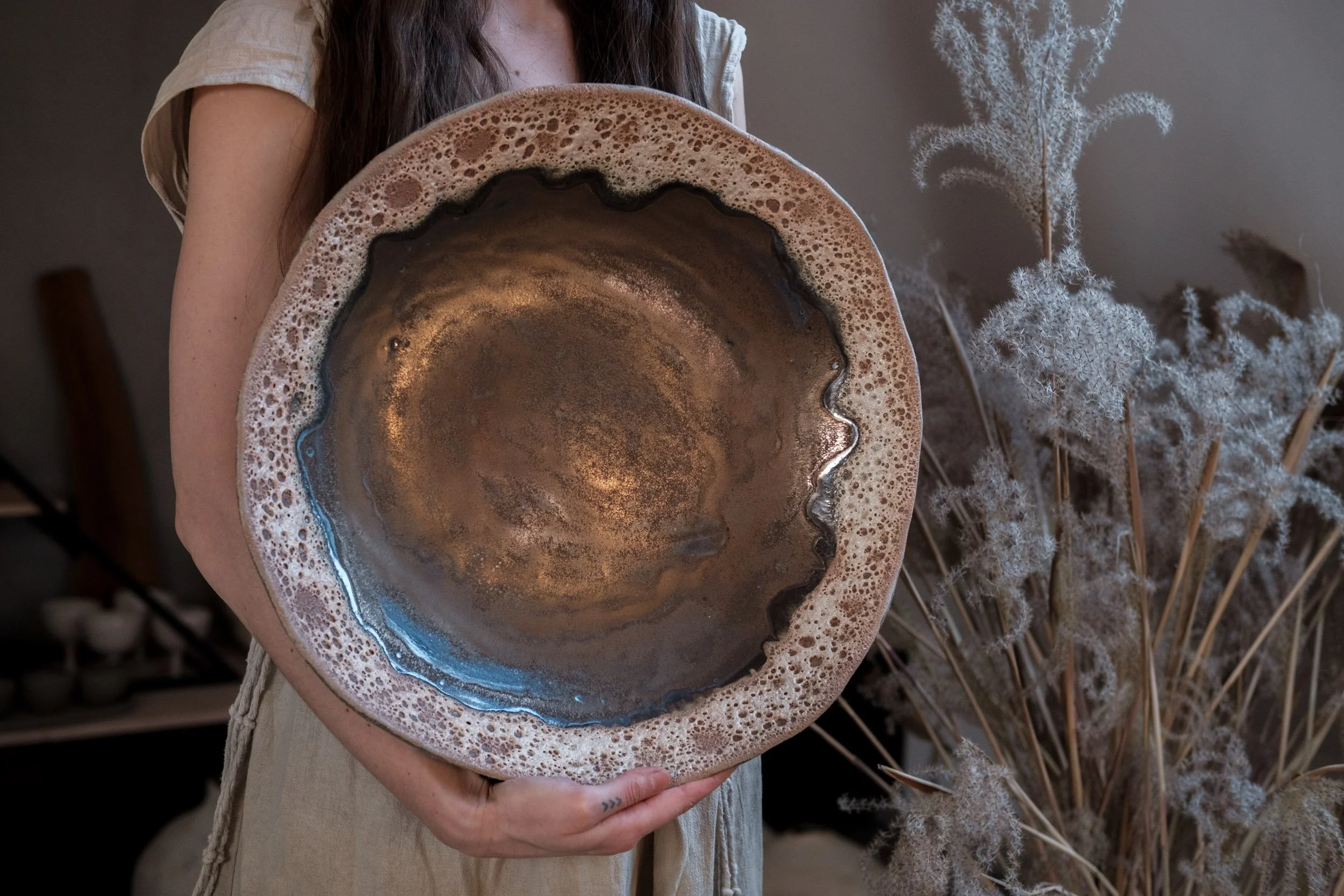
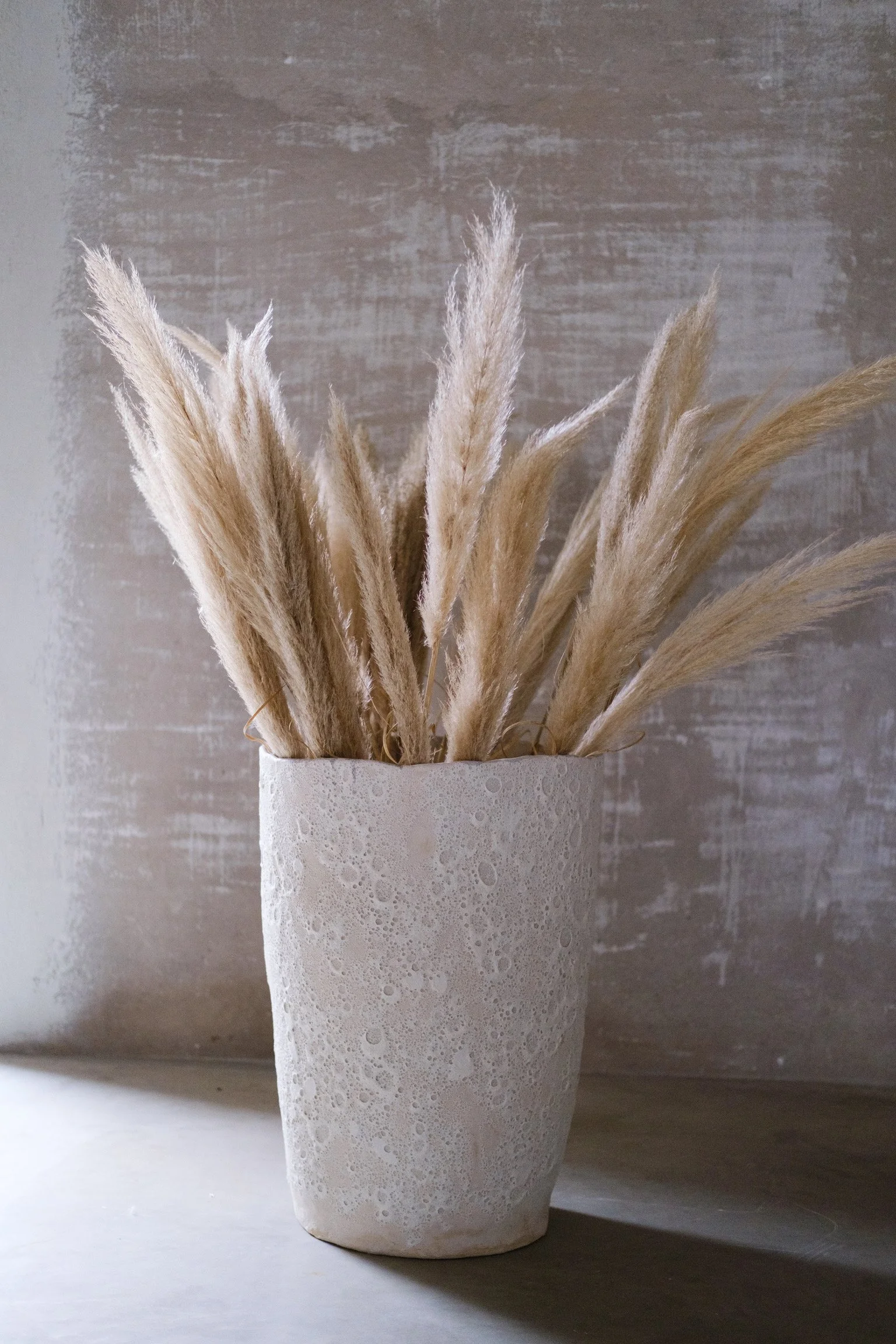
We successfully single-fired a large floor vase:
white matte glaze inside
white lava glaze outside
both brush-applied
And yes — it worked.
But honestly?
I am not sure I would risk such a large piece again.
The larger the object:
the greater the drying stresses
the greater the shrinkage stress
the greater the chance of catastrophic failure
And unlike a small cup, when a large raw-fired piece fails, it can destroy kiln shelves and neighboring work too.
Our Most Important Lava Glaze Discovery
Single firing crater/lava glazes took extensive trial and error.
Eventually we discovered something extremely important.
For our lava glazes, we apply them by dabbing with a brush rather than brushing smoothly.
Usually:
2–4 layers
built up for stronger crater texture
But with raw glazing, timing becomes critical.
If one layer dries completely before the next is added:
the glaze can lose adhesion
sections may detach during firing
glaze chunks can fall onto kiln shelves
Which becomes… a spectacular disaster.
So when applying lava glaze raw:
build layers immediately one after another
work continuously
avoid letting isolated areas fully dry before continuing
Shape also matters enormously.
A shallow dish may work perfectly, while scaling the exact same glaze to a vertical vase can suddenly fail.
This is something many potters underestimate:
successful small-scale raw firing does not automatically scale upward.
Why Single Firing Can Still Be Worth It
Despite all the risks, single firing has genuinely helped our studio at critical moments.
A few years ago, we had just completed our new studio space and were carrying a significant bank loan.
Then came a corporate order:
1,400 bowls
fixed Christmas deadline
With our normal double-firing workflow, we simply could not have completed the order in time.
The kiln capacity was the bottleneck.
So we raw glazed the entire project.
And that single decision allowed us to take on — and complete — the commission.
In many ways, that order helped stabilize the studio financially during a very vulnerable period.
That experience completely changed how we viewed single firing.
Not as a universal replacement for double firing.
But as a strategic production tool.
Single firing is neither “better” nor “worse.”
It is simply another approach — one with:
major efficiency advantages
real technical limitations
and a much smaller margin for error
For us, the best candidates remain:
shallow forms
simple shapes
small pieces
brush-applied glazes
stable stoneware bodies
forms without attachments
Meanwhile, high-risk pieces usually return to double firing:
large work
highly refined surfaces
delicate joins
important functional ware
Still, if you are curious about reducing firing costs, increasing production speed, or simply experimenting with process — raw firing is absolutely worth exploring.