Navigating the World of Special Effect Glazes: A Guide for Potters and Customers
FOOD SAFETY BEYOND LEAD AND CADMIUM — WHAT ABOUT OTHER METAL OXIDES?
When we talk about ceramic food safety, the conversation often begins and ends with lead and cadmium. There is a good reason for this: these are the metals specifically addressed by the established ceramic food-contact migration requirements in the EU, and they are also central to ceramicware testing and enforcement in the United States.
But ceramic glazes are chemically much more complex than that.
Colour and special effects in glazes are often created using metal oxides. Depending on the glaze, these may include iron, copper, cobalt, manganese, chromium and other elements. They are what give us many of the beautiful colours and surfaces we associate with ceramics: cobalt blues, copper greens, iron browns, deep blacks and many metallic or reactive effects.
So an important question follows: if a glaze contains these metals, can some of them migrate into food?
Potentially, yes.
THE GLAZE MATRIX MATTERS
A properly fired glaze is essentially a glass. During firing, its ingredients melt together and form a glassy matrix in which the colourants and other components become incorporated.
A well-formulated, fully matured glossy glaze generally forms a durable glass matrix, which can be very effective at retaining its components.
Some matte and special-effect glazes behave differently. Their mattness may result from crystallisation, phase separation or glaze chemistry that produces a less glassy surface. Depending on the formulation and firing, such surfaces can sometimes be less chemically durable than a stable glossy glaze.
This does not mean that matte = unsafe. There are extremely durable matte glazes, just as there can be poorly formulated glossy ones.
It simply means that surface appearance alone cannot tell us how much a glaze will leach.
WHAT DOES STANDARD CERAMIC FOOD-SAFETY TESTING ACTUALLY TELL US?
This distinction is important.
The established EU ceramic migration legislation specifically sets limits for lead and cadmium migration. Likewise, US ceramicware enforcement has traditionally focused heavily on extractable lead and cadmium.
Other elements used in ceramic glazes are not assessed in the same way under these ceramic-specific standards.
Therefore, a piece passing the required lead and cadmium test does not literally mean that nothing whatsoever can migrate from its glaze. It means that the regulated migration of lead and cadmium is within the applicable limits.
Tiny or trace amounts of other glaze components may potentially migrate, particularly from a less chemically durable glaze under acidic conditions.
That distinction is worth understanding without becoming unnecessarily frightened by it. Migration is not automatically the same thing as toxicity: what substance migrates, in what quantity, how often exposure occurs, and by which route all matter.
WHY ACIDITY AND CONTACT TIME MATTER
Glaze durability becomes particularly relevant when food or drink is acidic and remains in contact with the surface for a long time.
There is a considerable difference between placing dinner on a plate for thirty minutes and storing an acidic liquid in a ceramic vessel for many hours.
This is also why I think the intended use of a ceramic object should be part of the conversation.
A dinner plate usually has relatively short food-contact times. Food is served, eaten and the plate is washed. A mug, cup, jug or storage vessel may hold a liquid for considerably longer, and acidic liquids can be more chemically aggressive toward certain glaze surfaces.
THE CONSERVATIVE APPROACH: USE A LINER GLAZE
For potters — or customers — who want to take the most conservative approach, there is a very simple solution:
use a stable, chemically durable liner glaze on the surfaces that have the most sustained contact with food and drink.
I particularly favour this approach for mugs, cups, teapots and other drinking vessels. A reliable glossy or otherwise well-tested liner glaze on the interior provides a durable food-contact surface, while reactive, matte, crystalline or metallic glazes can still be explored on the exterior.
For plates and serving ware, I am personally more comfortable with a broader range of properly fired special-effect glazes, particularly when they are used for ordinary meal service rather than prolonged storage of strongly acidic foods.
This is partly simply about using ceramics with common sense: a plate holding dinner for the duration of a meal is a very different use case from a vessel holding lemon juice overnight.
FOOD-SAFE DOES NOT MEAN CHEMICALLY INERT
Perhaps the most useful way to think about this is that “food-safe” and “absolutely chemically inert” are not the same statement.
Ceramics are materials made from minerals and oxides. Glazes are complex glasses containing many different elements. The purpose of food-contact regulation is to control substances known to present significant risks at relevant levels — not to demonstrate that absolutely zero atoms of anything ever leave a ceramic surface.
For the cautious maker, the practical hierarchy is therefore straightforward: choose well-formulated glazes, fire them to proper maturity, avoid unstable or visibly deteriorating surfaces for food contact, use a durable liner glaze where prolonged liquid contact is expected, and have the finished fired ware laboratory tested whenever certainty is required.
This still leaves enormous room for the expressive surfaces that make handmade ceramics so special.
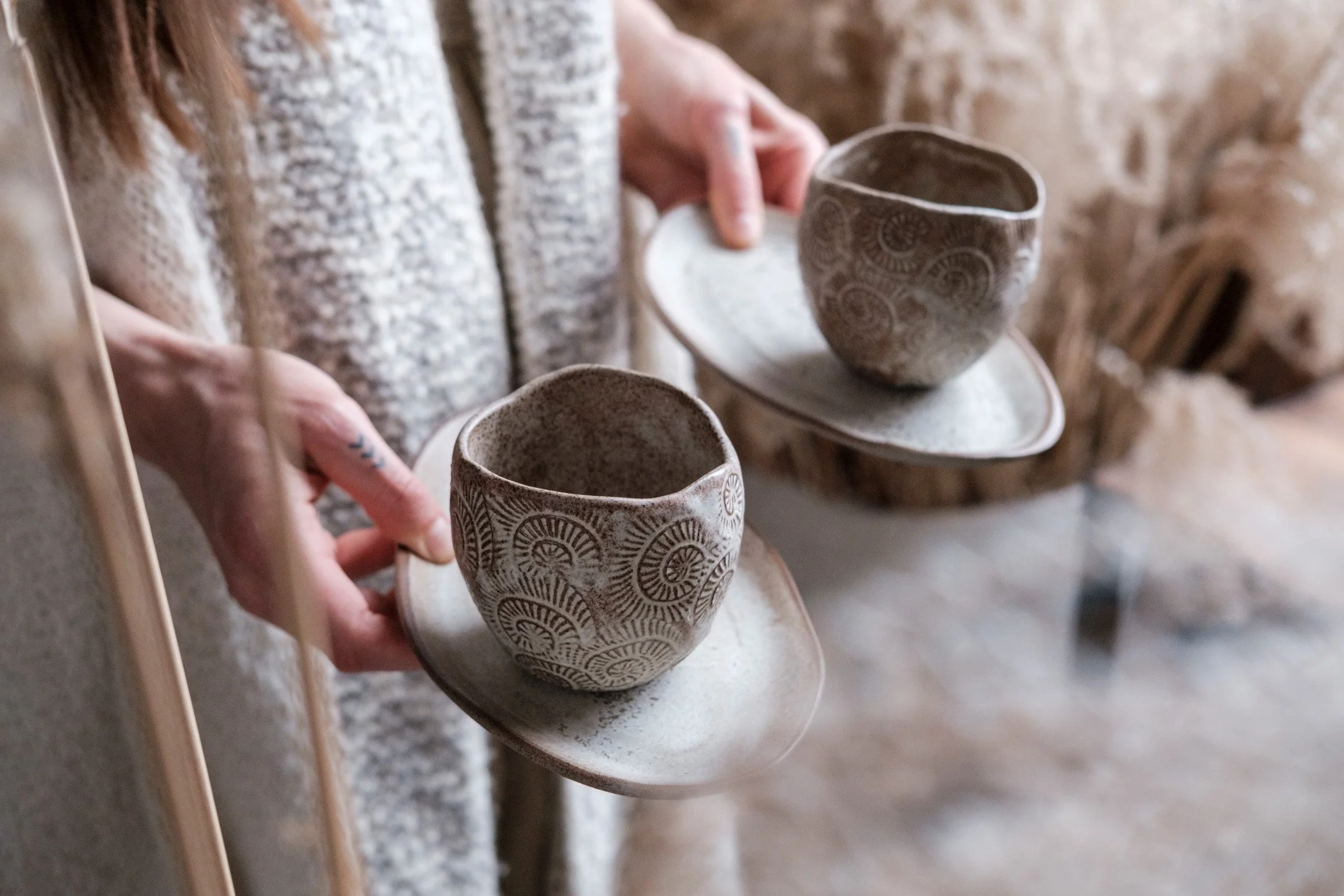
The Spectrum of Matte Glazes
“Matte” covers a huge spectrum — from very dry, stone-like surfaces to silky satin glazes that are almost glossy. And importantly, not all matte glazes behave in the same way.
A well-formulated satin matte can be extremely durable and practical for everyday tableware. Very dry mattes may be more prone to staining, cutlery marks, tea or coffee patina, and in some formulations lower chemical durability.
Glossy glazes generally form a continuous glassy matrix that is particularly effective at locking colourants and metal oxides into the fired surface. Some matte glazes achieve their appearance through crystallisation or other changes within the glaze structure, and may release somewhat more of their components under aggressive acidic conditions.
This does not mean that matte glazes are inherently unsafe. There are excellent, chemically durable mattes and poorly formulated glossy glazes. The individual glaze, clay body and firing matter more than the label “matte.”
In my own work, some matte glazes remain spotless after years of use, while others gradually develop a beautiful patina. For drinking ware, those wanting the most conservative approach can simply use a stable liner glaze inside.
There are number of matte glazes that contain no metal oxides: Perfect matte, Stone, AB Oatmeal, Ron Cream, Dune amongst others.
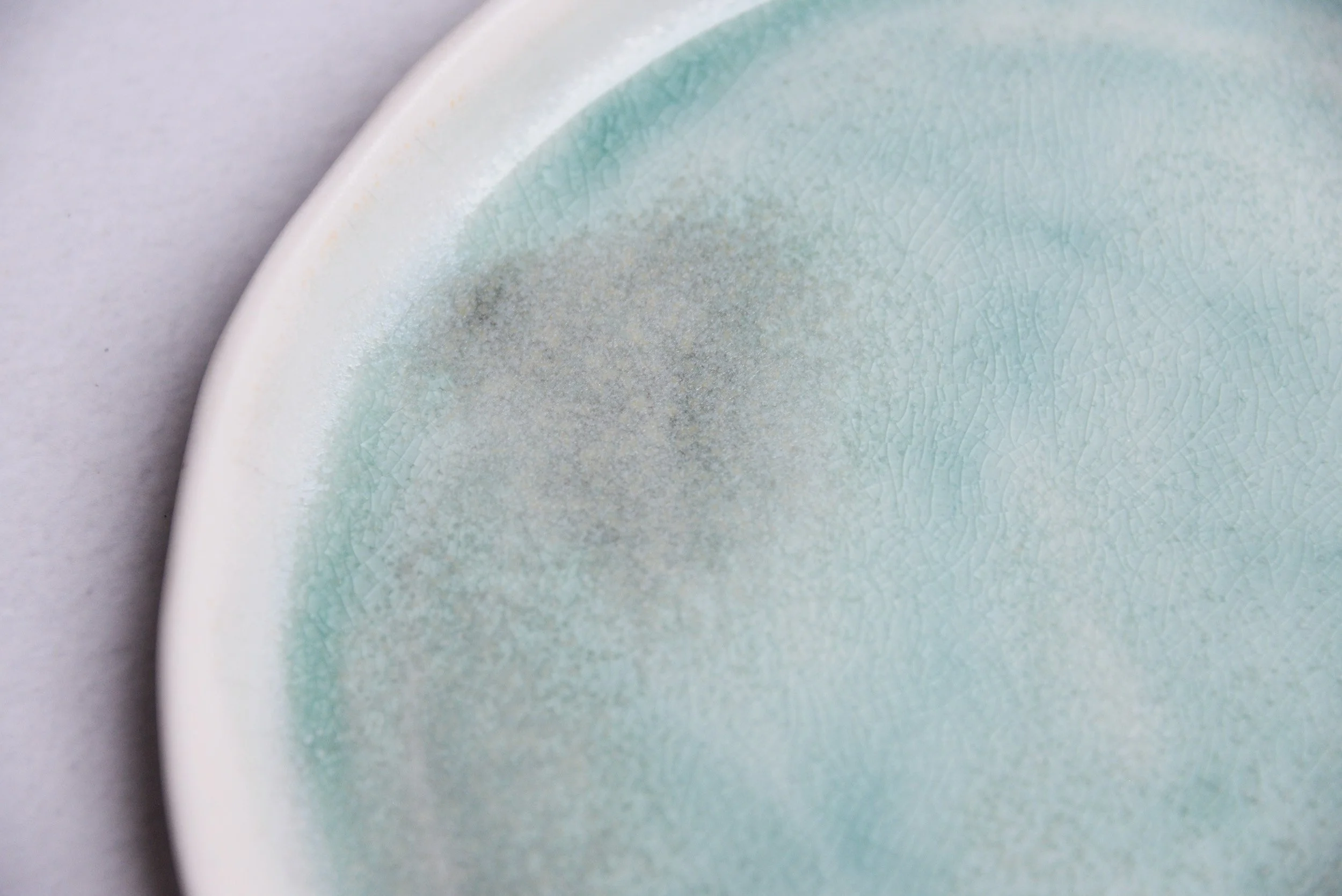
Crackle Glazes: Embracing the Fine Lines
Crackle, or crazing, occurs when the glaze and clay body contract at slightly different rates during cooling, creating a network of fine lines in the glaze.
These surfaces have been deliberately cultivated in ceramic traditions for centuries. With use, tea, coffee and other pigments can gradually enter the fine lines, making the pattern increasingly visible — something that can be considered either patina or staining, depending on your perspective.
From a functional point of view, it is useful to distinguish a crazed glaze from the ceramic body underneath it. Properly vitrified high-fired stoneware has very low water absorption, unlike porous low-fired earthenware.
Nevertheless, an intact, uncrazed glaze is the more conservative choice where hygiene is particularly important. For intensive restaurant use, children's ware, or drinking vessels, I would favour a stable liner glaze. For serving ware, tea ware, exteriors and pieces where developing patina is part of their character, crackle can be a beautiful and intentional surface.
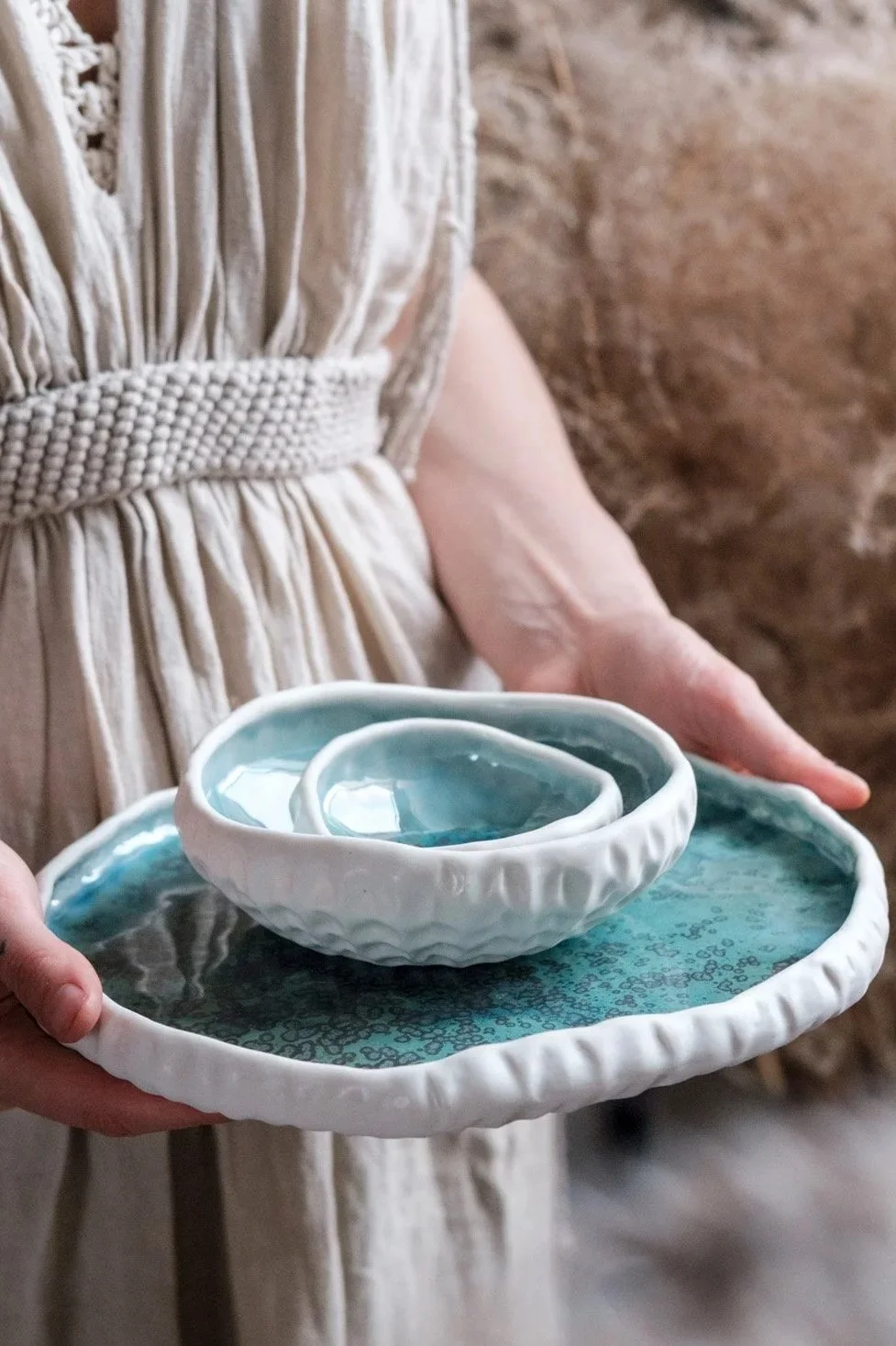
Crystalline Glazes: Delicate Beauty, Functional When Used Thoughtfully
Crystalline glazes create their extraordinary flowers and starbursts through actual crystal growth inside the glaze. The glaze becomes very fluid at peak temperature and is then held through carefully controlled cooling stages, allowing crystals to form and grow.
Because their chemistry is deliberately manipulated to encourage crystallisation, they behave somewhat differently from conventional glossy glazes. Many also contain colourants such as cobalt, copper, iron or manganese.
This does not make crystalline glazes decorative-only. A properly formulated and matured crystalline glaze can perform beautifully on functional tableware, and I use them extensively in my own work.
Some crystalline formulations do have lower acid resistance and may develop slight dulling or colour changes after prolonged contact with strongly acidic foods. For ordinary use on plates, bowls and serving ware, this is generally much less relevant than it would be for storing acidic liquids for hours.
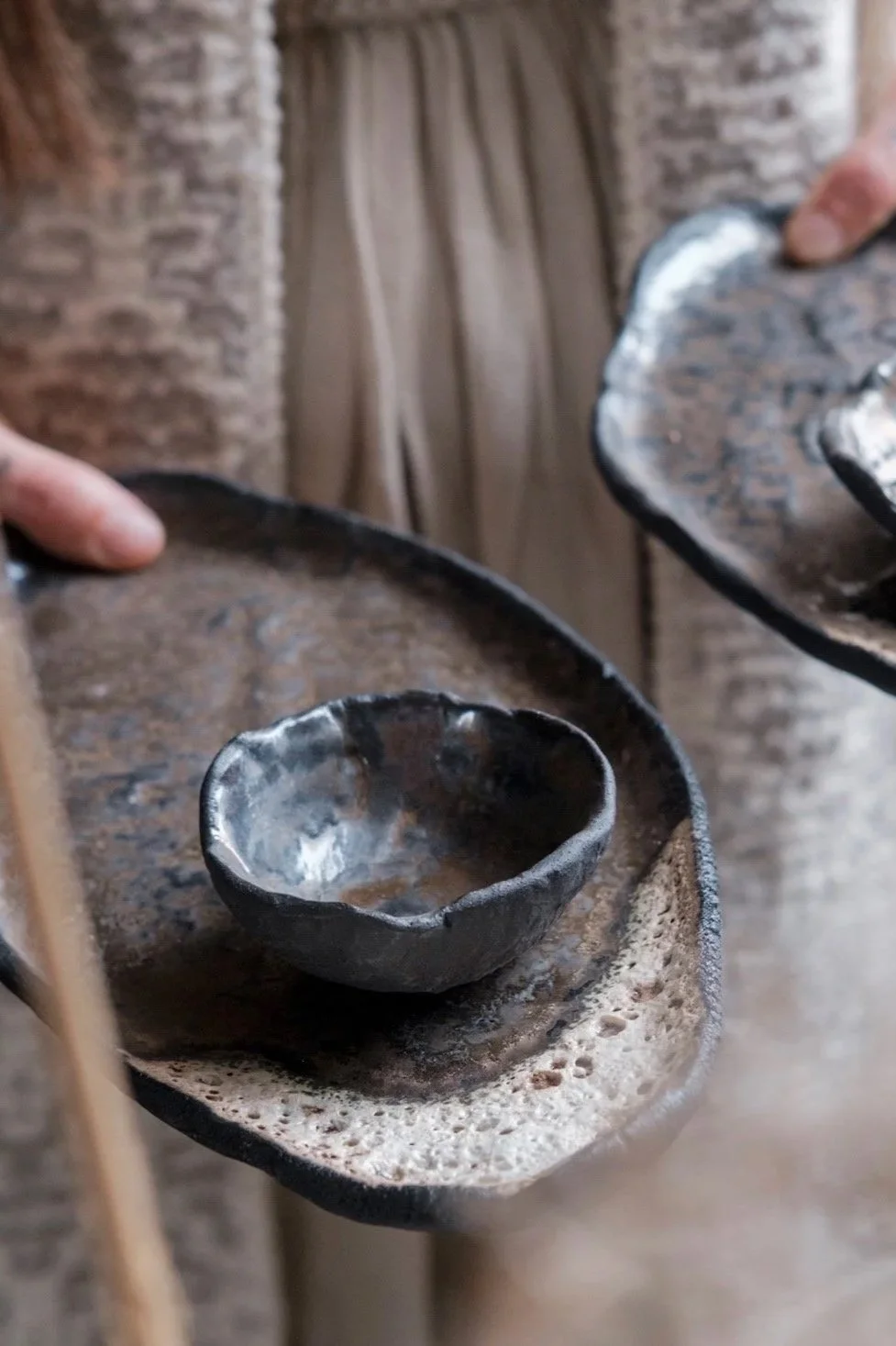
Metallic Glazes: Navigating Acid Resistance and Everyday Use
Metallic glazes — bronze, pewter, iron-rich and other metal-saturated surfaces — are among the glazes that seem to cause the most concern around food safety. Perhaps this is understandable: we see the word metal, remember warnings about lead and cadmium, and instinctively put everything into the same category.
But these are different questions.
Metallic glazes often contain relatively high amounts of oxides such as iron, manganese, copper or cobalt to create their characteristic colour and sheen. The presence of a metal oxide does not automatically make a finished glaze toxic.
In fact, a metallic glaze can pass the applicable food-contact migration test for lead and cadmium while at the same time being classified as having low acid resistance. This is not contradictory. The tests are looking at different things.
Food-contact testing for ceramic ware in the EU focuses specifically on the migration of lead and cadmium. Acid-resistance testing, on the other hand, tells us how well the glaze surface withstands chemical attack from acids.
So what does low acid resistance actually mean?
It means that prolonged exposure to something acidic — lemon juice, vinegar, tomato, for example — may attack the glaze surface. You might see a dull patch, discoloration or a change in the metallic sheen. Some components of the glaze may also migrate from a surface that is being chemically attacked.
That is useful information about the glaze, but it needs to be kept in perspective.
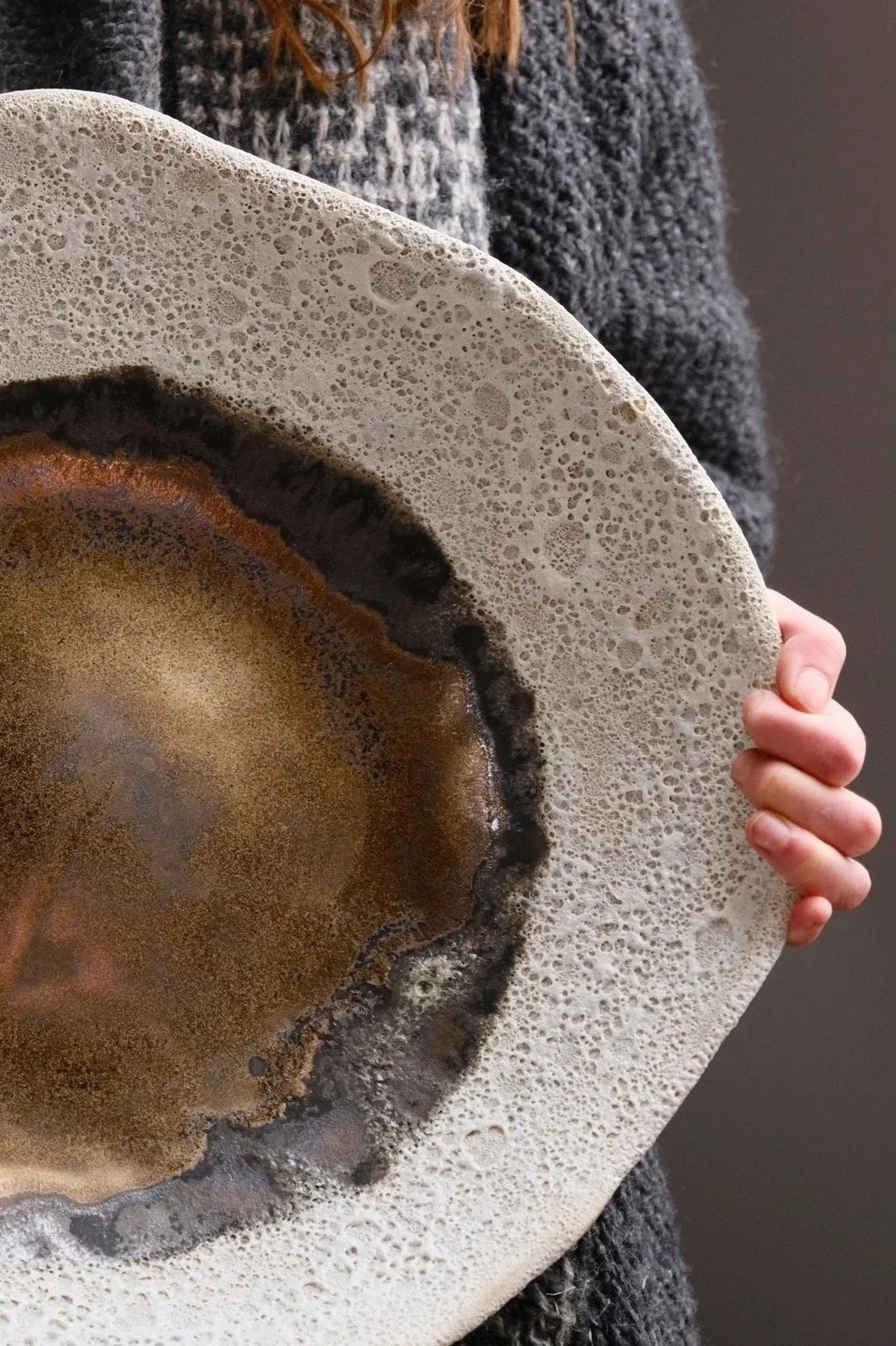
Does low acid resistance only mean visual change, or can leaching occur?
INTENDED USE MATTERS
A large metallic fruit platter containing whole lemons and clementines is technically a piece of “food-contact ware.” But the fruit skin is sitting on the platter, not bathing the glaze in lemon juice for 24 hours.
You are not going to suddenly make that platter dangerous by putting a lemon on it. Low acid resistance is not radioactivity.
Likewise, serving sushi, bread, cheese, pastries or dinner on a metallic plate for the duration of a meal is a very different exposure from filling a vessel with vinegar or lemon juice and leaving it there overnight.
This is where I prefer knowledge and common sense over fear.
If a glaze has low acid resistance, I simply consider what I am making and how that object will realistically be used. Metallic glazes can be wonderful for platters, serving dishes, sushi plates and other short-contact applications.
For the inside of a mug, cup or vessel that repeatedly holds liquids — particularly acidic ones — I prefer the more conservative solution of a stable, chemically durable liner glaze.
This doesn't make the metallic glaze “bad” or “unsafe.” It means we understand the properties of the material and design accordingly.
Ceramics do not need to withstand every imaginable food, acid and storage condition to be useful functional objects.
A fruit platter needs to function safely as a fruit platter; it does not need to function as a container for lemon juice.
Manganese in Glazes — Understanding the Real Risks
Manganese is a common ceramic colorant, used to create deep browns, blacks, purples and many metallic effects. Because manganese can be harmful when inhaled, its presence in glazes sometimes raises understandable concerns around functional ware.
The important distinction is between working with raw manganese in the studio and using a finished, fired ceramic object.
The primary concern with manganese in ceramics is occupational exposure — particularly inhaling airborne material while mixing dry glaze ingredients, spraying glazes, or being exposed to kiln fumes.
Repeated or excessive inhalation of manganese can affect the nervous system. This is a genuine studio safety issue, which is why good ventilation, appropriate respiratory protection and careful handling of dry materials matter.
Once the glaze has been fired, however, we are dealing with a very different material. The manganese is incorporated into the fired glaze rather than being present as loose airborne powder.
Why Potters Cannot Certify Glazes for Other Studios
One of the most important things to understand about glaze safety is that a glaze recipe or commercial product cannot tell us everything about the finished ceramic surface.
Even when two potters use exactly the same glaze, the result can vary because of:
application thickness
clay body
kiln atmosphere
actual heatwork achieved during firing
firing and cooling schedule
This is why one potter cannot reliably certify another studio's finished ware simply because they use the same glaze.
If certainty is required, the most reliable approach is to have the finished fired tableware tested by an appropriate laboratory according to the regulations applicable where it will be sold.
Ultimately, we test the ceramic object — not just the ingredients that went into it.
A Practical Approach for Potters
If you want to take the most conservative approach, use a stable, chemically durable liner glaze for surfaces with prolonged food or liquid contact, particularly inside mugs, cups, teapots and storage vessels. Our glaze IVORY is perfect for stoneware, ALWAYS PERFECT ideal for porcelain, but also light matte glaze like “White Matte” provide a food-safe satin white surface that is easy to clean too..
That doesn't mean special-effect glazes need to be confined to sculpture.
Matte, crystalline, crackle and metallic glazes can all have a place in functional ceramics. Think about the glaze itself and the intended use of the object: a coffee mug, dinner plate, sushi dish and giant fruit platter do very different jobs.
Use special-effect glazes thoughtfully on serving ware, plates, exteriors and other suitable surfaces, and introduce a liner glaze where the function calls for something more chemically durable.
And if a glaze has low acid resistance, communicate what that actually means rather than simply labelling the piece “unsafe.” It may mean avoiding prolonged contact with strongly acidic foods because they can alter the surface — not that putting a croissant or a whole lemon on the plate presents a hazard.
How I Explain It to Customers
“All glazes used in my work are lead- and cadmium-free and fired to durable stoneware temperatures. Some special-effect surfaces, particularly metallic and crystalline glazes, may have lower acid resistance. This means prolonged contact with strongly acidic foods can sometimes alter the appearance of the glaze. For best care, avoid storing acidic foods or liquids on these surfaces for extended periods and use the piece according to its intended function.”
Clear information is far more useful than fear-driven messaging. Understanding a material's limitations doesn't make it dangerous — it allows us to use it intelligently.
Final Thoughts
Special-effect glazes are part of what makes ceramics extraordinary. Crystals grow in the kiln, metals create unexpected depth and sheen, matte surfaces absorb light, and crackle glazes continue developing character throughout their lives.
These surfaces don't need to be feared, nor do we need to pretend that every glaze behaves exactly like a stable glossy liner glaze.
Food safety is more nuanced than a simple “safe / unsafe” label. We need to consider glaze chemistry, firing, chemical durability, the substances actually regulated and tested, and — perhaps most importantly — how the finished object will realistically be used.
For potters, that means understanding our materials, testing where appropriate and designing the surface around the function of the piece. For customers, it means receiving enough information to use handmade ceramics confidently and sensibly.
There is room for both caution and experimentation.
When we understand our materials rather than fear them, special-effect ceramics can remain what they are meant to be: functional, expressive objects made to be used and lived with.