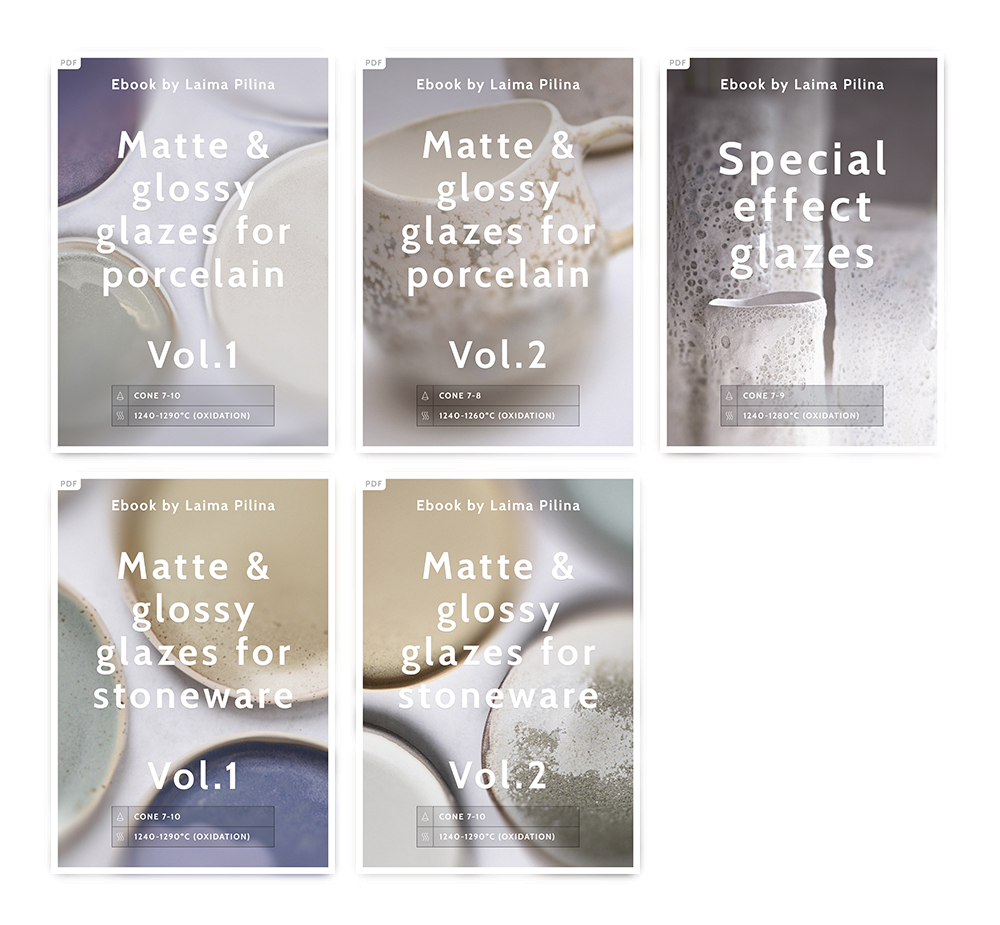
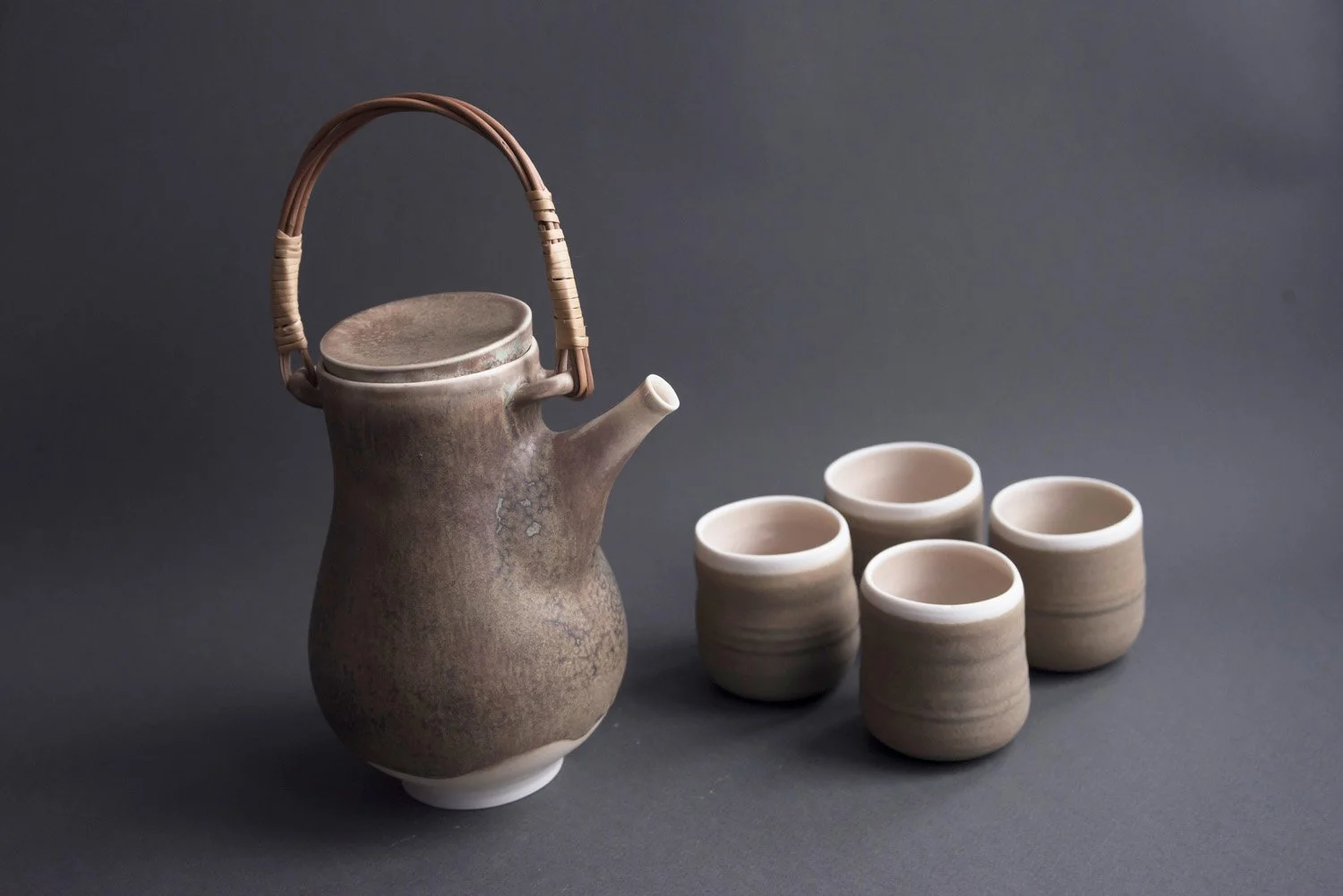
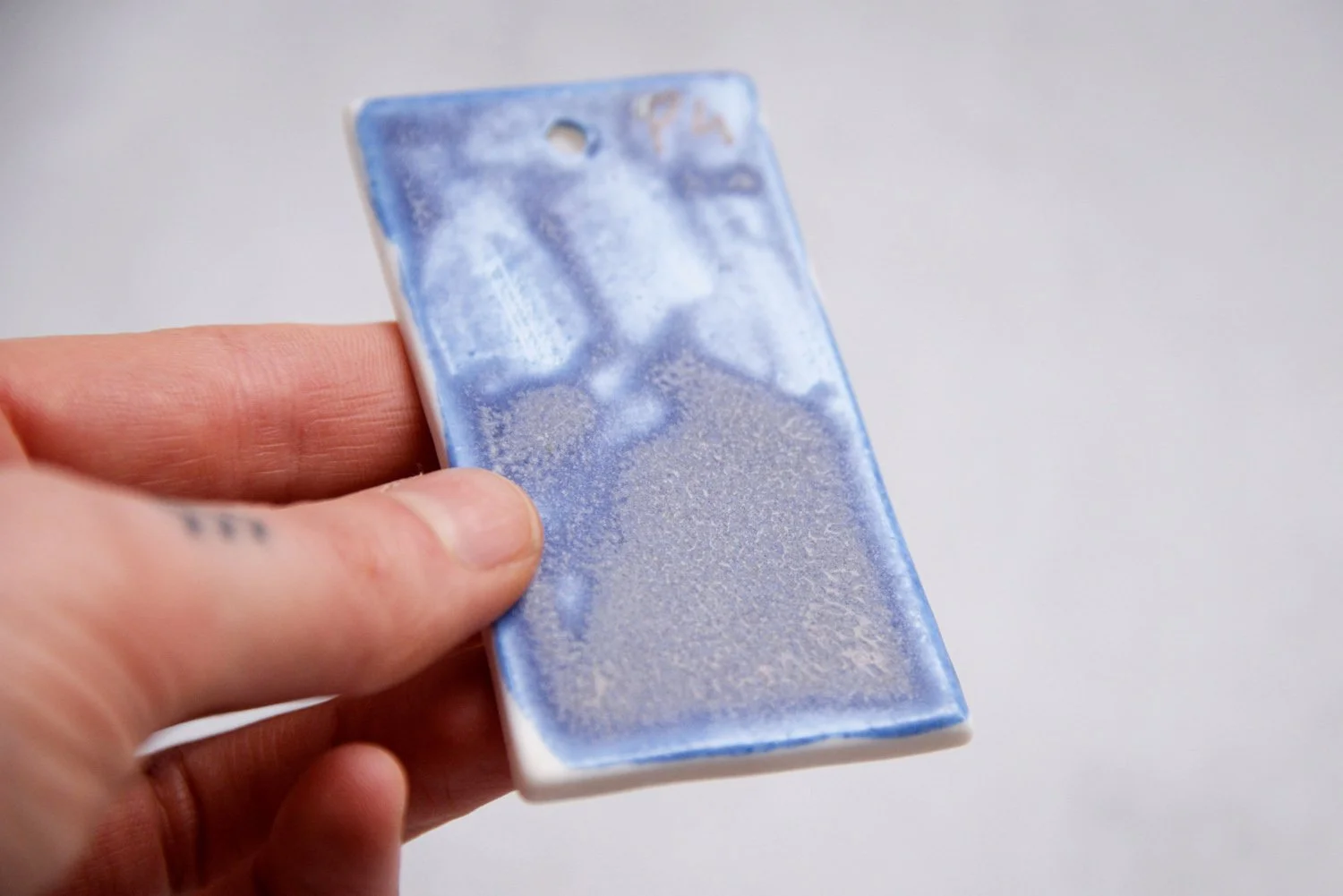
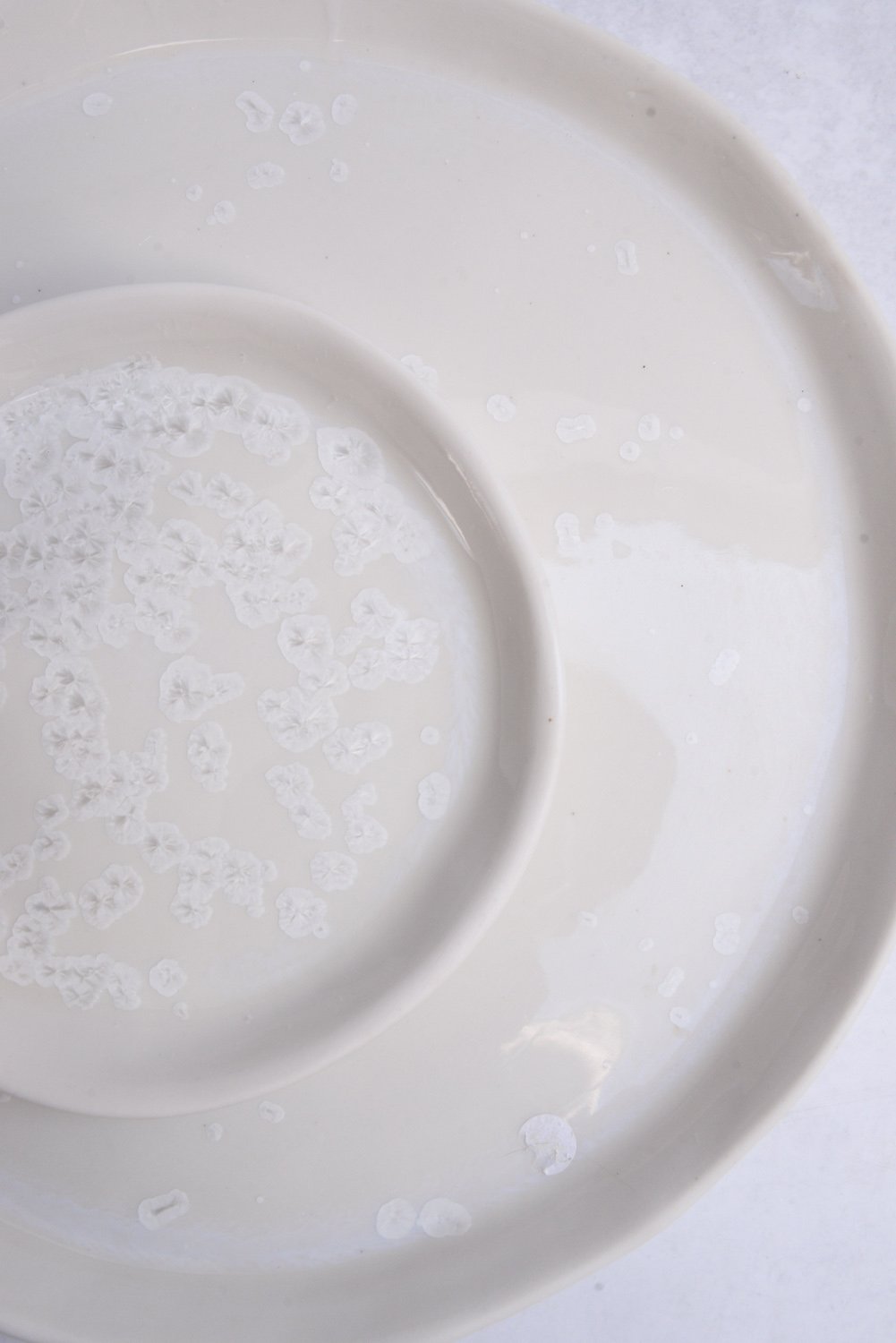
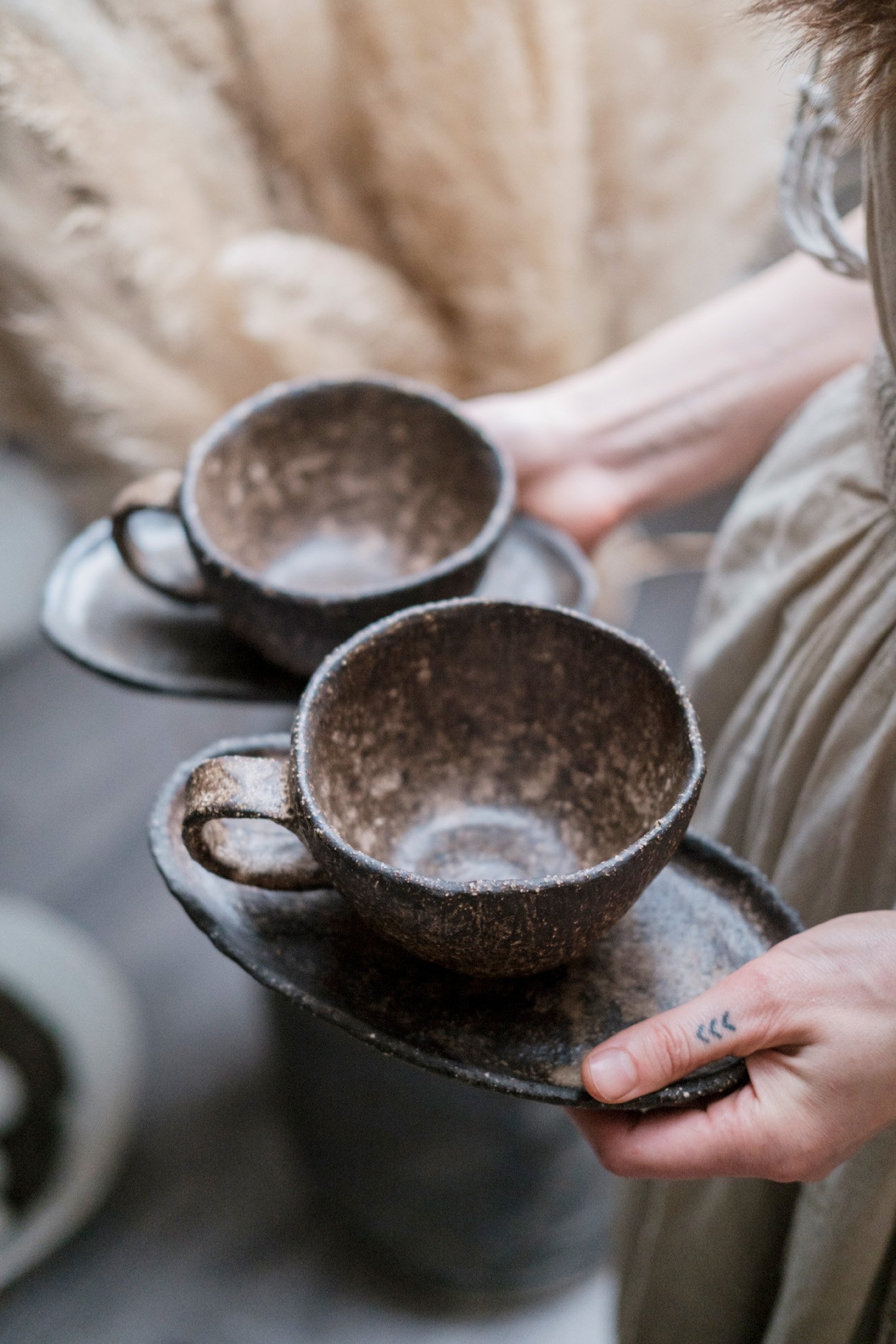
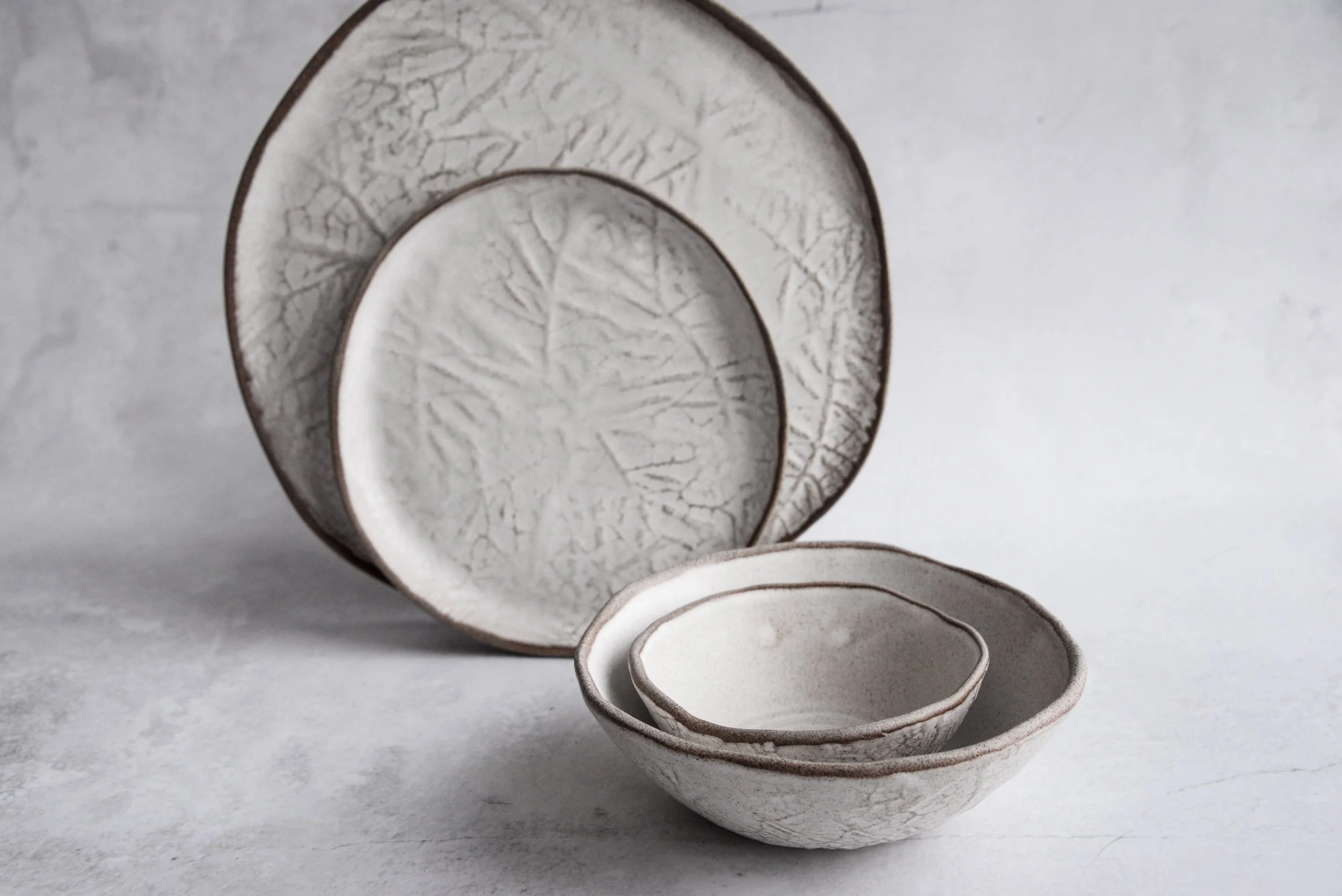
This volume dives deeper into my core glaze foundations and offers 15 refined recipe variations built on the three stoneware bases I use most often in the studio:
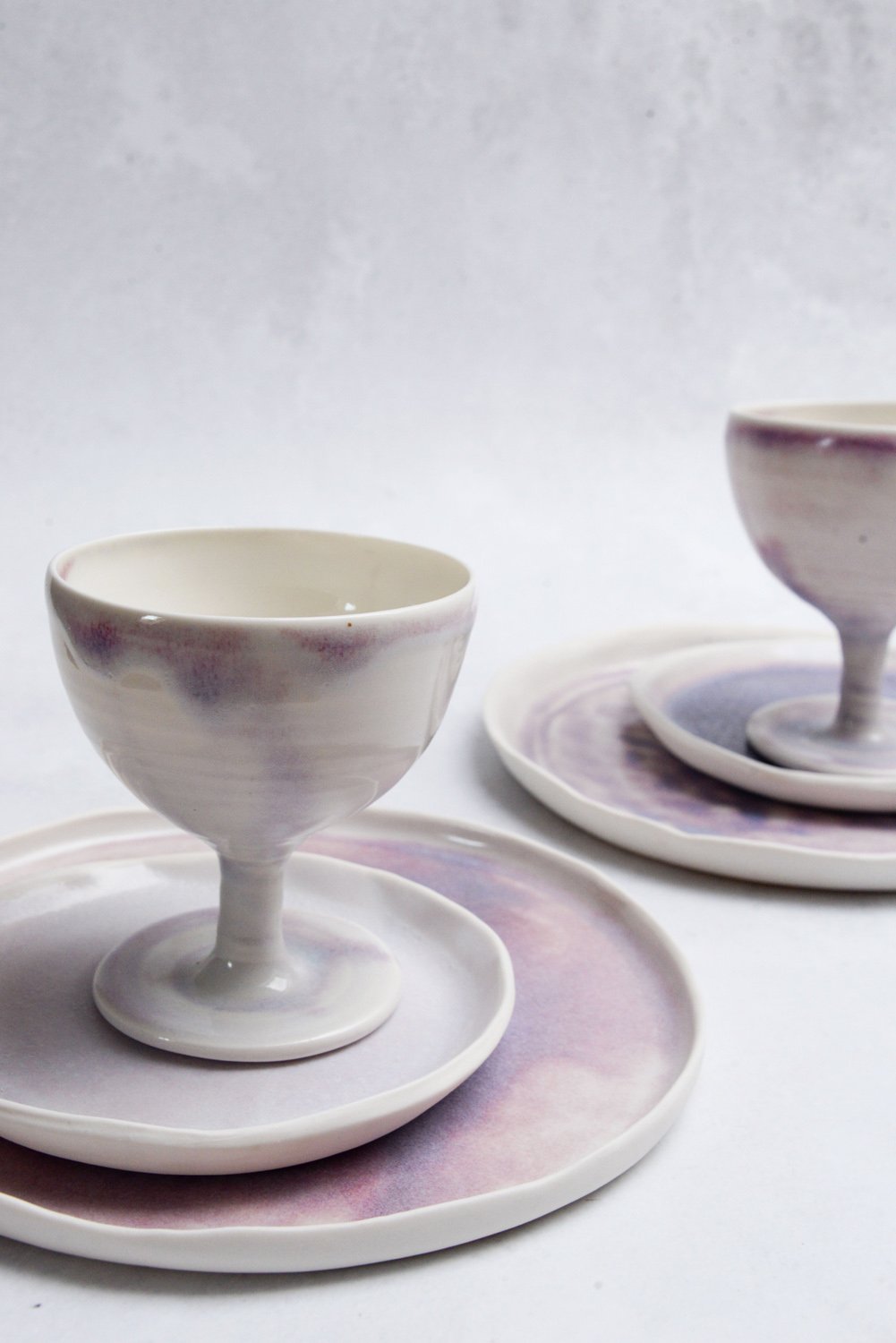
Matte White Glaze — featured in the Perfect Grey Combo
Semi-Matte / Glossy “Snow” Glaze — matte when thin, glossy when thicker
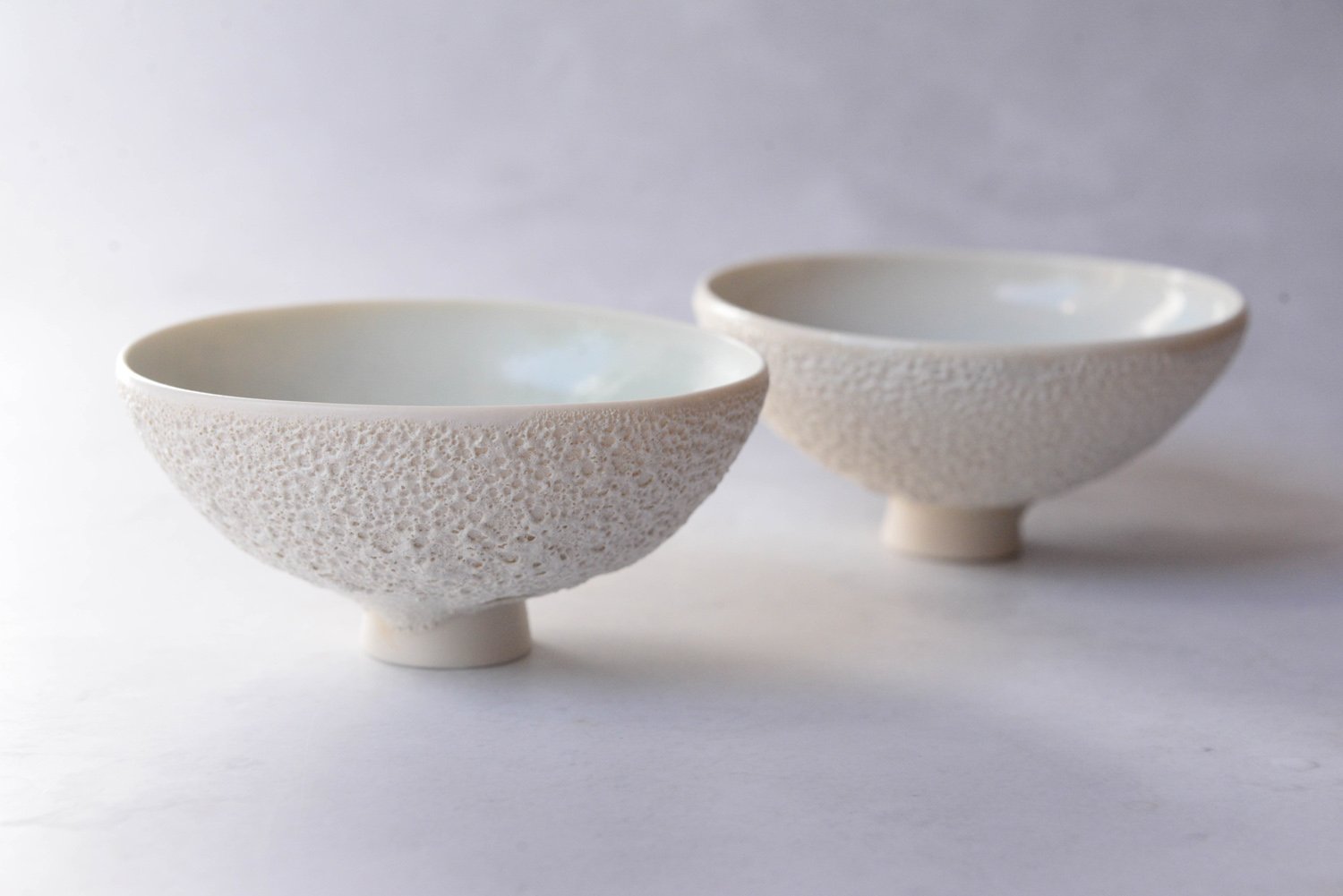
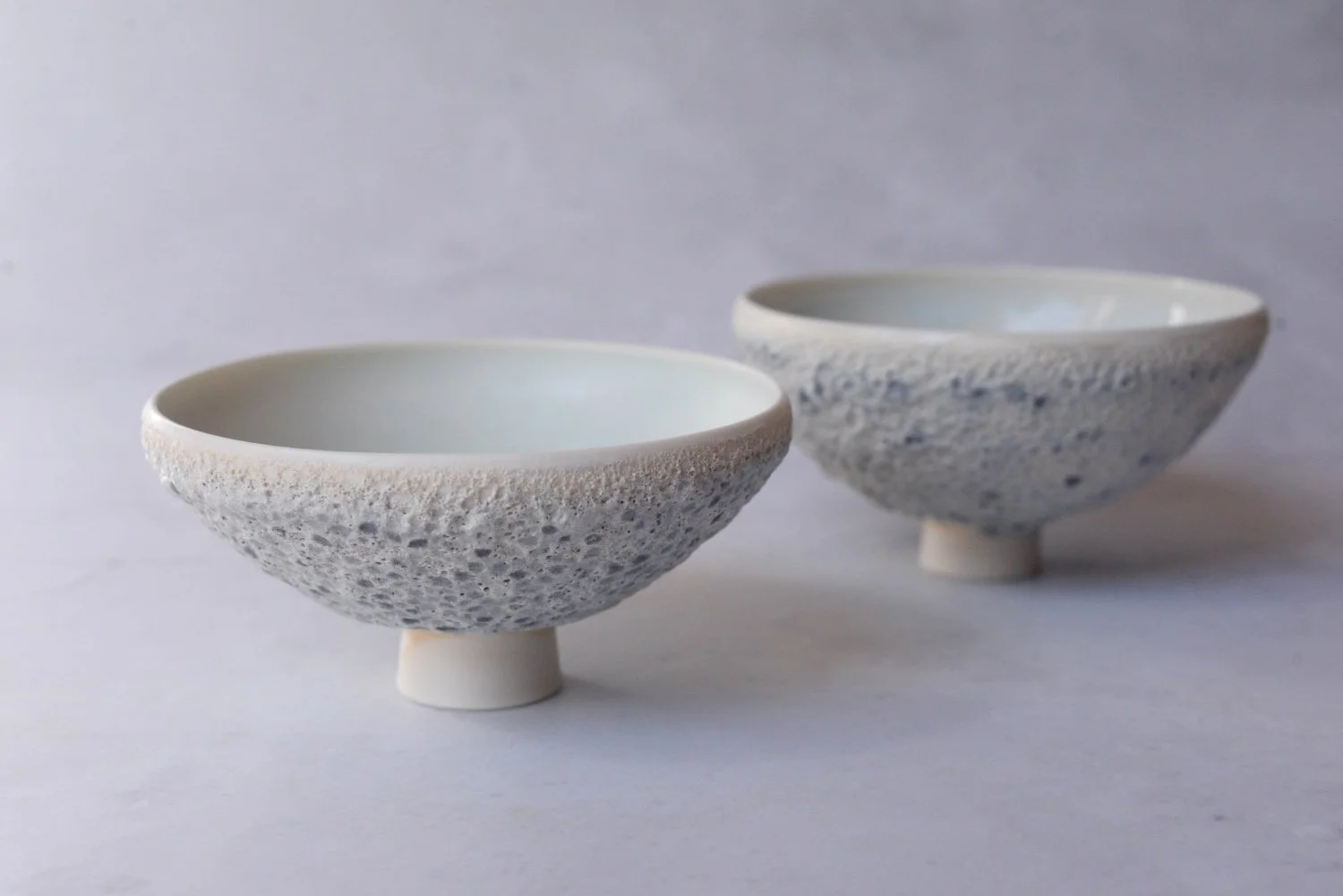
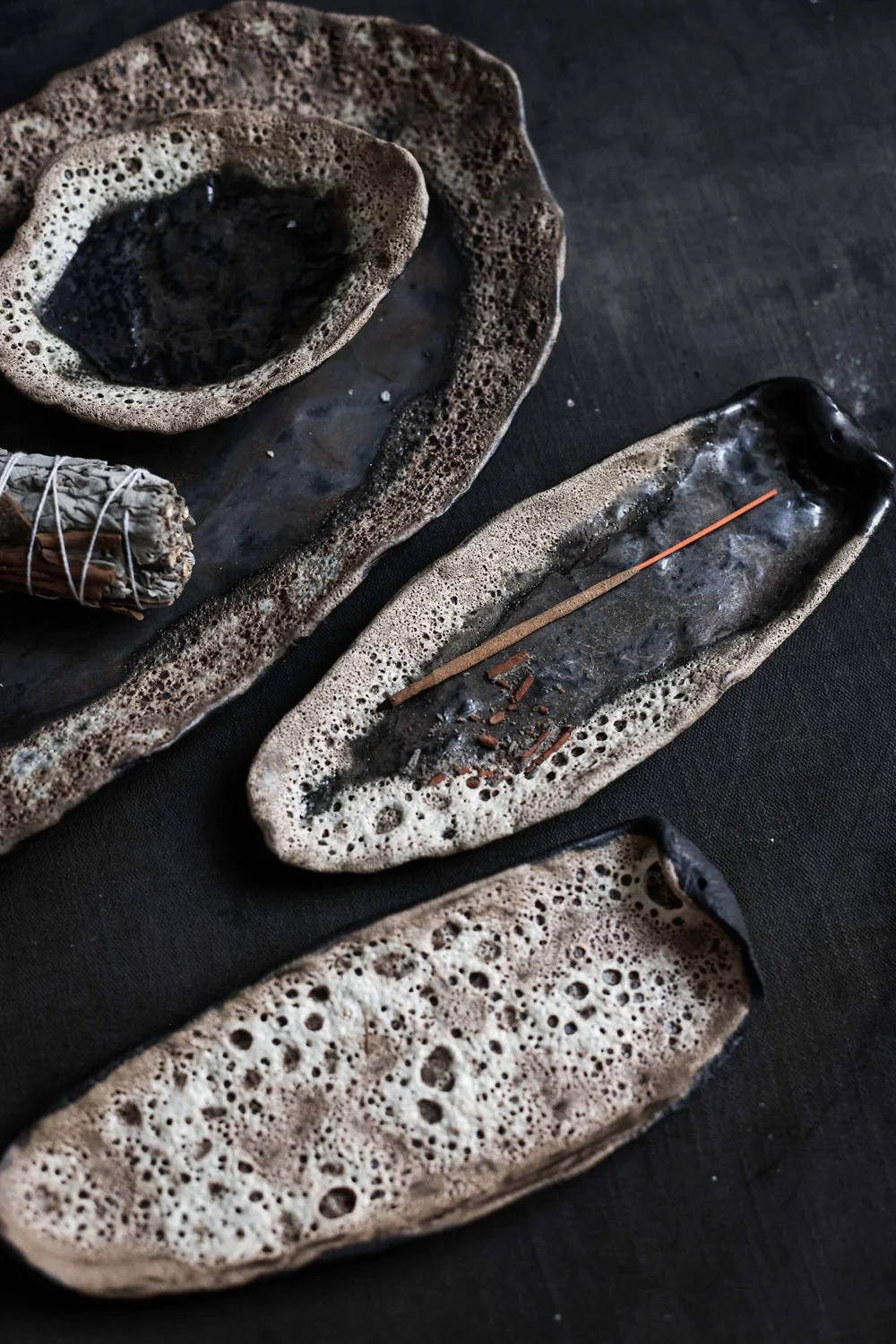
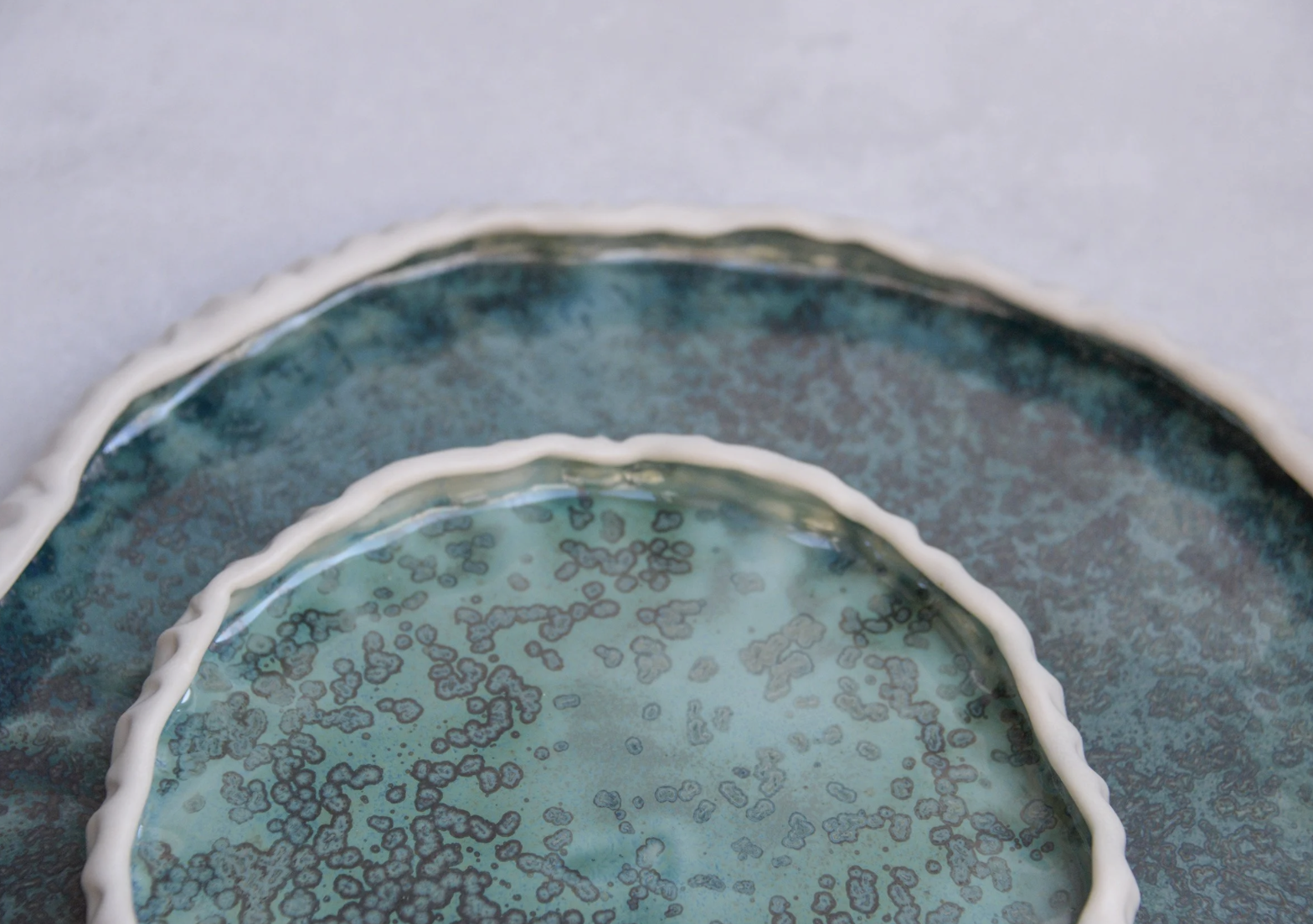
Matte Crystalline / Crackle “Stone” Glaze — subtle crystals and ash-like textures
These recipes are the result of years of testing and are ideal for potters who want to explore variations of trusted base glazes rather than starting from scratch.
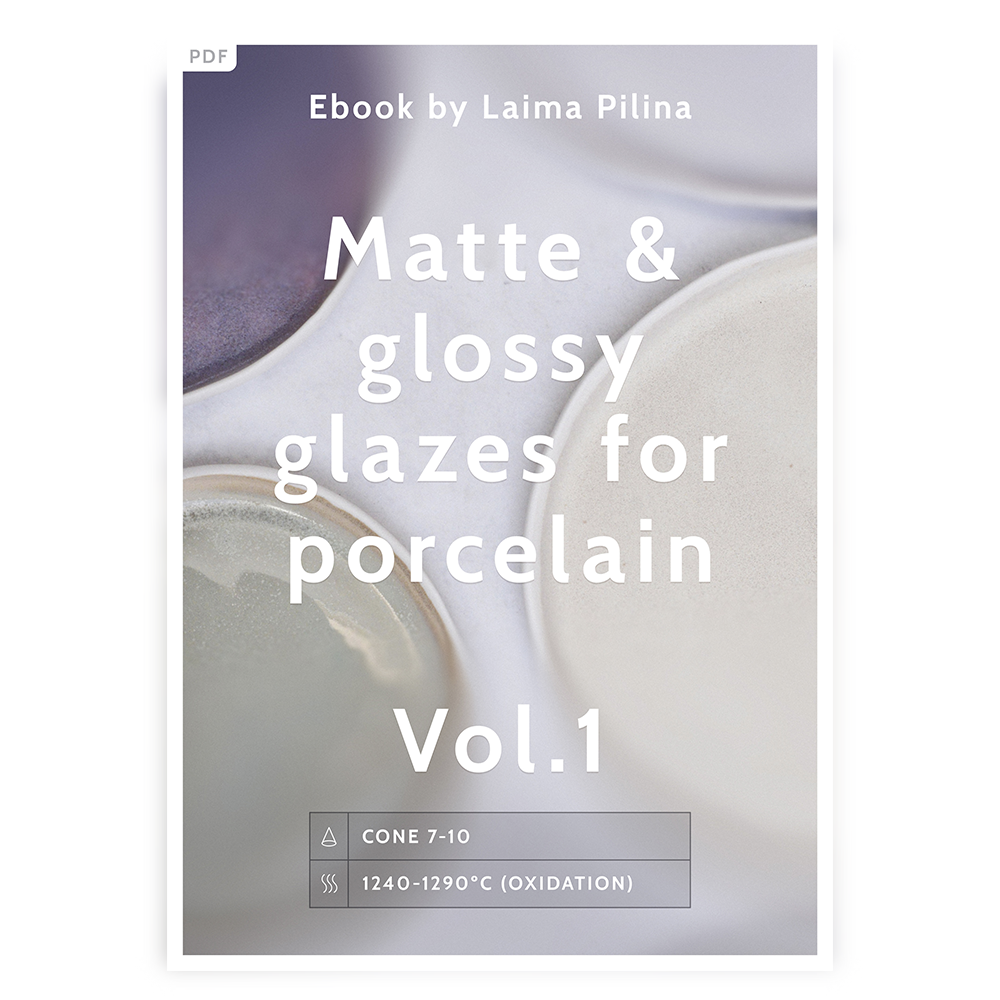
Firing Range
Cone 7–10
1240–1300°C / 2264–2372°F (oxidation, electric firing)
FAQ — Will These Glazes Work on Porcelain?
Yes — several of them do.
However, all samples shown in the eBook are fired on stoneware, so expect some differences in melt, flow, and colour when applied to porcelain.
Testing is recommended when switching clay bodies.
Glaze Ingredient Overview
Most recipes use at least three of these eight foundational materials:
Ball Clay
China Clay
Potash Feldspar
Cornish Stone
Nepheline Syenite
Dolomite
Flint
Whiting
Colourants & Additional Materials Used in Variations
Bentonite
Talc
Magnesium Carbonate
Titanium Dioxide
Wollastonite
Zinc Oxide
Zirconium Silicate
Lithium Carbonate
Strontium Carbonate
Silicon Carbide
Tin Oxide
Copper Carbonate
Cobalt Carbonate
Copper Oxide
Iron Oxide
Nickel Oxide
Ilmenite
These additives shape the glaze’s surface — from matte to glossy, from smooth to crystalline, from subtle to dramatic.
This volume dives deeper into my core glaze foundations and offers 15 refined recipe variations built on the three stoneware bases I use most often in the studio:
Matte White Glaze — featured in the Perfect Grey Combo
Semi-Matte / Glossy “Snow” Glaze — matte when thin, glossy when thicker
Matte Crystalline / Crackle “Stone” Glaze — subtle crystals and ash-like textures
These recipes are the result of years of testing and are ideal for potters who want to explore variations of trusted base glazes rather than starting from scratch.
Firing Range
Cone 7–10
1240–1300°C / 2264–2372°F (oxidation, electric firing)
FAQ — Will These Glazes Work on Porcelain?
Yes — several of them do.
However, all samples shown in the eBook are fired on stoneware, so expect some differences in melt, flow, and colour when applied to porcelain.
Testing is recommended when switching clay bodies.
Glaze Ingredient Overview
Most recipes use at least three of these eight foundational materials:
Ball Clay
China Clay
Potash Feldspar
Cornish Stone
Nepheline Syenite
Dolomite
Flint
Whiting
Colourants & Additional Materials Used in Variations
Bentonite
Talc
Magnesium Carbonate
Titanium Dioxide
Wollastonite
Zinc Oxide
Zirconium Silicate
Lithium Carbonate
Strontium Carbonate
Silicon Carbide
Tin Oxide
Copper Carbonate
Cobalt Carbonate
Copper Oxide
Iron Oxide
Nickel Oxide
Ilmenite
These additives shape the glaze’s surface — from matte to glossy, from smooth to crystalline, from subtle to dramatic.

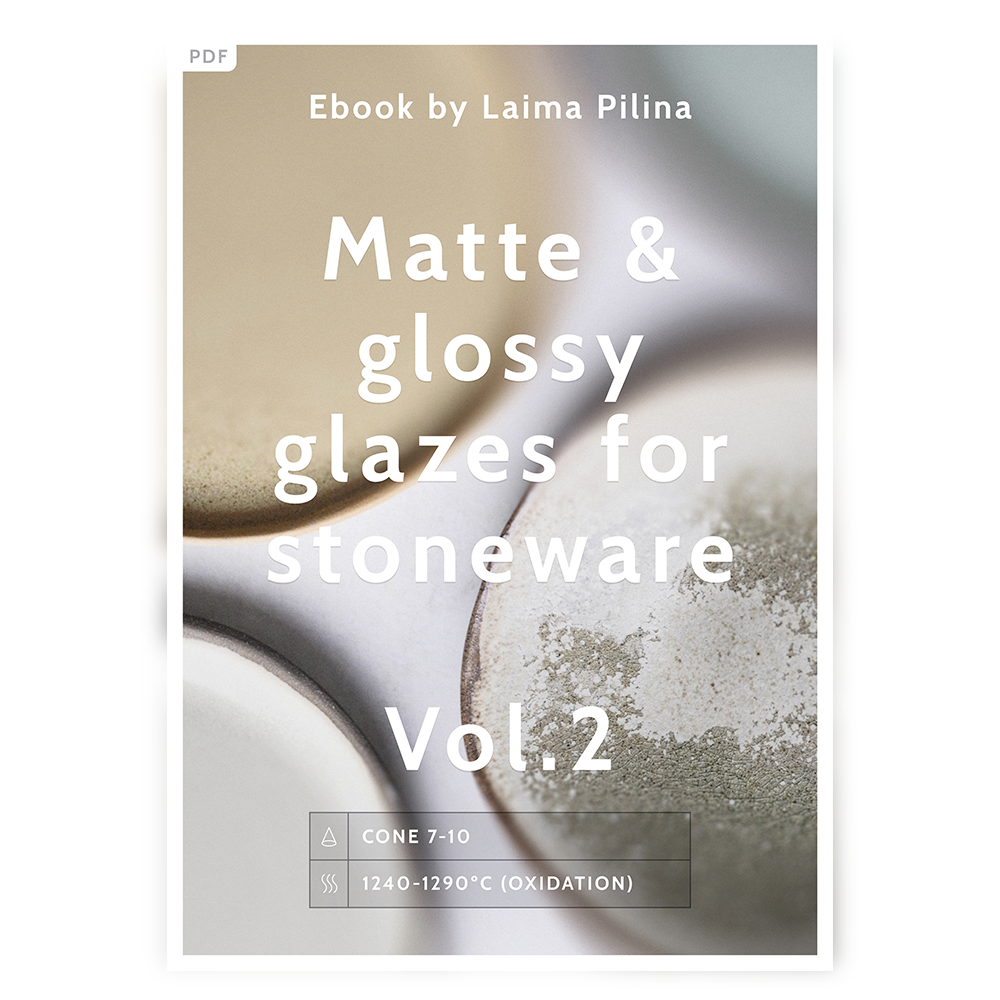 Image 1 of 22
 Image 2 of 22
 Image 3 of 22
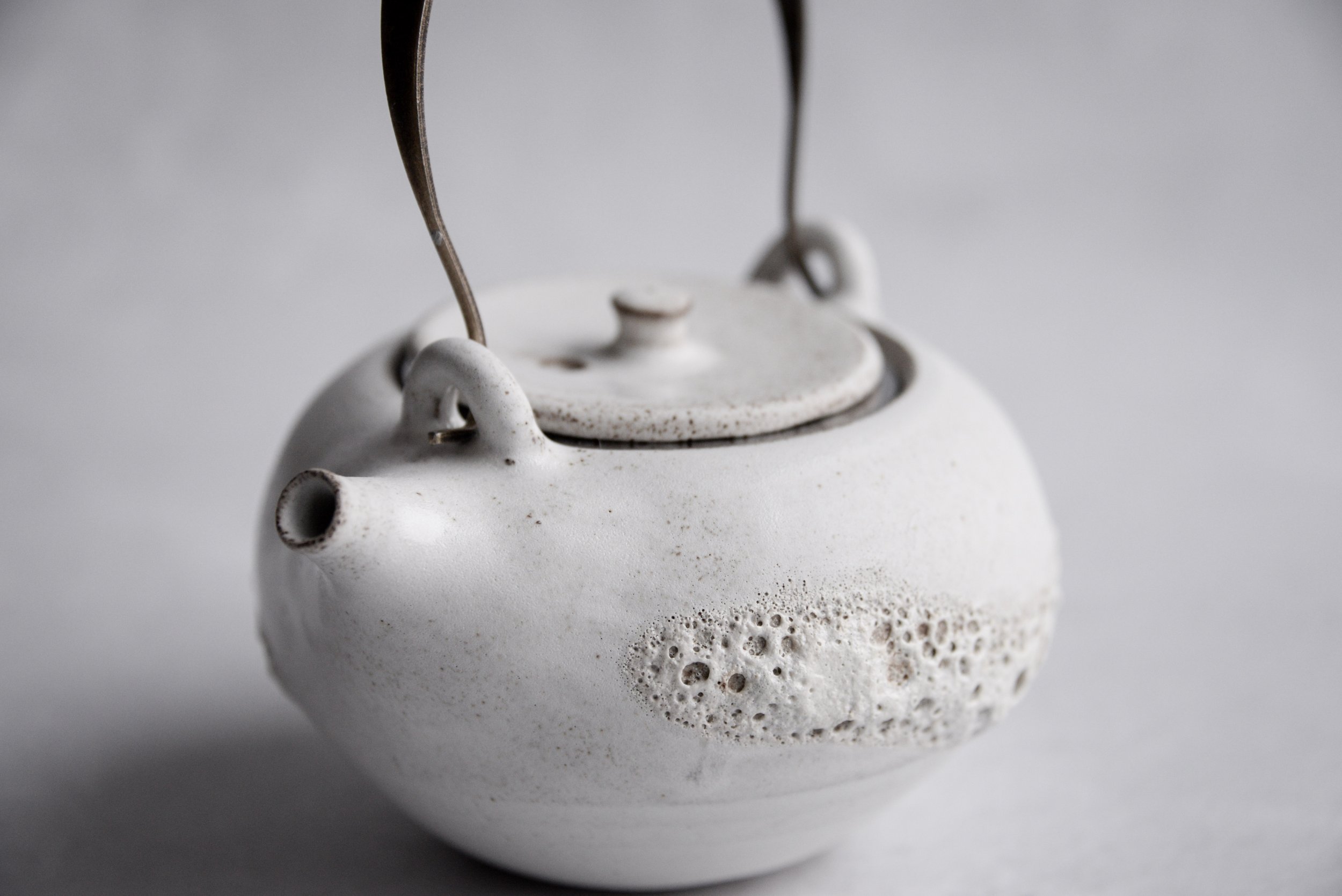 Image 4 of 22
 Image 5 of 22
 Image 6 of 22
 Image 7 of 22
 Image 8 of 22
 Image 9 of 22
 Image 10 of 22
 Image 11 of 22
 Image 12 of 22
 Image 13 of 22
 Image 14 of 22
 Image 15 of 22
 Image 16 of 22
 Image 17 of 22
 Image 18 of 22
 Image 19 of 22
 Image 20 of 22
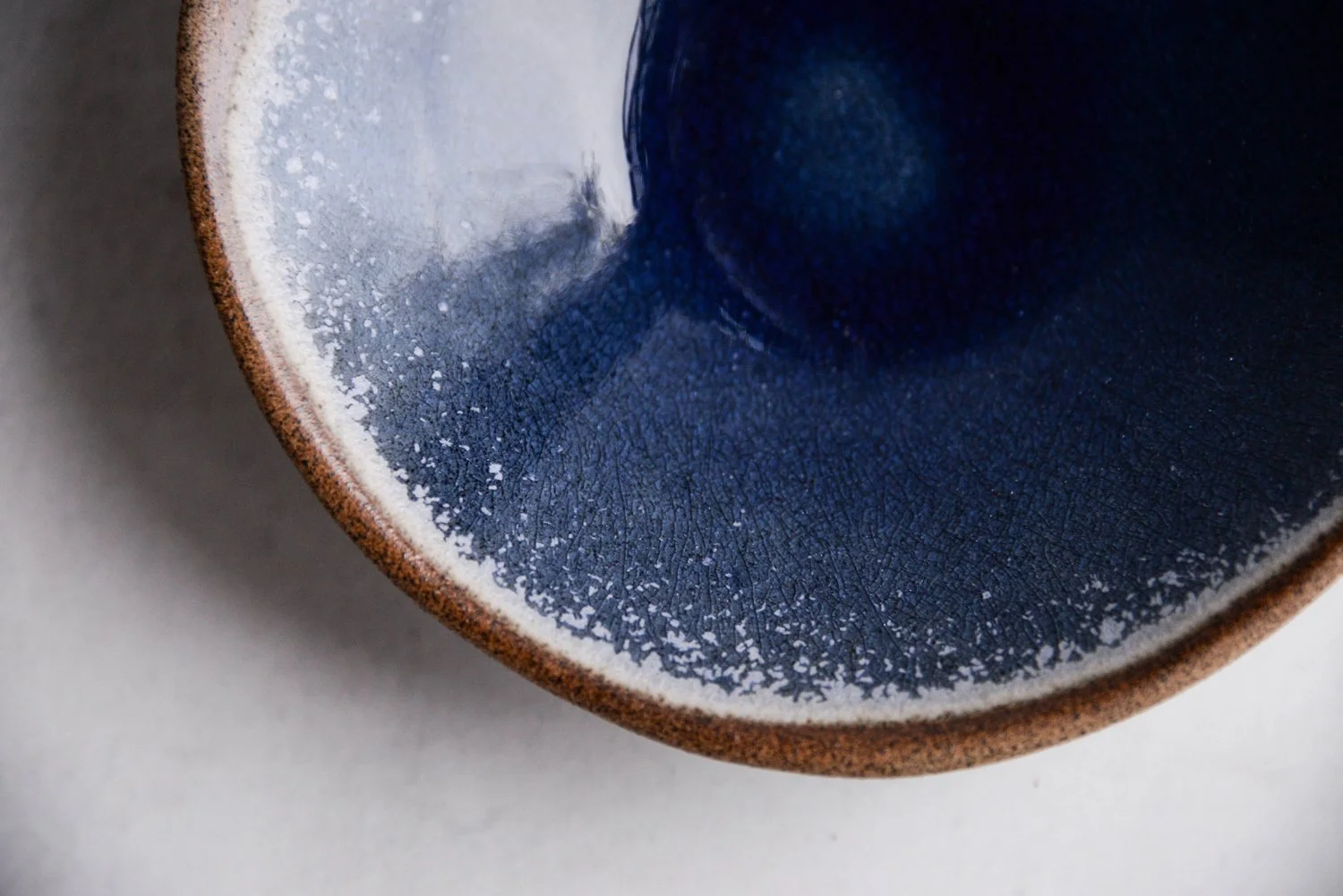 Image 21 of 22
 Image 22 of 22